Are Solar Roof Shingles Better Than Traditional Panels?
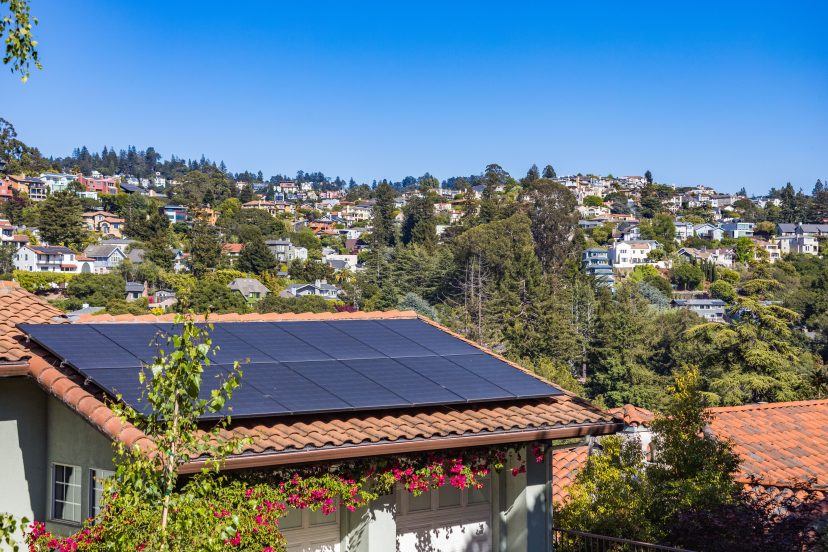
You want solar power, but you may not want your roof to look like it is wearing a backpack. That is where Solar Roof Shingles get interesting. They promise clean energy, a sleeker roofline, and less of that “big rectangles bolted to the house” look.
But are they actually better than traditional solar panels? Or are they just the designer sneakers of rooftop solar: stylish, impressive, and a little painful when you see the bill?
This guide explains everything in plain English. You will learn how solar shingles work, when they make sense, when panels are smarter, what to ask installers, and which beginner-friendly solar products can help you understand home solar before making a major investment.
How Do Solar Roof Shingles Work?
Solar roof shingles are roofing materials that produce power as well. Instead of sitting on top of your roof like traditional solar panels, they become part of the roof itself.
They are often called solar shingles, solar tiles, solar roofing, or building-integrated photovoltaics, also known as BIPV. The idea is simple: your roof protects your home from rain, wind, and heat while also turning sunlight into usable power.
Think of them like a phone case with a built-in charger. It still does the basic job, but it quietly adds another useful function.
What Solar Roof Shingles Do
Solar shingles use photovoltaic cells to convert sunlight into electricity. That electricity moves through wiring, passes through an inverter, and becomes power your home can use.
The big difference is placement. Traditional solar panels are mounted above existing roofing. The roofing system includes the installation of solar shingles.
A full solar shingle setup may include:
- Active solar shingles that produce power
- Inactive matching shingles for a uniform look
- Inverters
- Wiring
- Monitoring software
- Optional solar battery storage
So yes, they are roofing and renewable energy rolled into one.
Solar Roof Shingles vs Traditional Panels
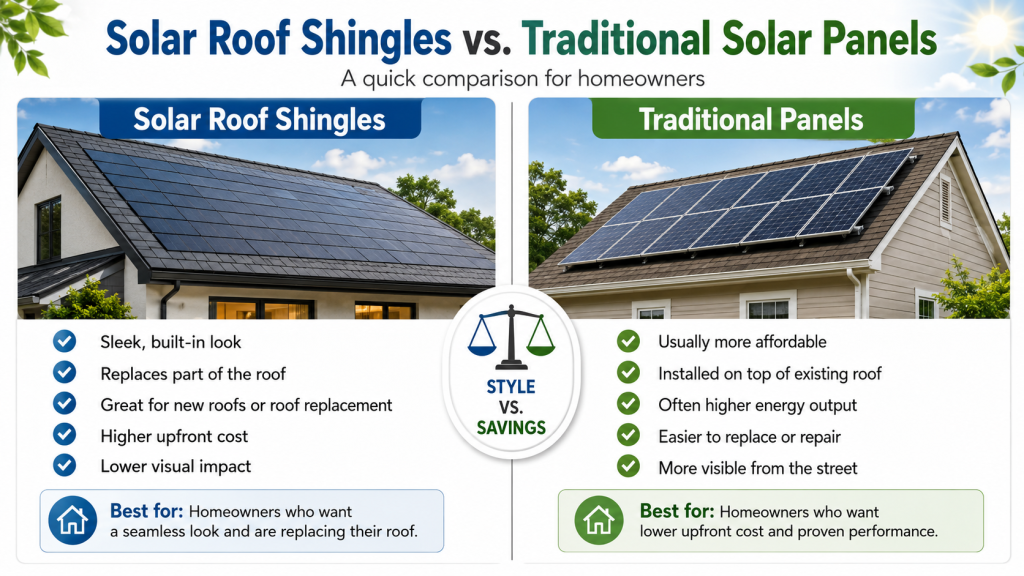
Traditional solar panels usually win on price, availability, and energy output per square foot. Solar roof shingles usually win on appearance.
Panels are like a reliable pickup truck. Although they are not always elegant, they do the job. Solar shingles are more like a clean, built-in cabinet. They blend in beautifully, but they usually cost more.
If your main goal is maximum savings, panels often make more sense. If your roof needs replacement anyway and curb appeal matters, solar shingles become much more tempting.
Where Solar Roof Shingles Shine
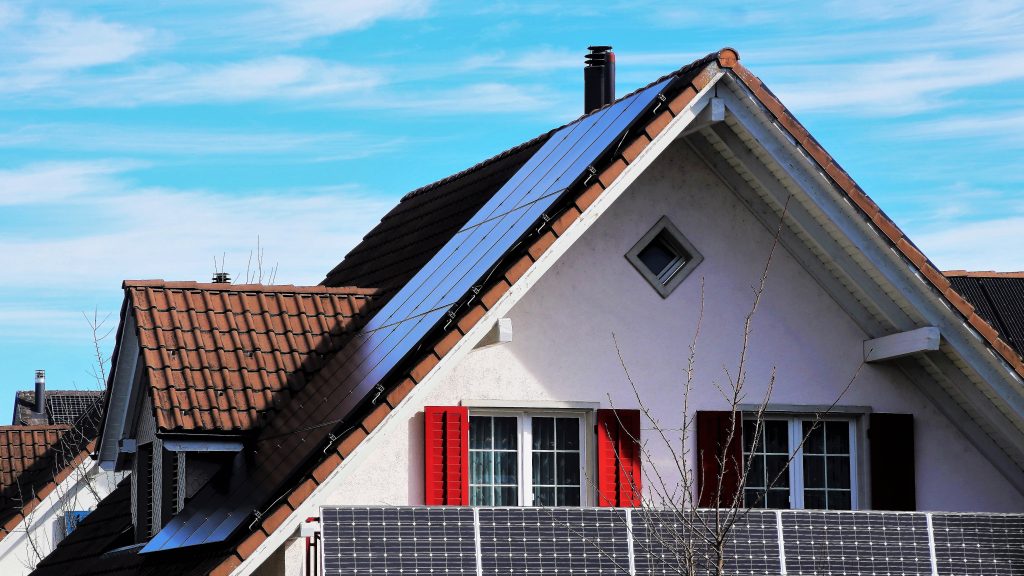
Solar roof shingles are especially attractive when you are already replacing your roof. Since they act as both roofing and solar equipment, the timing can work in your favor.
They may be a strong fit if:
- You dislike the look of raised panels
- Your HOA has strict appearance rules
- You are building a new home
- Your roof is old and needs replacement
- You want a streamlined solar tile roof
- You plan to stay in the home long term
For design-conscious homeowners, this is the “finally, solar that does not shout” option.
Where Traditional Panels Still Win
Traditional rooftop solar panels are still the practical favorite for many homes. They are widely available, easier to compare, and often less expensive.
Additionally, they are typically easier to replace or repair. If one panel has a problem, installers can usually access it without disturbing your actual roof materials.
Panels may be better if:
- Your roof is fairly new
- You want the best cost-per-watt
- You need high solar production
- You want more installer options
- Your budget is tight
There is no shame in choosing the practical path. Sometimes the sensible shoes are the right shoes.
Solar Shingle Cost and Long-Term Value
Solar shingles usually cost more than standard panels because they combine two jobs: roofing and electricity production. You are not just buying solar equipment. You are also buying part of a roof.
That is why the value depends heavily on timing. If your roof is already near the end of its life, solar shingles may feel more reasonable. If your roof is only five years old, replacing it early just to install shingles may not be financially wise.
Also check incentives. Federal, state, and local solar incentives may reduce your net cost, but rules can change, so confirm with a tax professional or local installer.
Roof Condition Matters More Than People Think
Before you fall in love with solar shingles, look at your roof like a home inspector would.
Ask:
- Is the roof shaded by trees?
- Does it face a sunny direction?
- Is the roof structure sound?
- Are there many vents, chimneys, or odd angles?
- Does local code allow the system?
A simple roof is easier and cheaper to work with. A complicated roof with dormers, valleys, skylights, and surprise squirrel architecture can raise costs quickly.
Efficiency, Shade, and Energy Output
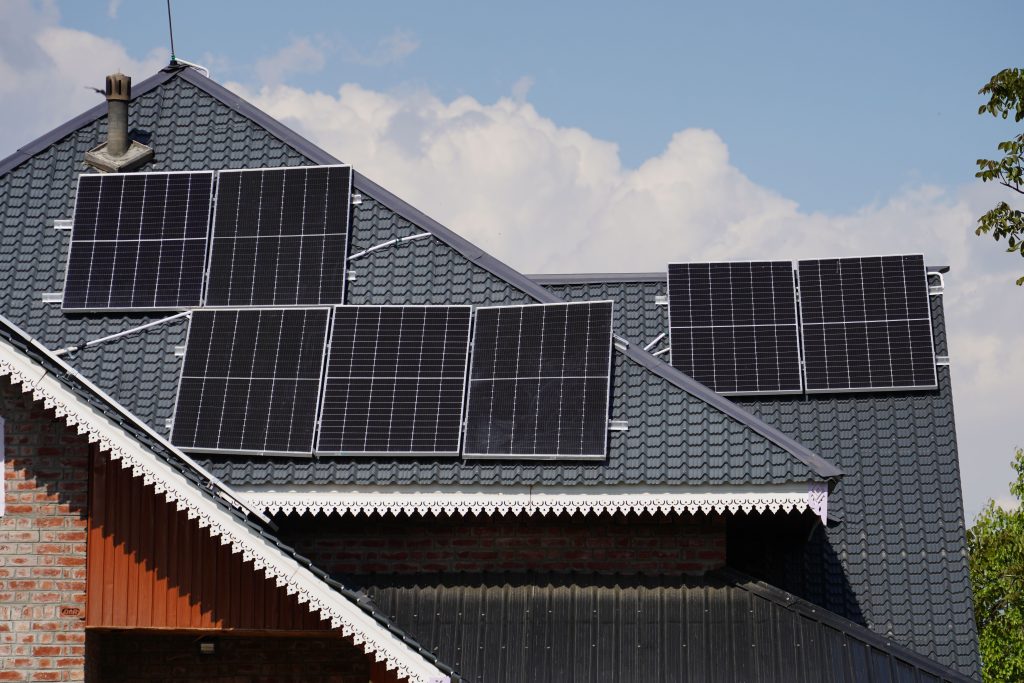
Solar roof shingles can produce useful power, but traditional panels often produce more electricity per square foot. That’s important if your roof space is limited.
Shade is another big deal. A little morning shade from a tree may seem harmless, but solar equipment notices everything. It is the friend who remembers you said “just one bite” and then ate half the dessert.
Before choosing any home solar system, ask for a solar production estimate. A good installer should show expected annual output, not just pretty roof renderings.
Installation Timeline and Permits
Solar shingle installation is usually more involved than a standard panel installation. It can require roofing crews, electricians, solar designers, permits, inspections, and utility approval.
That does not mean it is a nightmare. It just means you should avoid rushing.
Ask installers:
- Who handles roofing work?
- Who handles electrical work?
- Is one warranty covering both?
- How long will permitting take?
- What happens if a shingle fails?
The best solar installation is boring in the best way: planned, permitted, inspected, and documented.
Durability, Weather Ratings, and Warranties
Solar shingles are designed to live outside, so durability matters. Look for ratings related to wind, fire, hail, weatherization, and product performance.
Some major solar roofing systems advertise 25-year warranties, but read the details carefully. A tile warranty, power warranty, roof leak warranty, and workmanship warranty are not always the same thing.
Ask for warranty terms in writing. Then ask who actually services the system if something goes wrong. A great warranty is only comforting if someone picks up the phone.
Solar Batteries, EVs, and Whole-Home Planning
Solar roof shingles are only one part of a bigger energy picture. If you want backup power, you may also need battery storage. If you own an electric vehicle, your future electricity use may rise.
Think about your home like a small energy ecosystem.
You might plan for:
- Solar shingles or panels
- A solar inverter
- Battery backup
- EV charging
- Smart energy monitoring
- Outdoor solar lighting
For smaller upgrades, you can also explore simple solar improvements like these driveway solar powered lights for outdoor visibility.
Research-Backed Insights on Solar Roofing
The U.S. Department of Energy explains that building-integrated photovoltaics replace conventional building materials with solar energy-generating materials, including roofs, skylights, facades, and windows. That supports the core idea behind Solar Roof Shingles: the roof becomes part of the power system.
A National Renewable Energy Laboratory report on residential roofing-integrated photovoltaics also points to the practical installation lessons behind roof-integrated solar. The key takeaway is that solar roofing is not just a product choice. It is a coordination challenge between roofing, electrical work, permitting, design, and long-term maintenance.
In simple terms: solar shingles can be exciting, but the installer matters as much as the technology.
5 Amazon Products for Solar Power Beginners
Most full Solar Roof Shingles systems are sold through certified installers, not as DIY Amazon products. However, these Amazon items can help beginners explore solar power, small off-grid setups, roof mounting, and system basics.
Renogy 200 Watt 12 Volt Monocrystalline Solar Panel Starter Kit
This kit includes two 100W solar panels and a charge controller, making it a practical starter option for learning how solar systems work.
Features:
- 200W solar panel setup
- Charge controller included
- Useful for RVs, boats, campers, and small off-grid systems
Best for: Beginners who want hands-on solar experience before investing in whole-home solar.
ECO-WORTHY 200 Watts 12 Volt/24 Volt Solar Panel Kit
This solar kit is designed for RVs, campers, vehicles, caravans, and other off-grid uses. It is a nice middle-ground option for someone learning solar power basics.
Features:
- 200W monocrystalline solar kit
- 30A PWM charge controller
- Suitable for 12V and 24V applications
Best for: DIY users, small backup projects, and off-grid learning.
HQST 100 Watt 12 Volt Monocrystalline Solar Panel Kit
This smaller kit is good for learning without feeling overwhelmed. It typically includes a solar panel, controller, cable, and mounting brackets.
Features:
- 100W panel
- PWM charge controller
- Cables and Z brackets included
Best for: Small sheds, battery charging, and first-time solar hobby projects.
MCOOH Solar Panel Mounting Brackets Roof Mount Kit
This mounting kit is made for securing solar panels on tin, flat, and sheet rooftops. It is not for installing solar shingles, but it helps readers understand rooftop mounting hardware.
Features:
- Rails and clamps included
- Aluminum alloy construction
- Designed for panel roof mounting
Best for: DIY solar panel setups where proper mounting hardware is needed.
Victron Energy SmartSolar MPPT Solar Charge Controller
A charge controller helps manage power flowing from solar panels to batteries. This model includes Bluetooth monitoring, which is handy if you like seeing what your system is doing.
Features:
- MPPT charging technology
- Bluetooth monitoring
- 12V/24V compatibility
Best for: Users building a more serious solar battery setup.
Smart Buyer Checklist Before You Commit
Before choosing solar shingles, slow down and compare your options. This is not a toaster purchase. You do not want to impulse-buy your roof.
Use this checklist:
- Get quotes for both solar shingles and traditional panels
- Ask for estimated annual production
- Compare warranty coverage line by line
- Check installer certifications
- Confirm roof replacement needs
- Ask about battery compatibility
- Review local incentives
- Check HOA and permit rules
- Ask who handles future repairs
Most importantly, compare lifetime value, not just the first quote.
Solar Roof Shingles FAQ
Are Solar Roof Shingles worth it for most homes?
Solar Roof Shingles can be worth it if your roof needs replacement, you care about appearance, and you plan to stay in the home long term. If your roof is newer and you want the lowest cost per watt, traditional panels may be better.
Do Solar Roof Shingles replace regular roofing?
Yes, solar shingles are designed to function as roofing material while producing electricity. Many systems also use matching non-solar shingles so the roof looks consistent.
Are solar roof shingles more efficient than solar panels?
They are better for aesthetics and roof integration. Traditional solar panels are often better for cost, efficiency, availability, and easier maintenance. The best option depends on your roof, budget, and goals.
How long will the solar roof shingles last?
Many major solar shingle systems offer warranties around 25 years, but coverage varies. Always compare product, power, weatherization, and workmanship warranties before signing.
Can I do my own installation of solar roof shingles?
In most cases, no. Solar shingles usually require certified roofing and electrical professionals. DIY installation can create safety, code, warranty, and roof leak problems.
Conclusion: Should You Choose Solar Roof Shingles?
Solar Roof Shingles are a beautiful step forward for solar power. They make the roof itself part of the clean-energy system, which feels elegant, modern, and honestly pretty cool.
Still, traditional solar panels remain the better fit for many homeowners because they are more affordable, easier to compare, and widely available.
The smartest choice starts with your roof. If it is old, visible, sunny, and ready for replacement, solar shingles deserve a serious look. If it is newer and you want the best financial return, panels may be the calmer, wiser choice.
Either way, moving toward solar power is progress. Start with good questions, compare real numbers, and choose the system that fits your home—not someone else’s dream roof.