How To Find The Best Solar Panel Angle For Maximum Sunlight
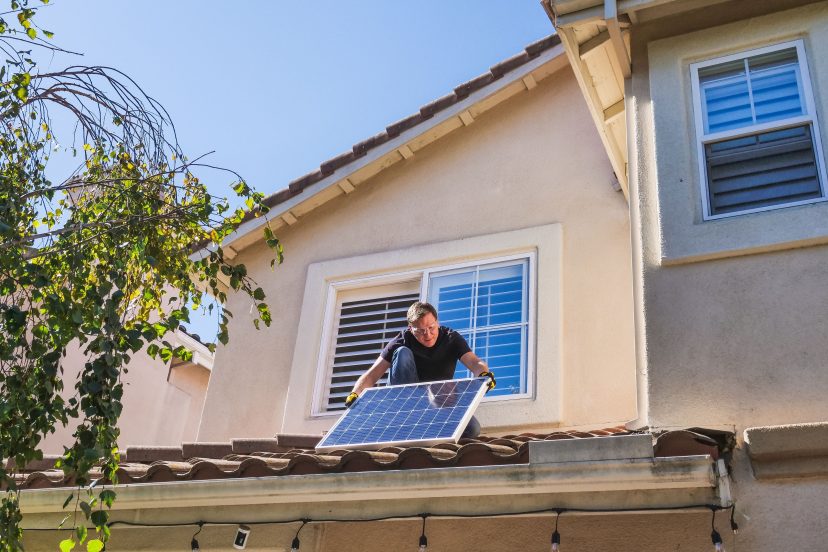
Finding the right Solar Panel Angle sounds like a geometry problem, but the practical goal is simple: position your panels so they receive as much useful sunlight as possible during the hours and seasons that matter to you. Latitude gives you a sensible starting point, yet roof pitch, direction, shade, weather, snow, electricity rates, and mounting limits can all change the best answer. This guide explains how tilt and azimuth work, how to estimate an effective fixed angle, when seasonal adjustment is worthwhile, and which tools can help you measure or change the setup. You will also learn why the mathematically “perfect” angle is not always the safest, cheapest, or most productive choice for your property.
Affiliate disclosure: This article may contain affiliate recommendations. If you purchase through a qualifying link, the website owner may earn a commission at no extra cost to you.
What Solar Panel Angle Means and Why It Matters
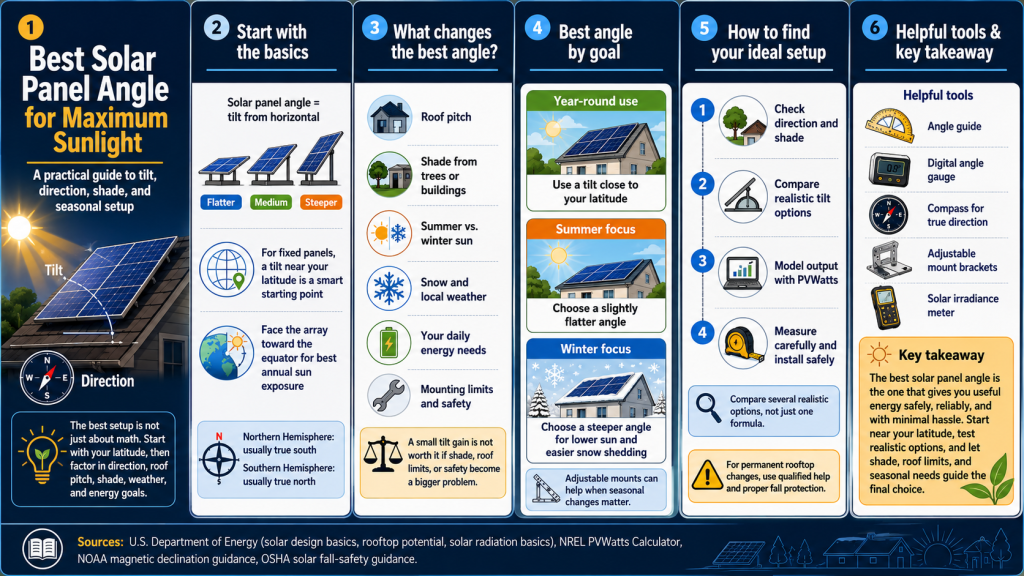
Solar panel angle, or tilt, is measured between the panel and a level horizontal plane. A flat panel has a 0-degree tilt; a vertical one has a 90-degree tilt. Sunlight arriving closer to perpendicular delivers more direct irradiance across the surface.
Azimuth describes the direction the panel faces. Think of tilt as raising your chin and azimuth as turning your head. You need both settings to be sensible.
Start With Your Latitude
For annual generation from a fixed array, start by testing a tilt close to your latitude. The U.S. Department of Energy gives this as general guidance for northern-hemisphere systems facing true south, but it is a baseline rather than a commandment.
For example, at 35 degrees north, look at a tilt close to 35 degrees and compare it to real roof or rack options. Climate and the hours when electricity matters can move the optimum.
Choose the Right Direction as Well as Tilt
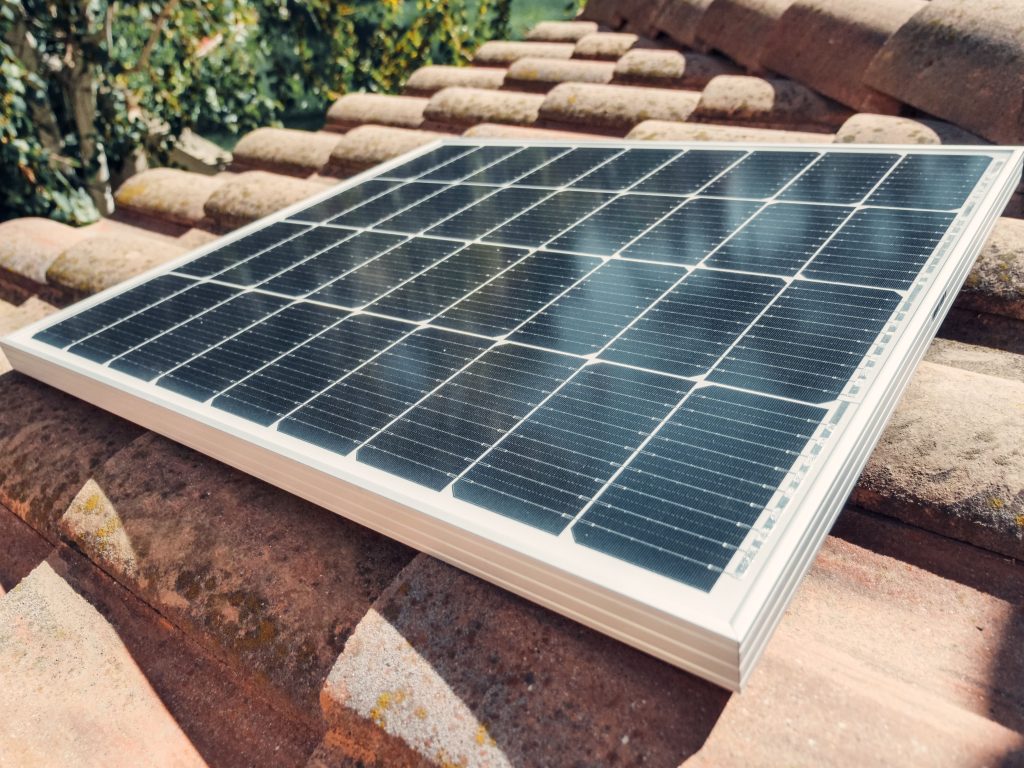
In the Northern Hemisphere, an equator-facing array generally points true south; in the Southern Hemisphere, it points true north.
True north is not the same as magnetic north. Magnetic declination varies by place and time, and NOAA provides a calculator for correcting compass bearings. Take readings away from steel roofing, vehicles, wiring, and mounting hardware.
Adjust the Angle for Seasons and Energy Goals
The sun travels higher in summer and lower in winter. A flatter panel favors summer sun, while a steeper panel favors winter. Adjustable ground or portable systems can be repositioned seasonally, provided the likely gain justifies the work.
Match the setup to your goal. A cabin needing winter battery charging may choose a steeper tilt. A grid-connected home may prefer a more westerly orientation when late-afternoon power is especially valuable, even if annual production falls slightly.
Account for Roof Pitch and Mounting Limits
Rooftop systems are often installed parallel to the roof because this is compact and simpler than a raised rack. If the pitch is near the modeled optimum, changing it may add cost and wind exposure for little extra energy.
Flat roofs offer more freedom, but rows need spacing to prevent self-shading. Raised structures must meet wind, attachment, waterproofing, setback, and code requirements. A spreadsheet-perfect angle is worthless if the rack is unsafe or leaks.
How Shading Can Change the Best Angle
Shade can outweigh small tilt improvements. Chimneys, trees, parapets, buildings, and panel rows may block valuable sun. DOE guidance treats shading, direction, roof size, tilt, location, and construction as core rooftop-potential factors.
Assess the site across the year because winter shadows are longer and vegetation changes. Moving the array, lowering a rack, or choosing another roof plane may help more than chasing a perfect angle.
Consider Clouds, Heat, Snow, and Local Weather
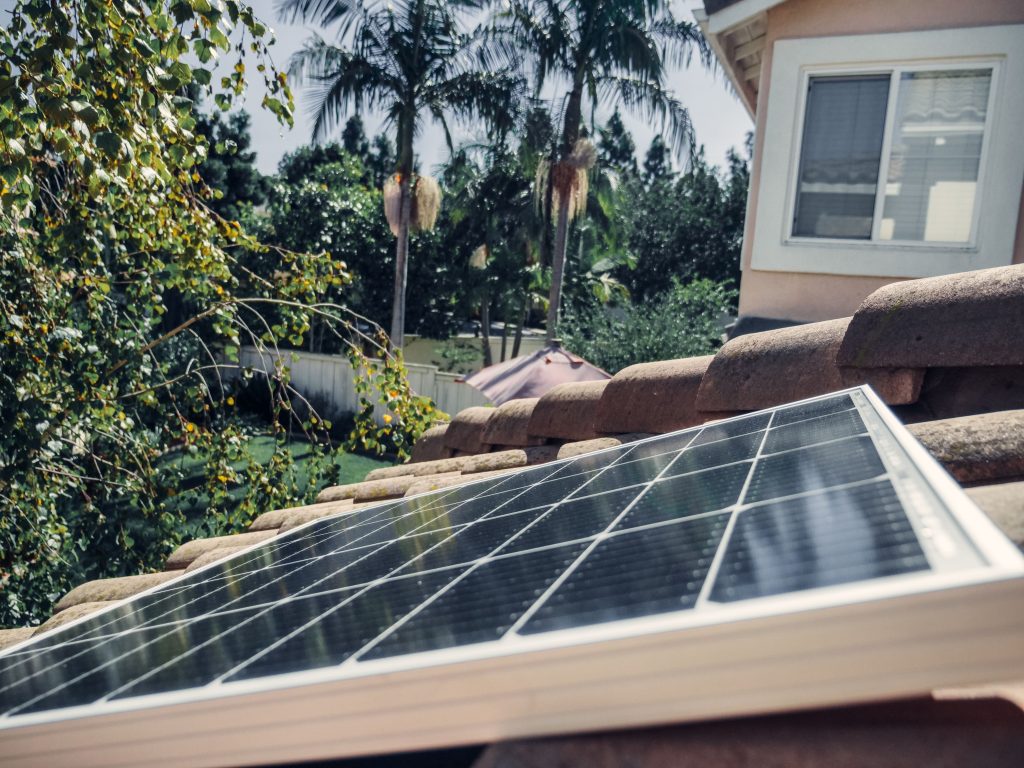
Cloudy climates receive more diffuse light from across the sky, so small tilt changes may matter less than under consistently clear conditions. Temperature and mounting geometry also affect performance, so angle should not be judged in isolation.
For solar panels in winter, a steeper tilt can improve snow shedding. DOE resilience guidance notes this benefit while emphasizing structural loads. Never increase tilt without checking wind and snow engineering.
Calculate Your Best Solar Panel Angle With PVWatts
Model several realistic options instead of trusting one formula. PVWatts estimates grid-connected production and accepts tilt, azimuth, array type, system size, losses, and other inputs. Results remain uncertain because weather and site conditions vary.
Compare roof pitch, latitude, and nearby flatter or steeper settings. Review annual and monthly output, then test plausible azimuths. When several options perform similarly, let cost, safety, and practicality decide.
Measure and Set the Angle Safely
For a ground or portable panel, place a digital inclinometer against the frame and adjust stable support legs to the target. A shadow guide instead aligns a temporary panel with the sun at that moment; it does not set an annual tilt.
Never work on a roof without training and fall protection. Do not place tools on glass, cover cells, loosen structural fasteners casually, or adjust racks in strong wind. Use a qualified professional for permanent rooftop changes.
Fixed Tilt, Adjustable Mounts, or Trackers?
Fixed tilt has few moving parts and suits most residential roofs. Adjustable mounts fit cabins, RVs, portable panels, and accessible ground arrays—assuming someone will actually reposition them.
Trackers follow the sun along one or two axes but add motors, controls, space, maintenance, and structural complexity. DOE describes them mainly for ground systems and notes their higher cost and maintenance.
Recommended Products for Finding and Setting Solar Panel Angle
Togo POWER Solar Angle Guide for Portable Solar Panel, Solar Tracker Tool Find Ideal Angle to Maximize Solar Energy Intake
Best for: Portable panels and quick campsite adjustments
This clip-on guide uses a center shadow indicator to help you point a portable panel more directly toward the current sun. Its listed clip opening is up to 0.8 inches. It is wonderfully simple, but it does not calculate the best fixed seasonal angle and should not cover any solar cells.
Klein Tools 935DAG Digital Electronic Level and Angle Gauge, Measures 0 – 90 and 0 – 180 Degree Ranges, Measures and Sets Angles
Best for: Accurate DIY angle measurement
The 935DAG measures and sets angles, offers 0–90-degree and 0–180-degree ranges, and includes a magnetic base. Its reverse-contrast display helps when reading from awkward positions. If your panel frame is aluminum, the magnet will not hold; rest it carefully against a straight frame edge instead.
SUUNTO MC-2 Compass: Top-of-The-line Compass for Professionals & Serious Hikers
Best for: Checking azimuth and true direction
This sighting compass includes adjustable declination correction, a mirror, clinometer, and luminous markings. Those features make it useful for establishing a true-north reference before laying out an array. It costs more than a basic compass, and nearby metal or electrical equipment can distort readings.
Renogy 28in Adjustable Solar Panel Mount Brackets, with Foldable Tilt Legs on Any Flat Surface for RV, Roof, Boat, Any Off-Grid Systems
Best for: Small framed panels on stationary RVs or flat surfaces
These adjustable brackets use foldable tilt legs and stainless-steel fasteners. The current listing specifies compatibility with selected Renogy panels, including models under 100W, 100W N-type panels, and 120W ShadowFlux panels. Flatten the array before travel, and verify dimensions rather than assuming wattage guarantees fit.
ECO-WORTHY Upgraded 45in Solar Panel Mount Brackets, with Foldable Tilt Legs, Suitable for 2pcs 100W/1pcs 200W 300W 400W Solar Panels, Adjustable Mounting Brackets Kits for RV, Roof, Boat, and Off-Grid
Best for: Larger framed modules needing seasonal adjustment
This longer bracket kit is listed for two 100W panels or one 200W, 300W, or 400W panel, depending on dimensions. Foldable legs make seasonal repositioning practical on suitable flat surfaces. Wattage alone does not determine compatibility, so confirm frame size, mounting holes, fasteners, and local wind requirements before installation.
Walfront Solar Power Meter Handheld Solar Irradiance Meter SM206 Energy Meter for Solar Panel Gardening Home Outdoor
Best for: Comparing sunlight at different positions
The SM206 is a handheld solar-radiation meter with selectable W/m² and Btu/(ft²-hour) units plus data-hold and maximum-reading functions. It can help compare locations or orientations under similar sky conditions. It measures incoming irradiance, not panel wattage, so use it as a diagnostic aid rather than proof of system performance.
Research-Backed Guidance on Solar Panel Angle
The Department of Energy’s PV system design guidance identifies latitude, orientation, and load needs as key fixed-tilt inputs and gives equator-facing, latitude-based positioning as a general annual-output starting point. The useful takeaway is not that latitude is always perfect, but that it is a defensible first scenario to model.
The PVWatts Calculator evaluates tilt and azimuth using location-based solar and weather data. Its own caution explains that predictions contain assumptions and do not capture every technology or site characteristic. Treat the result as a comparison tool, then refine it with shade analysis, equipment data, and installer engineering.
DOE’s solar rooftop potential guidance reinforces that tilt cannot be considered alone; shading, direction, location, roof size, and construction all influence usable potential. NOAA’s magnetic declination guidance also explains why compass north must be corrected to true north when setting azimuth.
Common Mistakes to Avoid
Do not copy a neighbor’s angle without comparing direction, shade, and energy goals. Avoid confusing roof pitch with degrees, magnetic south with true south, or a momentary alignment guide with an annual tilt calculation.
Do not optimize only for noon; morning or afternoon output may better serve batteries and time-based rates. Above all, never trade structural safety for a small modeled gain. Raised racks add wind load, adjustable hardware can loosen, and roof work brings fall and waterproofing risks.
Solar Panel Angle FAQs
What is the best Solar Panel Angle for year-round use?
A tilt close to your latitude is a practical starting point for an equator-facing fixed array, but the best value depends on local weather, azimuth, shade, roof pitch, and your seasonal energy needs. Compare several angles in PVWatts and choose the one that provides strong production without creating unnecessary mounting cost or structural risk.
Should solar panels face south?
In the Northern Hemisphere, true south usually maximizes annual production for a fixed array; in the Southern Hemisphere, true north is the comparable direction. East- or west-facing panels can still work well and may better match morning or afternoon demand. Roof shape, shade, local rates, and available space may matter more than perfect direction.
How frequently should a portable solar panel be adjusted?
Re-aim it when the sun’s position has changed enough to cast an obvious off-center shadow on your guide, especially during a long charging session. There is no universal schedule because latitude, season, weather, and panel placement differ. Stability, clear sun, and avoiding new shade matter more than nudging the panel every few minutes.
Is a steeper angle always better in winter?
A steeper angle generally aligns better with the lower winter sun and can help snow slide, but “steeper” has limits. Very high tilt increases wind exposure and may not suit the rack or site. Model winter output, check row shading, and follow structural requirements before changing a permanent array.
Can I use a phone app to measure panel tilt?
A calibrated phone inclinometer can provide a useful estimate on an accessible ground or portable setup. Remove a bulky case, use a straight frame edge, and compare the reading with a known level surface. Do not rely on a phone alone for structural installation, true-direction layout near metal, or work that requires professional surveying accuracy.
Final Recommendation: Choose the Best Solar Panel Angle for Your Site
Begin with a Solar Panel Angle near your latitude and an equator-facing azimuth, then test nearby options in PVWatts. Give shade, roof condition, wind loading, snow, seasonal demand, and electricity timing equal attention; they often matter more than squeezing out the last theoretical percentage point.
For portable panels, the Togo POWER guide makes frequent sun alignment quick. For a permanent or adjustable frame, the Klein Tools 935DAG provides a clearer tilt measurement, while a declination-adjustable compass helps establish true direction. Keep an existing roof pitch when modeled losses are small, and only add tilt hardware when the expected benefit justifies the cost and engineering. The best setup is the one that produces useful energy safely, reliably, and with minimal fuss.