Cleaning Solar Panels: Best Tips for Better Efficiency
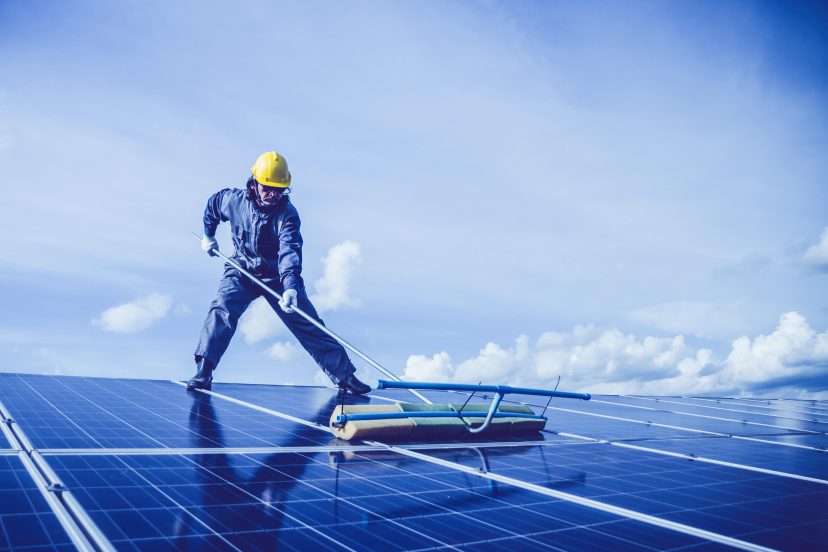
Solar panels work hard every day, quietly turning sunlight into usable energy while sitting through dust, pollen, bird droppings, leaves, salty air, and whatever else the weather feels like throwing at them.
So, yes, cleaning solar panels matters.
Not in a “panic every time you see one dusty corner” kind of way. More like cleaning your windshield before a long drive. The car still runs with a dirty windshield, but you see better, drive safer, and enjoy the trip more.
In this guide, you’ll learn when to clean your panels, what tools to use, what to avoid, and when it is smarter to call a professional. You’ll also get research-backed insight, practical maintenance tips, and a few product ideas for homeowners who want to keep their solar power system in good shape.
Affiliate disclosure: This article may mention products that could earn a commission if purchased through affiliate links, at no extra cost to you.
Why Cleaning Solar Panels Matters More Than You Think
Solar panels need sunlight the way plants need water. When grime sits on the glass, less sunlight reaches the photovoltaic cells underneath.
That buildup is called soiling, which is just a fancy solar-industry word for “your panels are dirty.” The U.S. Department of Energy explains that dirt accumulation can block sunlight and significantly reduce energy output.
The tricky part is that soiling does not look the same everywhere. A home near a dusty road, farm field, ocean breeze, construction zone, or tree canopy may need more attention than a clean suburban roof with regular rainfall.
What Actually Makes Solar Panels Dirty?
Solar panels collect more than ordinary dust. Depending on where you live, your panels may deal with:
- Pollen in spring
- Bird droppings
- Tree sap
- Leaves and small twigs
- Desert dust
- Salt spray near coastal areas
- Ash from wildfires or outdoor burning
- Pollution film in busy urban areas
Think of your panels like outdoor windows that never get a day off. Even when they look “mostly clean” from the ground, a thin layer can still soften the amount of sunlight reaching the surface.
What Dirt Does to Solar Panel Efficiency
A little dust may not ruin your solar panel efficiency overnight. However, heavier buildup can become a real drag on performance.
The International Energy Agency Photovoltaic Power Systems Programme reports that after irradiance, soiling is one of the most influential factors affecting PV system yield and estimates annual PV energy production losses of about 3–5% from soiling.
That may sound small, but over months and years, it adds up. If your solar energy system is meant to lower bills and produce steady power, even modest losses deserve attention.
How Frequently Should Solar Panels Be Cleaned?
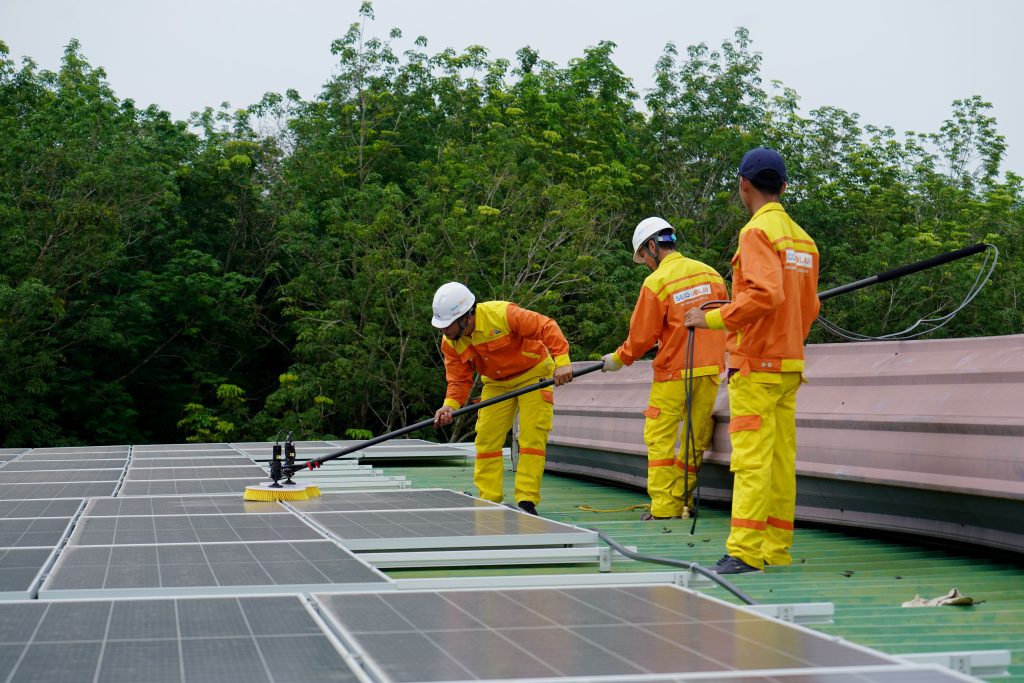
Most homeowners can start with a simple rule: inspect your panels a few times a year and clean them when buildup is visible or performance drops.
For many homes, cleaning once or twice a year is enough. However, you may need more frequent solar panel maintenance if you live near:
- Farms or dirt roads
- Heavy traffic
- Trees that drop pollen, leaves, or sap
- Coastal air with salt residue
- Dry climates with little rainfall
- Bird-heavy areas
Your monitoring app can help too. If your solar power production dips for no obvious reason, and the weather has been normal, dirty panels may be part of the story.
The Ideal Time to Clean Solar Panels
Early in the morning, late in the afternoon, or on an overcast, cool day are the ideal times to clean solar panels.
Why? Because hot glass and cold water are not best friends. Spraying cold water on very hot panels can create stress, and water may dry too quickly, leaving streaks behind.
Also, cleaning in strong sun is simply unpleasant. Nobody wants to wrestle a hose while slowly turning into toast.
Aim for a calm, cool time when the panels are not blazing hot. Your panels will thank you. Your skin will too.
Safety First: When Not to DIY
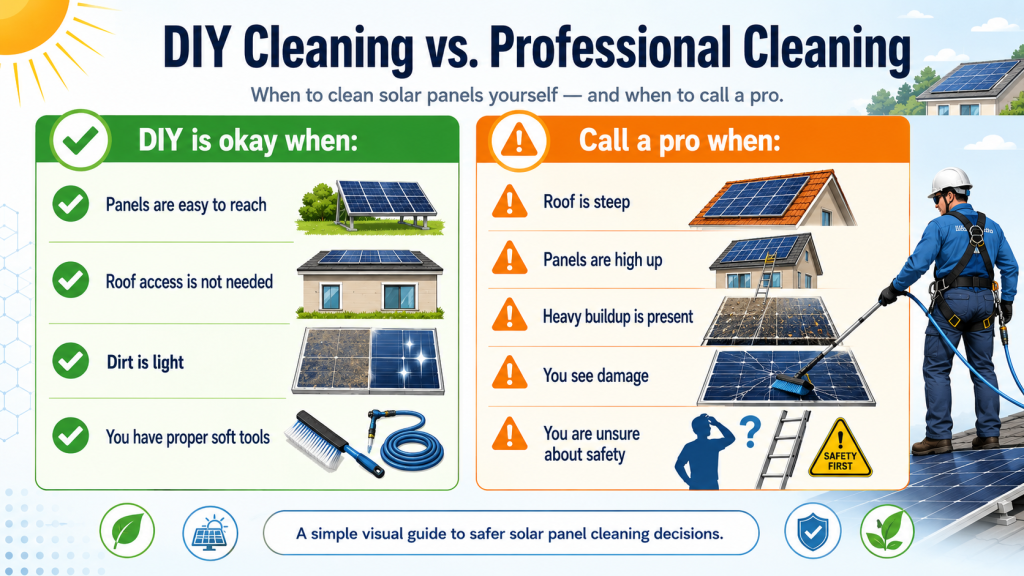
Here is the friendly but serious part: do not climb onto a steep or slippery roof just to clean your panels.
Saving a little money is not worth risking a fall. If your panels are hard to reach, mounted on a steep roof, or located near electrical components you do not understand, hire a professional.
You should also avoid DIY cleaning if:
- Your roof is wet, steep, or fragile
- You need a tall ladder to reach the panels
- You are uncomfortable working at height
- The system manual warns against homeowner cleaning
- You notice cracked glass, loose wiring, or damage
Solar panels are valuable. So are your knees, ribs, and general ability to walk around happily.
Essential Tools for Cleaning Solar Panels
You do not need a garage full of fancy gear. In most cases, simple and gentle tools work best.
Good tools include:
- A soft brush
- A microfiber cloth
- A garden hose with gentle spray
- A water-fed pole
- A squeegee made for glass
- A bucket with clean water
- Mild soap, if approved by the panel manufacturer
A solar panel cleaning kit can make the job easier because many include a telescopic pole, soft bristles, and hose attachments. The goal is to remove dirt without scratching the glass or stressing the system.
Step-by-Step Guide to Cleaning Solar Panels Safely
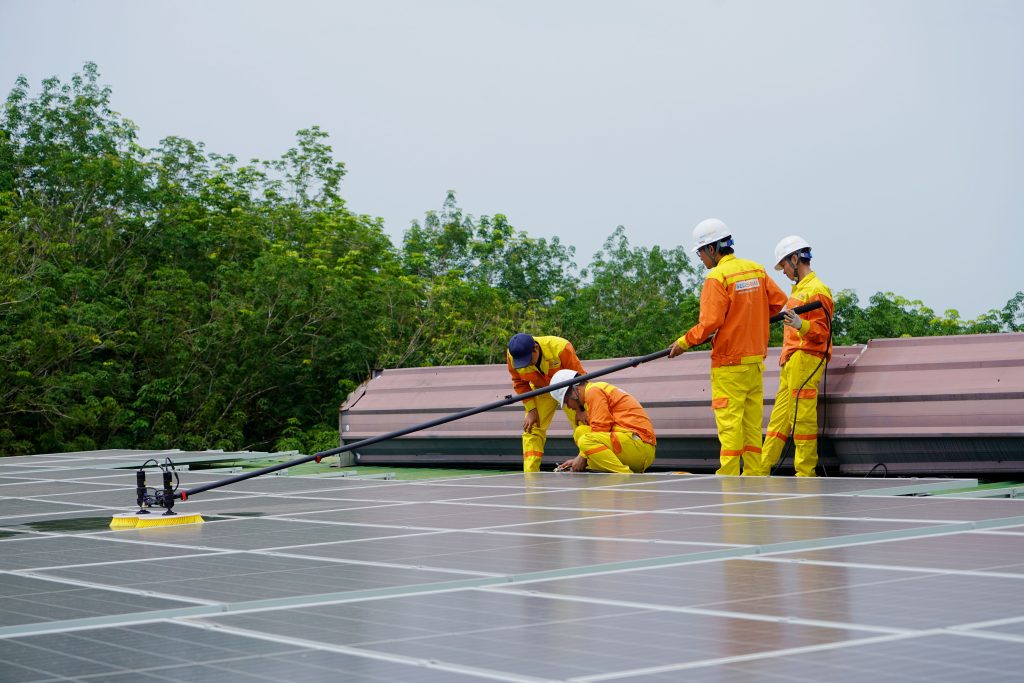
Start by reading your panel manufacturer’s care instructions. Warranties can be picky, and it is better to check first than regret later.
1. Turn off the system if recommended
Follow your installer or manufacturer’s shutdown instructions. Don’t guess if you’re not sure. Contact your solar provider.
2. Rinse with gentle water
Use a soft spray to loosen dirt. Avoid pressure washers because strong force can damage seals or push water where it does not belong.
3. Use a soft brush or microfiber head
Gently move across the panel surface. Do not scrub like you are cleaning a cast-iron pan after a camping trip.
4. Rinse again
Wash away loosened dirt and any mild soap residue.
5. Let panels air dry
A squeegee can help reduce streaks if you can reach safely from the ground.
What Not to Use on Solar Panels
Cleaning solar panels is mostly about restraint. Gentle wins.
Avoid:
- Pressure washers
- Abrasive pads
- Harsh chemicals
- Metal tools
- Strong detergents
- Scrapers
- Walking on panels
- Cleaning during extreme heat
Avoid spraying water directly at the wires or under the panel frame as well. Panels are built for outdoor conditions, but that does not mean they want a pressure-washer spa day.
Is Rain Enough to Clean Solar Panels?
Sometimes, yes. But not always.
Rain can rinse away loose dust, especially on tilted panels. However, it may not remove sticky pollen, bird droppings, salt film, or grime that has baked onto the surface.
Think of rain like a quick rinse on a dinner plate. Helpful? Definitely. The same as washing it properly? Not quite.
If you live in a rainy area with good panel tilt, you may clean less often. If you live somewhere dry, dusty, or bird-friendly, rain will probably need backup.
Research-Backed Reasons Clean Solar Panels Perform Better
Cleaning solar panels is not just about keeping them looking nice. Dust, pollen, bird droppings, and grime can block sunlight and reduce how much energy your panels produce.
The National Renewable Energy Laboratory explains how solar panel soiling can quietly reduce energy output, especially in areas with dust, pollen, or limited rain.
The International Energy Agency PVPS also reports that dirty photovoltaic panels can cause measurable energy losses, estimating annual PV production losses of about 3–5% from soiling.
For homeowners, the takeaway is simple: you do not need to clean panels constantly, but you should check them regularly and wash them when buildup is visible or energy output drops.
Products That Can Help With Solar Panel Cleaning
Below are five product examples that fit common solar panel cleaning needs. Always check your panel manufacturer’s cleaning guidelines before using any tool or solution.
1. 20FT Water Fed Solar Panel Cleaning Kit, Telescopic Solar Panel Cleaning Brush with Extension Pole & Soap Dispenser for Household & Outdoor
This kit includes a 5–20 ft water-fed extension pole, soft brush, soap dispenser, adjustable brush head, and pre-attached hose setup, making it useful for homeowners who want an all-in-one cleaning tool.
Features:
- Soft water-fed brush
- Telescopic aluminum pole
- Soap dispenser
- Adjustable brush head
Best for: Homeowners cleaning low or moderately reachable rooftop panels, RV panels, windows, and outdoor glass.
2. Briliantwerk Solar Panel Cleaning Brush with 20 ft Extension Pole
This brush appears in Amazon’s related product listings as a water-fed pole brush with a soap dispenser for solar panels, windows, and siding.
Features:
- 20 ft extension pole
- Water-fed design
- Soap dispenser
- Soft brush head
Best for: DIY users who want a simple brush-and-pole setup for occasional cleaning.
3. Electric Solar Panel Cleaning Kit, 20FT Solar Panel Cleaning Brush and Pole with Soap Dispenser
This electric cleaning kit is listed with a telescopic water-fed pole, soap dispenser, and solar panel cleaner solution for windows, roofs, RVs, and solar panels.
Features:
- Electric brush design
- 20 ft telescopic pole
- Soap dispenser
- Water-fed cleaning
Best for: Homeowners dealing with stubborn dust, bird droppings, or larger panel surfaces.
4. LyriFine Electric Solar Panel Cleaning Brush and Pole Kit, 20Ft Extendable Washing Kit
The LyriFine kit is listed with a 20 ft extendable pole, water-fed design, two-speed cleaning, and soap dispenser for solar panels, windows, roofs, and RVs.
Features:
- Electric two-speed brush
- Extendable pole
- Soap dispenser
- Outdoor window and solar use
Best for: Users who want extra cleaning power without using harsh scrubbing.
5. EQUIPMAXX 24 Feet Reach Solar Panel Cleaning Brush & Pole Kit
This EQUIPMAXX kit uses a water-fed pole, lightweight aluminum construction, 7–24 ft reach, and an adjustable double gooseneck for difficult angles.
Features:
- 24 ft reach
- Lightweight aluminum pole
- Brush and squeegee setup
- Adjustable gooseneck
Best for: Taller homes, larger arrays, or users who want extra reach from the ground.
Cleaning Solar Panels by Roof, Climate, and Location
Your cleaning routine should match your environment.
In dry desert areas, dust may build up quickly. In coastal areas, salt can leave a film. In leafy neighborhoods, pollen and sap may be the main problem. Near farms, airborne dust from planting and harvesting can settle on panels.
Roof angle matters too. Steeper panels often shed dirt more easily during rain. Flat or low-angle panels may hold dust, water spots, and debris longer.
So instead of asking, “How often does everyone clean their panels?” ask, “What are my panels exposed to?”
That small shift makes your maintenance plan much smarter.
Maintenance Habits That Keep Solar Power Working Better
Cleaning is only one piece of solar panel maintenance.
Build a simple habit around your system:
- Check your solar app monthly
- Look for sudden production drops
- Visually inspect panels after storms
- Trim branches that shade panels
- Keep gutters clear near roof-mounted systems
- Schedule professional inspections when needed
- Save your installer’s contact information
If you are still exploring solar upgrades, you may also want to compare traditional panels with solar roof shingles so you understand how different solar designs affect appearance, installation, and long-term care.
It makes a big difference to raise awareness. You do not have to obsess over every speck of dust. Just stay tuned in.
FAQs About Cleaning Solar Panels
How do I know if my solar panels need cleaning?
Check for visible dirt, bird droppings, pollen, leaves, or a noticeable drop in energy production. If your monitoring app shows lower output during normal sunny weather, dirty panels may be one cause.
Is it possible to clean solar panels using tap water?
Yes, in many cases, you can use tap water with a gentle hose spray. However, hard water may leave mineral spots. If spotting is a problem, consider filtered or deionized water.
Is soap safe for cleaning solar panels?
Mild soap may be safe if your manufacturer allows it. Avoid harsh detergents, ammonia, bleach, and abrasive cleaners. Use plain water first when unsure.
Can I clean solar panels with a pressure washer?
No. A pressure washer can damage seals, wiring, frames, or the panel surface. Use gentle water pressure and soft cleaning tools instead.
Is hiring a pro to clean your solar panels worth it?
Professional cleaning is worth it when panels are hard to reach, installed on a steep roof, heavily soiled, or part of a larger system. It is also the safer choice if you are uncomfortable with ladders or roof work.
Conclusion
Cleaning solar panels does not have to be complicated. Keep it gentle, stay safe, watch your system’s performance, and clean when dirt or output drops tell you it is time.
Your solar panels are already doing something pretty wonderful: turning sunlight into energy for your home. With a little care, they can keep working efficiently for years.
Start simple. Inspect regularly. Use soft tools. Avoid risky roof adventures. And when the job feels beyond your comfort zone, call a professional. That is not giving up. That is being smart.