5 Solar Battery Storage Systems to Power Your Home
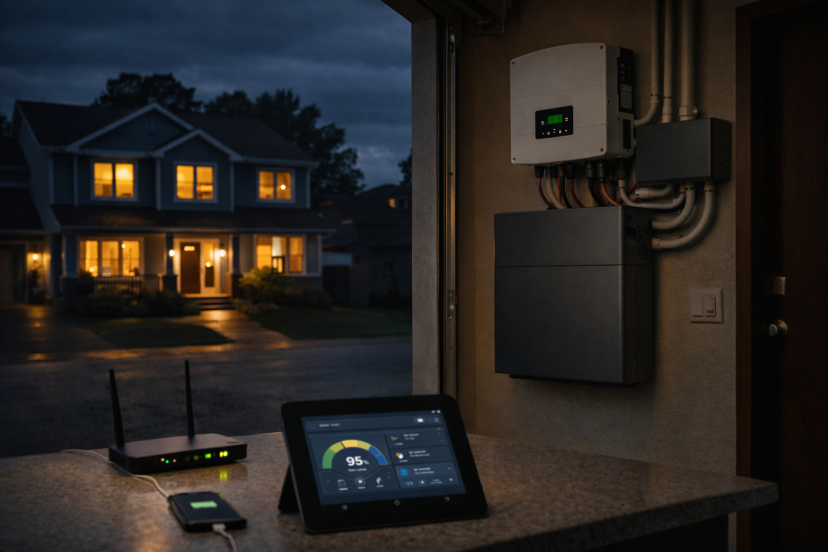
You know that moment when the power flickers… and your brain instantly starts doing math?
“Okay—fridge, Wi-Fi, a fan… maybe one light… please don’t let the freezer thaw.”
That’s the exact kind of real-life stress Solar Battery Storage is meant to shrink. Because solar panels are amazing—until the sun goes down, clouds roll in, or the grid decides to take a nap. A battery is basically your home’s “save button.” It stores extra solar energy so you can use it later, when you actually need it.
In this guide, I’ll walk you through what solar battery storage is, how to size it, what it costs, what to avoid, and how to choose a setup that fits your life (not your neighbor’s life, not a YouTuber’s cabin in the woods). And yes—this will be friendly and practical, not a textbook.
Solar battery storage, explained like you’re texting a friend
Think of your solar panels like a faucet. In the middle of the day, it’s pouring. But your home doesn’t always “drink” all that water right then.
A solar battery storage system is your big clean container that catches what you don’t use immediately—so you can “drink” it later at night, during peak utility rates, or when the grid goes down.
What it does (in plain terms)
- Stores surplus solar energy (or grid energy if you choose)
- Supplies power when solar isn’t producing
- Smooths your usage so you rely less on the grid
Why solar battery storage feels like peace of mind (not just a gadget)
Let’s be honest: most people don’t buy batteries because they love specs. They buy them because they want:
- their fridge to keep running during outages,
- their kids’ tablets to stay charged during storms,
- their home office to not crash mid-call,
- or their electric bill to stop surprising them.
And there’s something quietly powerful about knowing your home has a little independence.
The two big jobs batteries do for homeowners
Backup power (the “keep things alive” job)
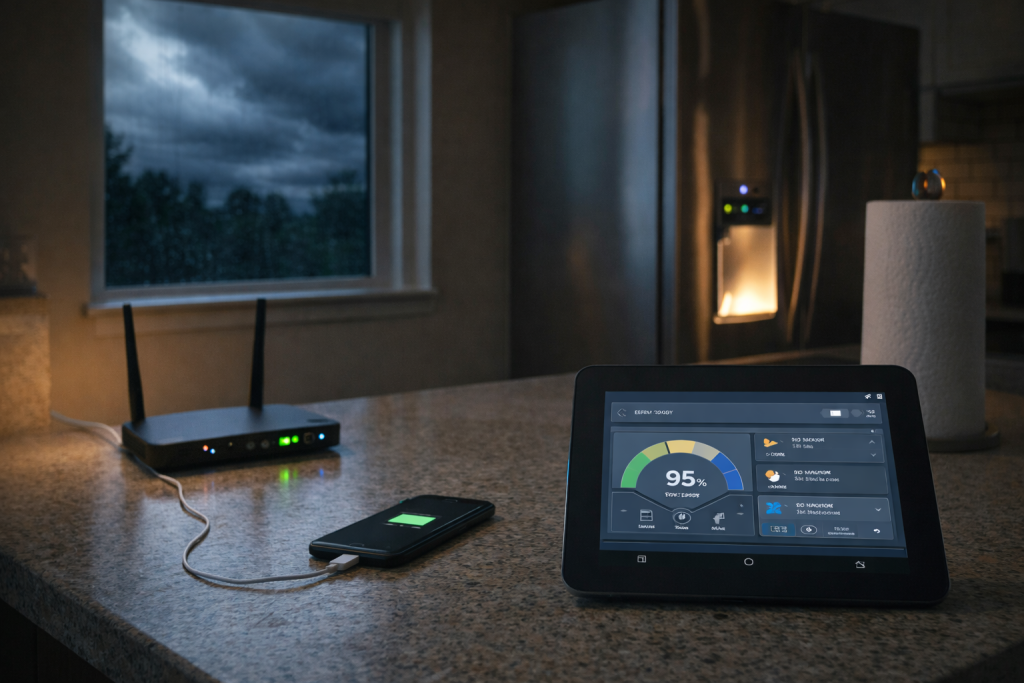
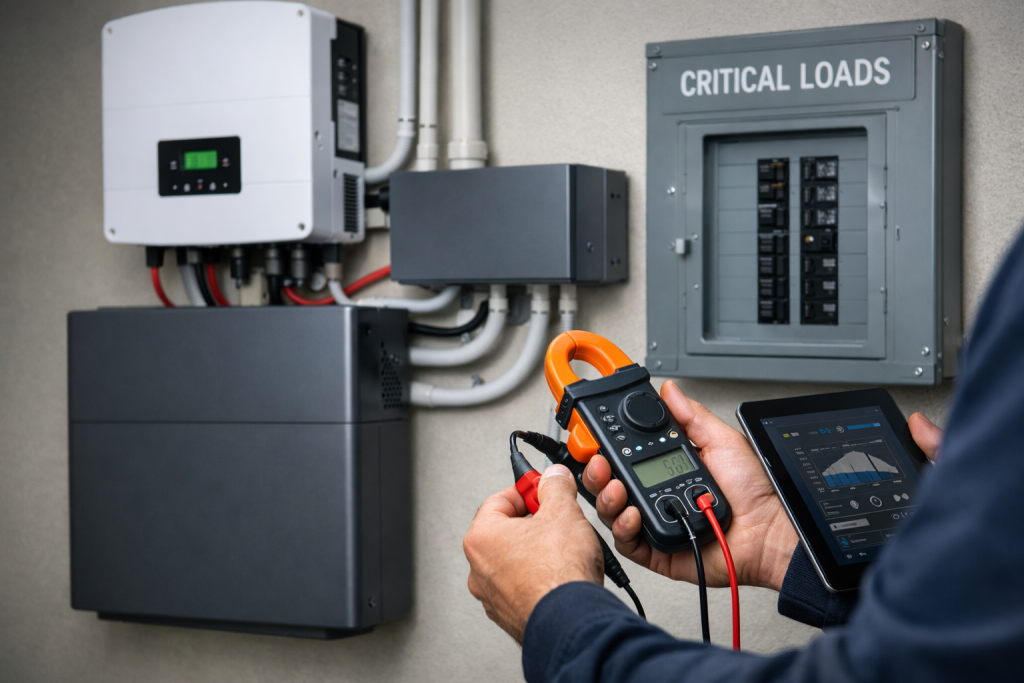
A battery can keep essentials running when the grid is out—especially if you plan it like a “critical loads” setup (fridge, lights, router, fans, maybe a small AC depending on size).
Bill savings (the “buy low, use smart” job)
If your utility has time-of-use (TOU) rates—expensive evenings, cheaper overnight—you can charge strategically and use stored power when rates spike.
Solar battery storage types: what you’ll actually see in the market
Lithium-ion (especially LiFePO4)
This is the common choice for modern home energy storage: good energy density, long cycle life, and strong performance. NREL notes that LFP (LiFePO4) has become a primary chemistry for stationary storage in recent years.
Lead-acid (AGM or flooded)
Lower upfront cost, but heavier, shorter lifespan, and you typically can’t use as much of the capacity without reducing lifespan. Still useful in some budget or specific off-grid setups.
Key terms you need (without the headache)
kW vs kWh (this one matters)
- kW = power (how much you can run at once)
- kWh = energy (how long you can run it)
A simple analogy:
kW is the size of the pipe, kWh is the size of the tank.
Depth of discharge (DoD)
How much of the battery you can use. Many lithium batteries allow high DoD, which is great because you’re actually using what you paid for.
Cycle life
How many charge/discharge cycles before capacity meaningfully drops. Higher cycle life = longer real-world value.
How to size solar battery storage without overbuying
Here’s the cleanest way to think about sizing:
Step 1: Decide what you want to power
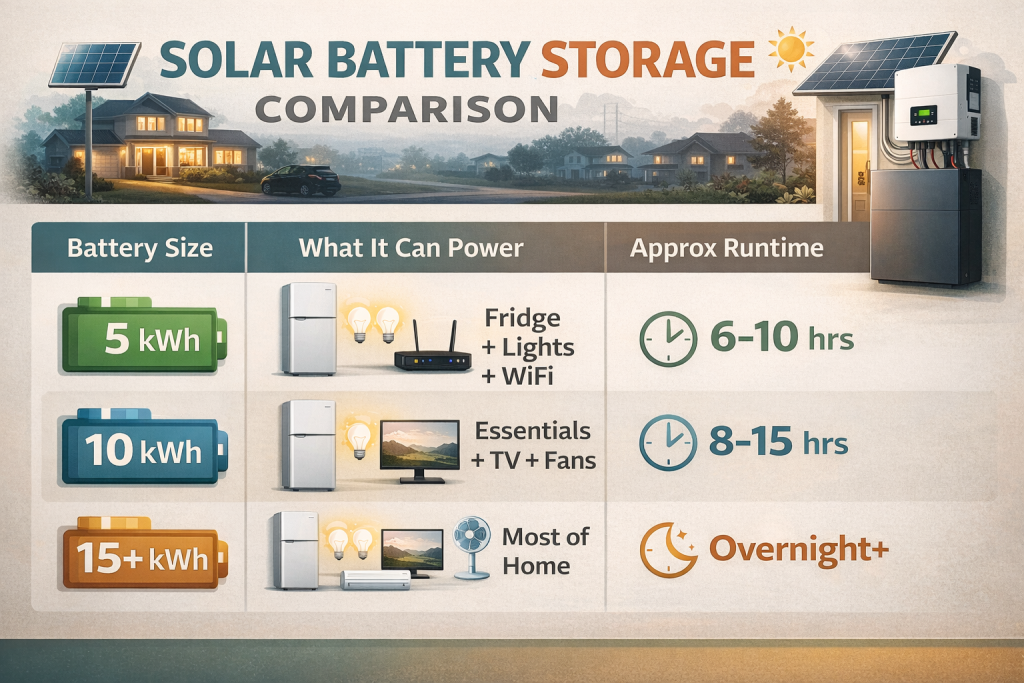
- Essentials only (fridge, lights, router, fans)
- Comfort backup (add TV, more lights, maybe a small AC)
- Whole-home feel (bigger loads, longer runtime)
Step 2: Estimate your “must-run” hours
Are you trying to cover:
- short outages (1–4 hours)?
- overnight (8–12 hours)?
- multi-day resilience?
Step 3: Translate that into battery capacity (kWh)
If your essentials average 500 watts and you want 10 hours:
0.5 kW × 10 h = 5 kWh
That’s the “napkin math” that gets you surprisingly close.
Don’t guess your solar production—get a realistic number
Sizing storage is way easier when you understand what your panels can realistically produce based on system size.
That’s why, in the Research-Backed section below, I’m including a helpful internal guide that breaks down how much energy a solar panel produces by size (so your battery plan matches reality, not optimism).
Solar battery storage costs: what’s normal (and why it varies)
Battery pricing swings based on capacity, brand, installation complexity, and incentives.
EnergySage estimates a typical solar battery setup can cost $15,228 before incentives for about 13.5 kWh of storage (Powerwall-sized).
EnergySage also reports an average battery cost of $1,128 per kWh (their 2026 guide).
And on the bigger market side, Reuters reported global battery storage demand surged 43% in 2025, with costs falling dramatically over time.
Translation: batteries are getting more popular and more affordable—but your best choice still depends on your goals.
Incentives and tax credits: the “don’t leave money on the table” section
In the U.S., certain battery storage installs may qualify for the Residential Clean Energy Credit (rules depend on your setup and current policy). Some product listings even flag that a tax credit “could be applied,” which is your cue to double-check eligibility with a qualified tax pro or installer.
Solar-plus-storage vs off-grid: be honest about your lifestyle
Solar-plus-storage (grid-tied)
This is the sweet spot for most homes:
- You stay connected to the grid
- You store solar for later
- You get backup power and bill flexibility
Off-grid
Possible, yes. Easy, not always.
You usually need:
- more battery capacity than you think,
- more solar than you planned,
- and a very realistic relationship with cloudy weeks.
If you want “off-grid vibes” but still love reliability, a hybrid approach is often the best emotional and financial compromise.
Where batteries shine most: outages, TOU rates, and solar self-use
Batteries are especially worth looking at if:
- your area has frequent outages,
- you have TOU pricing (expensive evenings),
- you want to use more of your own solar instead of exporting it,
- you work from home and can’t afford downtime.
Basically: if power interruptions are more than a mild inconvenience for you, storage starts to feel less like a luxury and more like a plan.
Installation choices that make or break your experience
Whole-home vs critical loads panel
- Whole-home: higher cost, higher coverage
- Critical loads: cheaper, targeted, often “enough”
AC-coupled vs DC-coupled (quick version)
- AC-coupled: easier for retrofits
- DC-coupled: often efficient for new installs
Your installer will guide this, but it helps to know the words so you can ask good questions.
Common mistakes (so you don’t become the cautionary tale)
- Buying for “maximum” instead of “needed”
Bigger isn’t always better if it strains your budget and doesn’t match your usage. - Ignoring surge loads
Fridges and pumps can spike on startup. - Not planning for expansion
If you might add EV charging or more appliances later, choose expandable options. - Assuming one battery equals “whole-home”
Not always. Your loads decide that.
Product Section: 5 solar battery storage picks with clear use cases
Affiliate disclaimer: As an Amazon Associate, I may earn from qualifying purchases at no extra cost to you.
1) EF ECOFLOW DELTA Pro 3600Wh Portable Power Station
Short description: A heavy-duty, high-capacity power station designed for serious home backup and high-watt devices.
Features: 3600Wh capacity, expandable ecosystem, fast charging options, multi-port output flexibility.
Use cases (who it’s for):
- Homeowners who want a robust backup plan for outages
- People running higher-watt essentials (fridge + lights + router + more)
- Anyone who values expandability over “one-and-done” systems
2) Anker SOLIX F2000 / PowerHouse 767
Short description: A premium portable power station aimed at dependable backup power with long-life battery chemistry.
Features: LiFePO4-based long-life design, multiple outlets, designed for long service life claims, home outage coverage.
Use cases (who it’s for):
- Families who want reliable backup for essentials + device charging
- Work-from-home setups that can’t lose power mid-day
- People who want a “high-quality appliance” feel in their backup gear
3) Jackery Explorer 2000 Plus (Solar Generator / Expandable Series)
Short description: A popular expandable power station line that’s easy to understand and easy to use.
Features: Expandable capacity approach, strong output for common household needs, designed for home backup + outdoor flexibility.
Use cases (who it’s for):
- First-time buyers who want something straightforward
- Households that want backup now but may expand later
- RV/camping users who also want home outage protection
4) BLUETTI AC200MAX Expandable Power Station
Short description: An expandable power station that can grow with you (especially if you later add expansion batteries).
Features: Expandable design, multiple ports, designed for home backup/off-grid versatility; public listing shows strong customer reviews.
Use cases (who it’s for):
- People who want modular growth (start now, add later)
- Backup power for essentials with flexibility for bigger plans
- DIY-minded users who like scalable systems
5) LiTime 12V 200Ah LiFePO4 Battery (Deep Cycle)
Short description: A building-block battery for DIY solar battery storage (paired with an inverter/charger and proper protection).
Features: Deep-cycle LiFePO4 format, designed for RV/off-grid/home storage builds; 12V 200Ah class is common for modular banks.
Use cases (who it’s for):
- DIY solar-plus-storage builders who want scalable battery banks
- RV/off-grid setups that already use 12V systems
- People comfortable pairing batteries with the right inverter, fuses, and monitoring
Research-backed: what credible sources say about solar battery storage (and what it means for you)
NREL’s cost/performance work highlights that stationary storage has increasingly shifted toward LiFePO4 (LFP) chemistry—often favored for safety, longevity, and supply-chain momentum in stationary use. That matters because it supports the idea that “long-life home storage” isn’t a niche concept anymore—it’s the direction the industry has been moving.
Research insight #2: Real-world home battery pricing signals (EnergySage)
EnergySage’s marketplace data gives practical price benchmarks homeowners actually see—like average cost per stored kWh—plus a reality check on when batteries are “worth it” (hint: outages + TOU rates often push the value up).
Bonus “make sizing easier” resource
If you’re still unsure how much your panels can generate (so you can match storage to production), this is the missing puzzle piece:
FAQs
How much solar battery storage do I need for a typical home?
Most homes start with “essentials backup” first. A common planning target is enough kWh to cover your fridge, lights, Wi-Fi, fans, and device charging overnight—then scale up if you want longer runtime or larger loads.
Is solar battery storage worth it if my area rarely loses power?
It can be—especially if you have time-of-use electricity rates. If your utility charges more in the evening, storage can help you rely less on pricey peak power. If your rates are flat and outages are rare, the value is more about comfort and independence.
Can I run air conditioning on a solar battery?
Yes, but it depends on the AC size and your battery’s kW (power) and kWh (energy). AC is a big load, and startup surges matter. Many people choose partial cooling (like one room) instead of whole-home cooling.
What’s better for solar battery storage: LiFePO4 or lithium-ion?
LiFePO4 is a type of lithium battery chemistry that’s commonly chosen for stationary storage because it’s known for strong cycle life and stability. The right option still comes down to your budget, available space, and what you want your backup system to handle.
Do solar batteries provide power during a blackout?
They can—if your system is designed for it. Some grid-tied solar setups shut down during outages unless you have a battery system (and the right transfer equipment) to safely “island” your home from the grid.
Conclusion
If you’ve made it this far, here’s the simple truth: Solar Battery Storage isn’t just about energy. It’s about relief. It’s about your home feeling steady when the grid isn’t.
Start with what you actually want—quiet backup for essentials, lower bills, more solar self-use, or all three. Size it based on your real life (not fantasy loads). Pick a system that fits your budget now and can grow later if that’s your style.
And when you’re ready? Your next power flicker won’t trigger panic-math. It’ll be… a non-event. And that’s kind of the dream.