Ground Mount Solar Panels: Practical Guide for Homeowners
If your roof is shaded, awkwardly shaped, aging, or simply too small for the solar array you want, the yard may be the better place to look. Ground mount solar panels give you far more control over orientation, tilt, access, and future expansion, but they also introduce questions about land use, foundations, trenching, permits, and cost.
The right choice depends less on whether ground mounting is “better” and more on whether your property can support it sensibly. This guide explains how ground-mounted systems work, when they beat rooftop solar, what installation details matter most, which products suit smaller projects, and what research says about layout, tracking, and structural safety.
What Ground Mount Solar Panels Are and How They Work
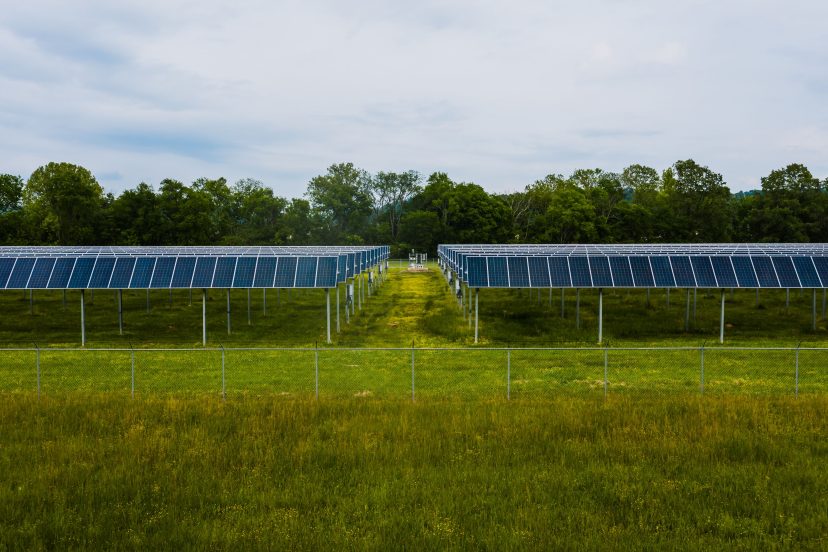
Ground mount solar panels place photovoltaic modules on a freestanding rack instead of a roof. Panels produce DC electricity, an inverter converts it for household or grid use, and optional batteries store energy.
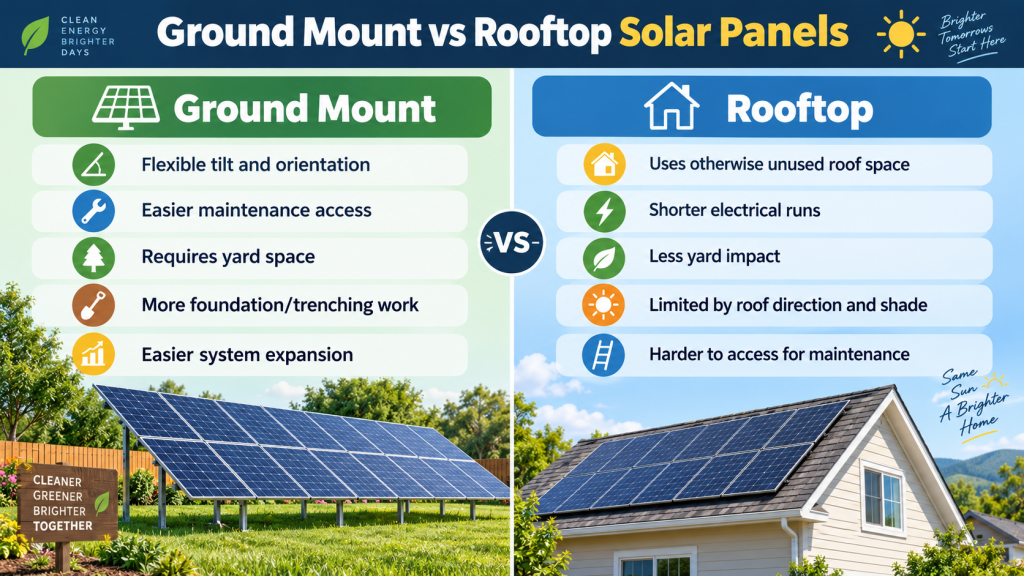
The main advantage is structural freedom. Designers can usually choose a better direction, tilt, row spacing, and service height, which helps when roof space or roof orientation is limiting. Ground access can also simplify inspection and vegetation control.
When Ground Mount Solar Panels Make More Sense Than Rooftop
Consider a ground array when your roof has heavy shade, poor orientation, little usable area, or a short remaining service life. It also suits owners who want more capacity than the roof can hold.
Open land still competes with gardens, septic fields, drainage, parking, and future buildings. If you are still comparing locations, map those trade-offs before committing valuable yard space to the array.
The Main Types of Ground-Mount Racking
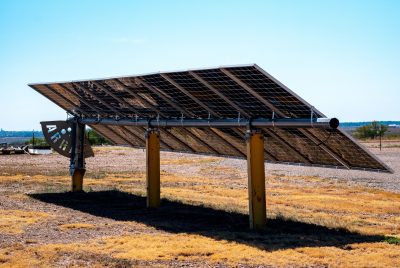
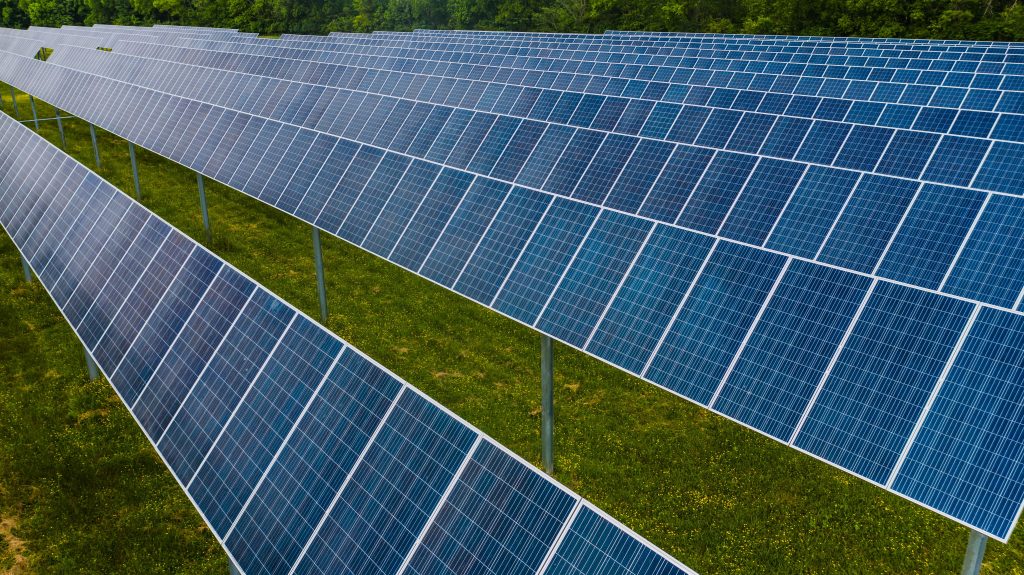
Most residential systems use fixed-tilt racks supported by posts, ground screws, piles, concrete footings, or another engineered foundation. With no motors, they are relatively simple to maintain.
Pole mounts add clearance for snow or uneven ground. Solar trackers move with the sun, but they require extra space, control systems, and ongoing maintenance. For many homes, a properly sited fixed rack is simpler.
How Much Space and Sunlight You Really Need
Start with sunlight, not panel count. Study how trees, buildings, fences, poles, and terrain cast seasonal shadows. A sunny summer noon can hide a poor winter layout.
Leave enough row spacing to limit self-shading and working room for maintenance. Before ordering hardware, confirm setbacks, easements, buried utilities, drainage, and future land plans.
Choosing the Best Tilt and Orientation
Ground mounting gives you freedom, but no angle is perfect everywhere. In the Northern Hemisphere, south-facing fixed arrays are a common starting point, while latitude offers a rough tilt reference. Snow, shade, and terrain may change the best choice.
Use production modeling instead of one rule. SolarFlez’s guide to finding the best solar panel angle explains how tilt and azimuth work together, while NLR’s PVWatts Calculator can compare tilt, azimuth, array type, shading, and losses. When outputs are similar, let safety, cost, trenching, and maintenance decide.
Foundations, Soil, Drainage, and Wind Loads
Soil, frost depth, slope, drainage, erosion, groundwater, wind, and snow loads all affect the foundation. A rack that works on firm soil may be unsuitable for loose fill or a flood-prone yard.
Do not guess foundation depth. Permanent arrays should follow the rack manufacturer’s engineering documents and local structural requirements. Direct water away from posts and trenches so erosion or standing water does not undermine the site.
Wiring, Trenching, Grounding, and Electrical Safety
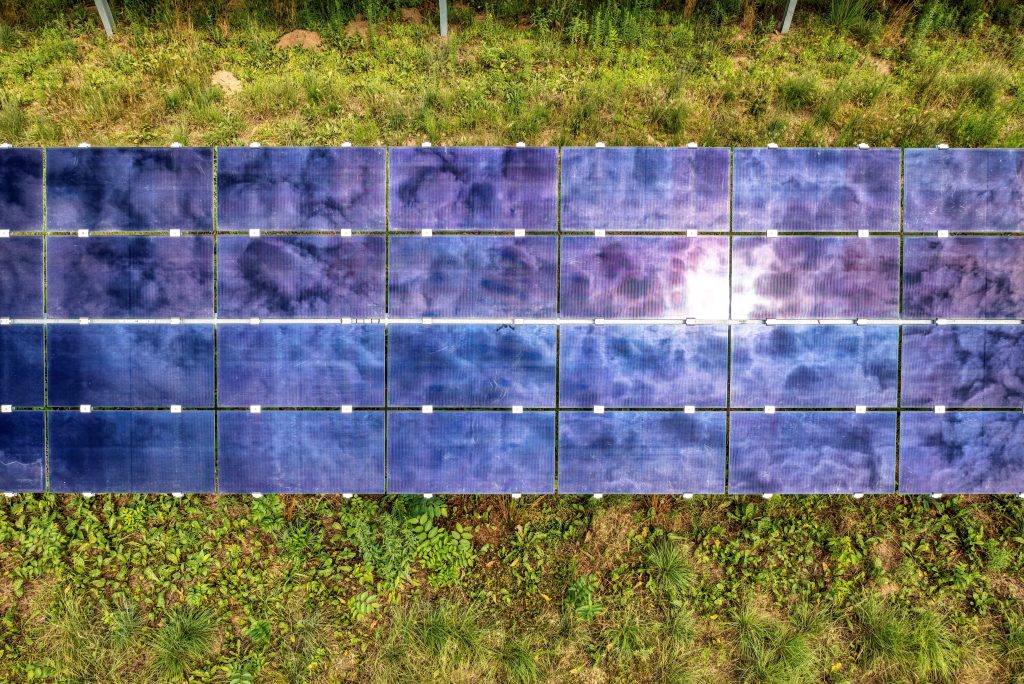
Because a ground array may sit far from the service panel, cable routing matters. Longer runs can mean larger conductors, more conduit, extra trenching, and closer voltage-drop planning.
Proper grounding and secure bonding are equally important. Frames, rails, lugs, disconnects, overcurrent protection, and inverter requirements must work together. For grid-connected residential work, use qualified professionals where required and follow local electrical codes, utility rules, and equipment instructions.
Permits, Setbacks, and Utility Interconnection
Ground mount solar panels may trigger setbacks, height limits, screening rules, floodplain restrictions, zoning requirements, or accessory-structure rules that differ from rooftop solar.
Grid-tied systems also need electrical permits, inspection, and utility interconnection. Check before buying equipment; a sunny corner is useless if it sits inside an easement or setback. The U.S. Department of Energy identifies permitting, inspection, and interconnection among the non-hardware considerations that can affect solar project timelines and costs.
Cost Factors and Where Ground Mounts Add Expense
Ground mount solar panels often add costs for racking, footings, trenching, conduit, longer wire runs, grading, drainage, fencing, or vegetation control.
Still, rooftop solar is not automatically the better value. A ground array may avoid shade or improve orientation. Compare modeled annual production, total installed cost, warranties, and maintenance access—not just rack price.
Maintenance, Vegetation, Snow, and Long-Term Access
Easy access is a real advantage of ground mount solar panels. You can inspect wiring, trim vegetation, and clean modules without climbing onto a roof.
However, ground-level systems need vegetation control, cable protection, drainage, and room for snow to slide or pile. Mowers, animals, and vehicles can become hazards. Plan a maintenance lane, protect exposed wiring, and consider barriers where regular traffic could reach the array.
Recommended Products for Ground Mount Solar Panels
These recommendations are best suited to small DIY, cabin, shed, portable, or off-grid projects. A full residential grid-tied array normally needs site-specific structural design, code-compliant electrical work, and racking approved for the exact modules and local loads.
| Product | Best fit |
| ECO-WORTHY Ground Mount | Multi-panel rack |
| BougeRV 28in Tilt Mount | Adjustable small array |
| Renogy 200W N-Type Panel | Compact off-grid power |
| Renogy 200W Kit | Beginner 12V system |
| Solar Angle Guide | Manual alignment |
ECO-WORTHY Upgraded Solar Ground Mount Adjustable Multi-Pieces Solar Panel Mounting Brackets Kit System for 4pcs 200W/3pcs 300W/2pcs 400W Solar Panels for Ground,Open Space, Cabins and Backyard Sheds
Best for: Expandable small backyard or cabin arrays
This galvanized-steel rack supports several small multi-panel configurations and is intended for ground or open-space use. It gives DIY users one integrated frame instead of piecing together separate tilt legs. Its practical limitation is structural: anchoring, soil conditions, wind loads, and local code still need to be checked for the actual site.
BougeRV 28in Adjustable Solar Panel Tilt Mount Brackets with Foldable Legs | Solar Panels Mounting Support up to 100W 150W 200W for Roof, RV, Boat, and Off-Grid
Best for: One- or two-panel adjustable off-grid setups
The 28-inch foldable tilt legs let users change panel angle on a suitable mounting surface, which can suit seasonal cabins or experimental arrays. However, the manufacturer currently lists the bracket for panels up to 28 inches wide and rates its own rigid-panel compatibility more narrowly, so measure the exact module first. It is not a complete residential ground-mount structure.
Renogy Solar Panels 200 Watt, N-Type Solar Panel 25% High-Efficiency 16BB | 200W Solar Panel for 12V/24V Battery Systems, IP67 PV Module for RV Marine Rooftop Farm Trailer Cabin Home Off-Grid
Best for: Compact fixed-panel off-grid systems
This 200W rigid module uses N-type 16BB cells and is listed for 12V or 24V battery-system applications. It suits a small rack where space is limited. Remember that it is only the module; a complete system still requires compatible racking, charge control or inverter equipment, wiring, protection, and structural support.
Renogy 200W 12V Monocrystalline Solar Panel Kit + 30A PWM Charge Controller
Best for: Beginners building a small 12V solar system
This kit combines two 100W panels with a 30A PWM charge controller and basic cabling, reducing the number of components a beginner must source separately. It can be a practical starting package for sheds, cabins, and similar loads. The supplied mounting hardware is not a permanent ground foundation, so the rack and anchoring still need separate planning.
Solar Angle Guide for Portable Solar Panels, Solar Panel Tilt Finder Tool
Best for: Quick manual alignment of portable or adjustable panels
This clip-on guide uses a shadow indicator to help point a panel more directly at the sun at that moment. It is simple and useful when you regularly reposition a portable or accessible array. However, it does not calculate the best fixed annual tilt for permanent ground mount solar panels, so use production modeling for long-term layout decisions.
Research-Backed Guidance for Ground-Mounted Solar
The U.S. Department of Energy’s Solar Photovoltaic System Design Basics guidance says mounting structures should remain stable and durable while withstanding wind, rain, hail, and corrosion over decades. It also notes that ground-mounted arrays can use tracking, although tracking adds upfront cost and maintenance.
The National Laboratory of the Rockies’ PVWatts Calculator lets homeowners compare tilt, azimuth, array type, system losses, shading, ground coverage, albedo, and bifacial settings rather than relying on one “perfect angle.” Its results are estimates, so use them for planning rather than as a substitute for detailed engineering.
The Fall 2024 Solar Industry Update reported that 92% of U.S. ground-mounted photovoltaic systems installed in 2023 used single-axis tracking. That figure largely reflects the utility market, however, so homeowners should not interpret it as evidence that every residential system needs a tracker.
UL Solutions’ PV Mounting Systems Certification guidance explains that UL 2703 covers photovoltaic mounting systems, clamps, retention devices, and ground lugs, including ground-mounted applications. That is a useful reminder that racking and bonding components function as part of an evaluated system rather than as unrelated pieces of hardware.
Common Mistakes to Avoid Before Installation
Most costly mistakes happen before installation: choosing a site after one shade check, ignoring buried utilities, buying racking before confirming module dimensions, underestimating trench length, or assuming one footing suits every soil.
Also consider future trees, buildings, fences, and vehicle routes. Ground mount solar panels are long-term infrastructure, so design around how the property may change, not only how the yard looks now. A slightly lower-yielding layout can be wiser if it improves drainage, access, or electrical routing.
Ground Mount Solar Panels FAQs
Are ground mount solar panels more efficient than rooftop panels?
Not automatically. The modules themselves do not become more efficient simply because they sit on the ground. However, a ground array can often be positioned at a better tilt and orientation, avoid roof shade, and allow more airflow. Those advantages may increase annual energy production compared with a poorly oriented or shaded roof system.
What is the recommended distance between ground-mounted solar panels and a house?
There is no universal maximum distance that makes sense for every property. As distance increases, trenching, conduit, conductor size, voltage drop, and labor can become more important. A designer should balance the sunniest location against the electrical route and total project cost instead of placing the array as far away as the property allows.
Do ground mount solar panels need concrete foundations?
Not always. Depending on the racking system and site engineering, foundations may use concrete piers, driven posts, helical or ground screws, ballasted supports, or another approved method. Soil, frost, wind, slope, and drainage matter. Follow the racking manufacturer’s engineering documentation and local requirements rather than choosing a foundation solely because it is easiest to build.
Can I install ground mount solar panels myself?
Small off-grid systems can be approachable for experienced DIYers, especially when the rack is designed for consumer assembly. A grid-connected residential array is different because structural loads, trenching, grounding, overcurrent protection, disconnects, permits, and utility interconnection all come into play. Many homeowners can handle planning or mechanical work while leaving electrical and code-critical tasks to qualified professionals.
Is the added cost of ground-mounted solar panels worth it?
They can be when the roof is shaded, undersized, poorly oriented, or nearing replacement, or when you want more capacity and easier access. They are less attractive when yard space is valuable or trenching and foundation work are difficult. Compare total installed cost with modeled annual production, not just panel wattage or the price of the rack.
Final Recommendation: Are Ground Mount Solar Panels Right for You?
Ground mount solar panels make the strongest case when you have open, unshaded land and a roof that limits solar production, capacity, or maintenance access. Before buying hardware, compare annual production, site work, setbacks, trench length, soil conditions, wind and snow loads, and the value of the land you will give up.
For a small cabin or experimental array, the ECO-WORTHY ground rack can simplify the frame, while the Renogy 200W kit gives beginners a manageable electrical starting point. For a full home system, prioritize engineered racking, code-compliant wiring, and a site model over any single product. Choose ground mounting when the extra site work buys you meaningfully better solar access, capacity, or long-term serviceability.