Apartment Solar Panels: What Are Your Options
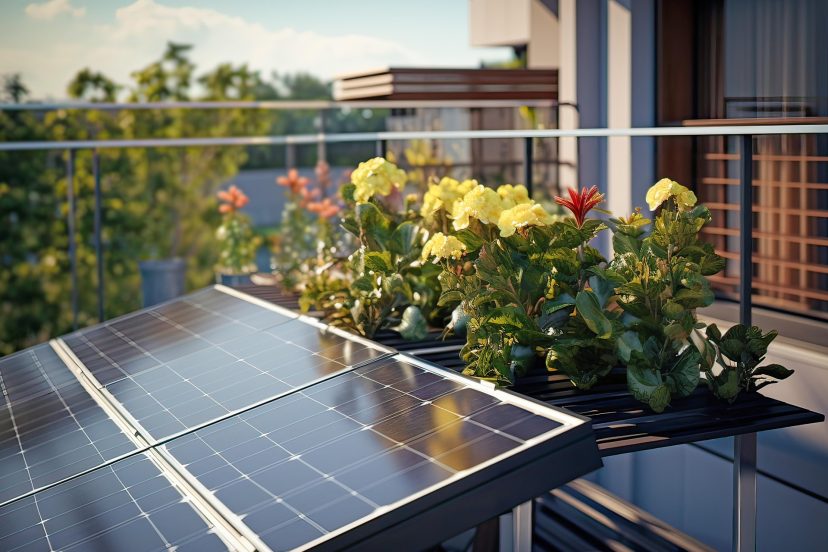
Living in an apartment can make solar power feel out of reach. Perhaps you have a sunny balcony but no roof access, or your lease prohibits permanent changes.
There are alternatives. Apartment Solar Panels range from small portable chargers to balcony systems, and some renters can receive solar electricity bill credits without installing anything. Each choice serves a different goal: charging devices, providing limited backup power, reducing utility costs, or supporting renewable generation.
Before spending money, you need to understand what your building allows, how much sunlight reaches your space, and which equipment actually works together. This guide compares the practical options, explains their limitations, and helps you choose a setup that makes sense for apartment living.
Can You Use Solar Panels in an Apartment?
Yes, but renters rarely control the roof, exterior walls, or building wiring. Even balconies can be subject to appearance and safety rules imposed by landlords or condominium associations.
Portable panels generate direct-current electricity for compatible devices or battery systems without changing fixed wiring. They are different from equipment that feeds power into household circuits.
Before shopping, answer three questions: Do you have usable outdoor sunshine? Is the electricity account registered under your name? Can you obtain approval for installation? Those answers usually narrow the choices more effectively than a panel’s advertised wattage.
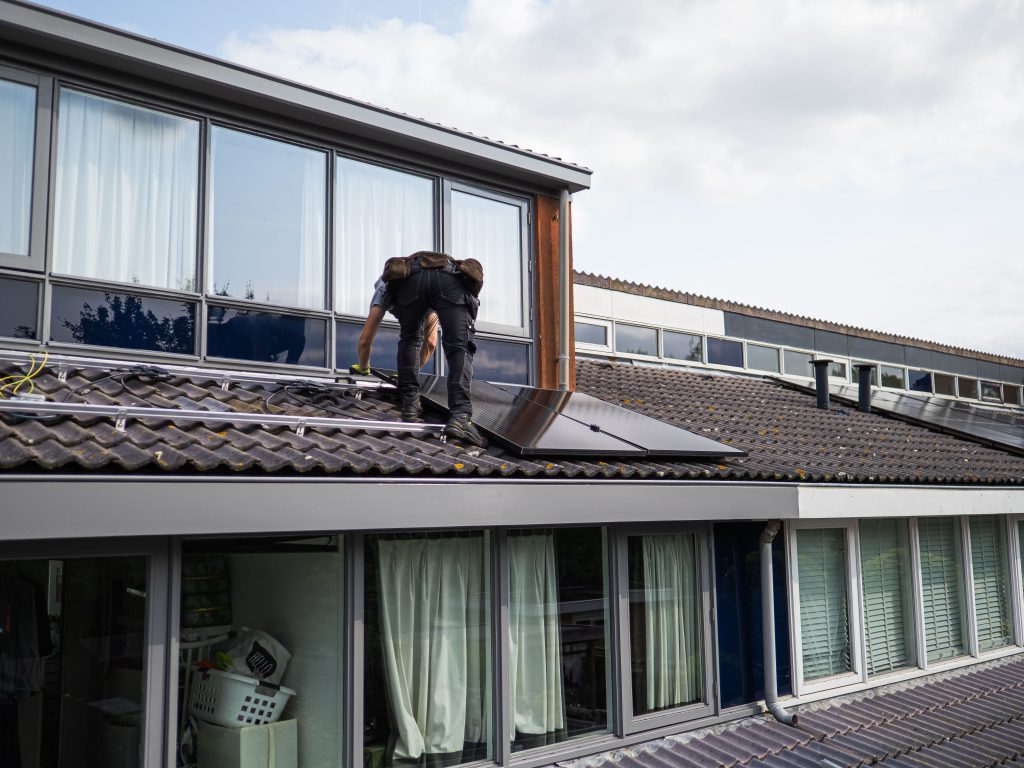
Compare the Main Apartment Solar Options
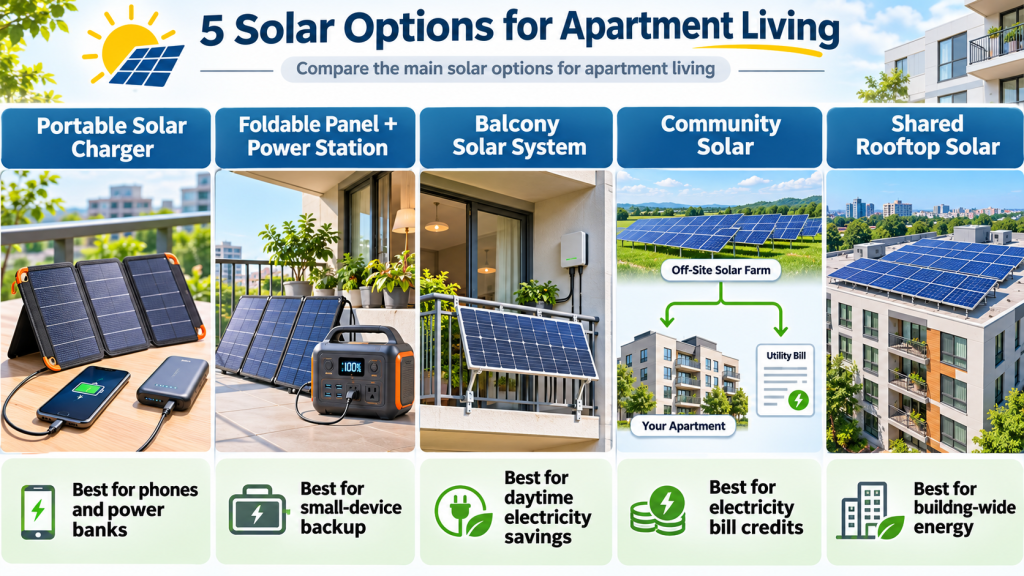
These approaches solve different problems:
| Option | Best use | Main limitation |
| Small portable charger | Phones and power banks | Limited output |
| Foldable panel and battery station | Small-device backup | Needs sun and storage |
| Plug-in balcony system | Reducing daytime grid use | Legal rules and approvals |
| Community solar | Utility bill credits | Local availability |
| Shared rooftop solar | Building electricity | Owner approval |
Portable systems suit renters who need removable equipment. Community solar deserves a first look when your apartment lacks outdoor space and your main interest is savings.
Portable Solar Panels for Renters
Foldable solar panels can be positioned in a permitted sunny area, then stored or moved with you. Some small models have USB ports; larger panels generally charge compatible battery stations.
Choose equipment that fits the balcony when unfolded, stores conveniently, and does not require drilling. An adjustable kickstand helps with changing sunlight angles.
A 100-watt rating is measured under standardized conditions, not promised continuous output. Buildings, clouds, and heat reduce actual production. Portable panels generally suit electronics better than heavy household appliances.
Balcony Solar Systems and Plug-In Power
Purpose-built plug-in solar systems use appropriate grid-compatible electronics to supply electricity to household circuits. Ordinary portable DC panels are not interchangeable and must never be plugged directly into wall outlets.
Rules are evolving: several U.S. states adopted plug-in solar laws in 2025–2026, but effective dates, certification requirements, and approved capacities differ. Buying a kit does not automatically authorize its use.
Even where lawful, external mounting rules and lease terms still apply. Consult your utility, property manager, and a qualified electrical professional before installing a system that connects to household wiring.
Solar Panels Paired With a Power Station
A portable power station stores solar energy in a battery and offers outlets or USB ports for supported electronics. This arrangement can provide limited backup power for a laptop, router, lamp, or phone.
It does not automatically energize an apartment’s wall sockets. Larger appliances may exceed the station’s continuous output or startup surge rating.
Match the panel’s voltage, current, connector, and wattage to the station’s specified solar input. Keep the battery unit in a dry, ventilated location according to its manual, rather than exposing it to direct outdoor heat.
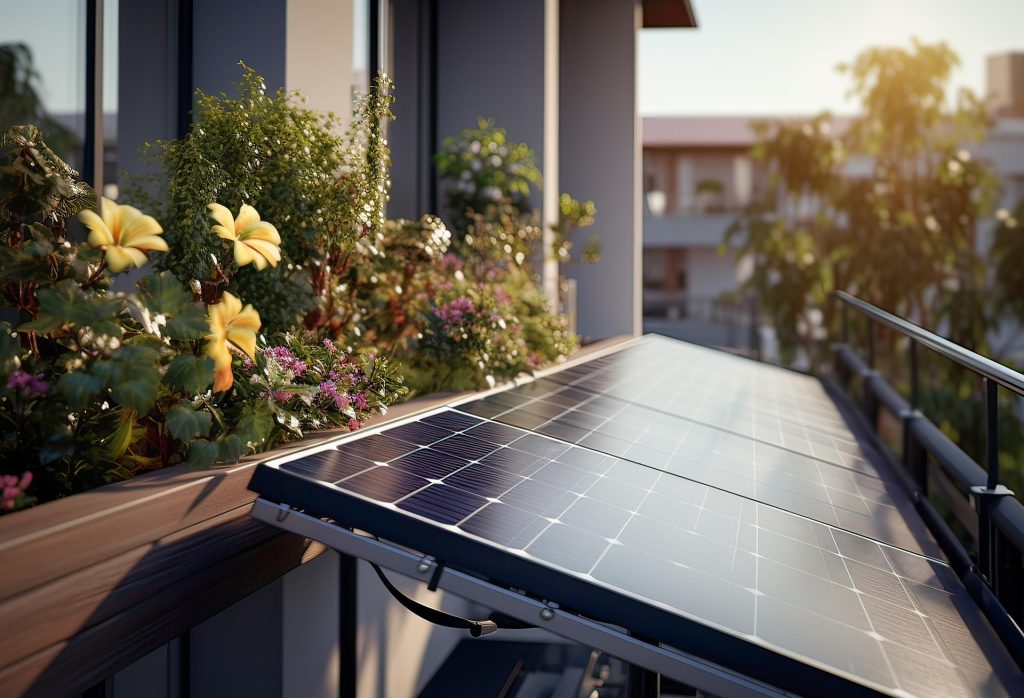
Community Solar Without Rooftop Access
Community solar lets eligible customers benefit from an off-site solar project without owning panels. Subscribers typically receive credits on qualifying electricity bills.
The U.S. Department of Energy’s community solar basics explains how the subscription arrangement works. For renters without sunny outdoor space, this may be more useful than buying hardware.
Compare program availability, credit calculations, any separate provider bill, and cancellation notice periods. If electricity is included in rent and the utility account belongs to your landlord, you may not qualify to enroll independently.
Shared Rooftop Solar for Apartment Buildings
Property owners or condominium associations can sometimes install rooftop panels to offset electricity used in common areas or individual units, depending on the building’s metering arrangement.
Such projects require agreement on roof access, structural suitability, costs, permits, electrical design, and who receives the savings. They are not installations an individual renter can usually authorize.
If you’re interested, ask management whether common-area electricity costs and rooftop sunlight justify an installer assessment. A shared-building proposal is more realistic than independently attaching panels to the roof.
Window-Mounted and Indoor Solar Panels
Panels can generate electricity near a sunny window, but glass, coatings, tint, and obstructions often reduce the available light. Indoor performance usually falls well below an otherwise identical outdoor setup.
A small charger might still help with occasional device charging. However, bulky panels at windows can obstruct access or create falling-object hazards if positioned poorly.
Keep realistic expectations, and never balance equipment outside a window without an approved secure system. For apartments with consistently shaded windows, off-site solar or conventional battery charging may be more practical.
How Much Electricity Can a Small Panel Produce?
Rated wattage measures peak output under test conditions; daily energy is a different quantity. Sun hours, shade, temperature, and conversion losses determine what you collect.
Suppose a 100-watt panel receives four equivalent peak-sun hours and delivers 70% of ideal production. 100 W × 4 hours × 0.70 = 280 watt-hours, or 0.28 kilowatt-hours that day. This illustrates the calculation, not your balcony’s expected yield.
List device wattages and usage hours before sizing anything. For example, a 10-watt lamp running five hours uses roughly 50 watt-hours, excluding charging losses.
Apartment Permissions and Solar Safety
Seek written approval before attaching equipment to railings, walls, or facades. Wind can dislodge poorly secured panels, placing people below at risk.
Keep exits, drainage, and walkways unobstructed. Follow instructions for weather exposure, cable protection, heat, and ventilation. Never pinch wires in doors or leave battery stations baking in sunlight.
Grid-connected systems need applicable electrical protections and approvals. Ordinary wall outlets are not safe backfeeding connections for random inverters or solar panels. Modifications to fixed wiring belong with a qualified professional.
Costs, Savings, and Choosing the Right Setup
Decide first whether you want bill savings or independent device power. Portable systems primarily support small electronics; adding batteries solely to reduce charging costs may offer poor financial returns.
Community solar can generate bill credits where available. Approved plug-in systems may reduce daytime purchases, but payback depends on sunlight, local tariffs, and equipment cost.
Measure usable outdoor space and observe shadows before buying. Account for batteries, adapters, mounting, and any required professional work. For location-related losses, see how solar panel shading affects output.
Recommended Apartment Solar Panels and Portable Options
These five panels serve different needs; none is a complete grid-connected installation.
BigBlue SolarPowa 20 Foldable Solar Charger
Best for: Charging phones, power banks, and other small USB devices in limited spaces.
The BigBlue SolarPowa 20 is a compact, foldable solar charger with USB-A and USB-C ports. Its lightweight, three-panel design makes it convenient for apartment renters who need something easy to store and move. It works best in direct outdoor sunlight and requires no permanent installation. However, it does not store electricity or power household appliances, so pairing it with a compatible power bank is more practical for charging devices later.
Anker SOLIX PS100 Portable Solar Panel
Best for: Renters using a compatible portable power station.
The PS100 is a 100-watt foldable panel with an adjustable stand and weather-resistant construction. Its supplied solar cables support compatible power stations, making it useful for temporary outdoor charging without permanent installation. Check input specifications before connecting another brand’s battery; this panel does not store electricity or plug directly into an AC wall outlet.
Jackery SolarSaga 100W Light Solar Panel
Best for: Lightweight placement in permitted sunny outdoor spaces.
This 100-watt panel uses a lightweight, bendable design rather than a conventional rigid framed module. Its weather-resistant construction and supplied adapter options suit compatible solar charging equipment, including certain portable stations. It has no built-in USB charging port or support feet, so plan a secure, manufacturer-approved placement before using it near a balcony.
Renogy 100W 12V N-Type 16BB Solar Panel
Best for: An approved, more permanent small off-grid project.
Renogy’s rigid 100-watt N-type panel has an aluminum frame and mounting provisions suited to properly designed off-grid installations. It can serve a compatible battery system when paired with appropriate charge-control equipment. Unlike folding panels, it is less convenient to store or move, and it is not a ready-to-connect apartment outlet kit.
EF ECOFLOW 220 Watt Portable Solar Panel
Best for: Higher-output charging where floor space allows.
This 220-watt foldable panel combines N-type solar cells, an adjustable kickstand, and an IP68-rated design. Its greater rated output may help recharge a compatible power station faster in strong sunlight. However, its larger unfolded footprint and weight make it less practical on narrow balconies; verify your station’s input limits and available placement area first.
What Official Solar Guidance Tells Apartment Residents
The U.S. Department of Energy’s guidance on community solar confirms that renters without suitable roofs can participate in off-site projects where programs exist. It does not guarantee savings for every subscriber.
Solar output is equally location-dependent. The National Laboratory of the Rockies’ PVWatts calculator estimates photovoltaic energy generation using geographic and system inputs. Its results are modeling tools, not guarantees for small, heavily shaded balconies.
For a practical decision, compare realistic sunlight with device needs, and examine account eligibility before subscribing. No technology can compensate completely for a balcony that receives almost no direct sun.
Frequently Asked Questions About Apartment Solar Panels
Can renters install solar panels on a balcony?
Sometimes, with permission and appropriate equipment. Freestanding portable panels may be easier to approve than railing-mounted or grid-connected systems, but building rules still apply. A private balcony does not automatically grant rights to modify the exterior. Ask about wind security, appearance restrictions, and electrical connections before buying.
Can apartment solar panels lower my electricity bill?
Yes, but savings depend on your approach. Community solar can provide credits for eligible subscribers, while approved plug-in systems may offset daytime grid use. Portable panels charging batteries generally save less because they support smaller loads. Compare full equipment or subscription costs with realistic annual savings.
Can solar panels generate electricity through apartment windows?
Yes, provided enough sunlight passes through the glass, but output is generally lower than outdoors. Tinting, coatings, window direction, and shade all matter. A small charger might be useful for a phone or power bank. For significant energy generation, outdoor placement or off-site solar is more practical.
Can portable solar panels power an apartment during a blackout?
Not an entire typical apartment. Panels generate power only with sufficient light and do not store it. With a compatible battery station, they can help run selected essentials such as a router or lamp. Check device wattage, battery capacity, surge requirements, and instructions before relying on backup power.
Is community solar better than buying a portable panel?
Usually, if your primary goal is bill savings and a suitable program exists. A portable panel is more useful for charging devices or obtaining limited backup power you can take when moving. They serve different purposes, so evaluate both against your actual needs.
Final Recommendation: Choosing Apartment Solar Panels
Apartment Solar Panels work best when matched to your living situation, rather than treated like miniature rooftop systems. A compact Goal Zero Nomad 20 makes sense for simple charging, while an Anker SOLIX PS100 paired with a compatible power station offers more practical backup flexibility.
If reducing the electricity bill matters most, investigate community solar and any legally permitted plug-in options before buying hardware. For shared rooftop solar, speak with building management rather than modifying the property yourself.
Start by checking your lease, outdoor sunlight, utility account, and power needs. Then choose the smallest safe, permitted system that genuinely meets your goal. For many renters, that means portable charging or community solar—not permanent panels attached to the building.