Top 10 Flexible solar panels
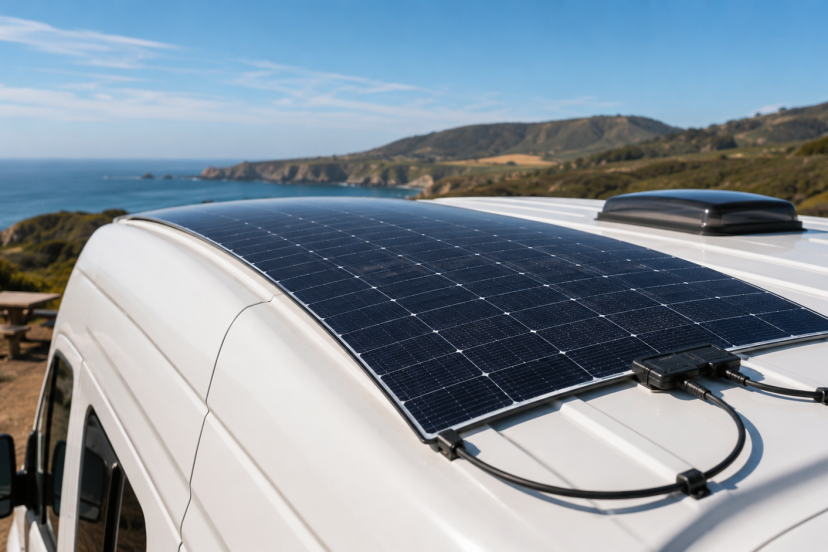
Flexible solar panels are lightweight photovoltaic modules for gently curved surfaces where framed panels are awkward. They suit RVs, vans, boats, cabins, trailers, and compact off-grid systems. The right choice reduces roof load and preserves space, but poor matching can cause connector problems, overheating, or weak output. We compared current Amazon.com products by construction, power, mounting, weather protection, compatibility, portability, documentation, and value. Specifications are manufacturer-listed, so confirm current details before ordering. Real-world output will vary with sunlight, temperature, shade, and installation.
| Product | Best for | Key feature | Main limitation | Price category | Overall recommendation |
| Renogy 100W | Overall use | Established 12V design | Mid-range cost | Mid-range | Strong all-rounder |
| BougeRV Yuma | Curved roofs | Adhesive CIGS construction | Premium pricing | Premium | Best specialty choice |
| EcoFlow 100W | Power systems | IP68 flexible module | Ecosystem-focused | Premium | Easy pairing |
| ALLPOWERS SF100 | Camping | Thin 100W panel | Newer Amazon page | Mid-range | Portable value |
| Callsun 100W | Solar generators | ETFE, 11-busbar design | Claims need verification | Mid-range | Feature-rich option |
| Topsolar 180W | Higher output | More rated wattage | Larger footprint | Mid-range | Useful roof upgrade |
| HQST 100W | Boat owners | 9-busbar PET module | PET surface | Budget | Sensible value |
| DOKIO 100W | Beginners | Simple lightweight format | Limited documentation | Budget | Basic starter |
| XINPUGUANG 100W | DIY projects | Fiberglass backing | Small feedback base | Budget | Low-cost pick |
| VEVOR 200W | Large roofs | 200W rated output | Limited long-term history | Mid-range | Capacity-focused |
1. Renogy Flexible Solar Panel 100W 12V — Best for Overall RV and Marine Use
Overview: Renogy’s 100W monocrystalline panel is designed for 12V off-grid systems and curved roofs. Clear product documentation distinguishes it from lesser-known brands.
Key Features: 100W rating; monocrystalline cells; lightweight semi-flexible body; predrilled mounting points; solar connectors.
Pros: Recognizable support; practical size; broad RV and marine suitability.
Cons: Costs more than many generic panels; requires compatible controller and wiring.
Best For: Buyers wanting a balanced, well-documented panel.
Verdict: It earns best overall by combining manageable weight, mounting flexibility, and clearer guidance.

2. BougeRV Yuma 100W CIGS Flexible Solar Panel with Tape — Best for Curved Roofs and Partial Shade
Overview: The Yuma uses CIGS thin-film technology rather than conventional crystalline cells. The adhesive-backed version targets smooth curves where drilling is undesirable.
Key Features: 100W rating; CIGS construction; factory-applied tape; highly flexible profile; manufacturer-claimed shade tolerance.
Pros: Conforms closely to curves; low-profile installation; no separate brackets required.
Cons: Premium price; adhesive positioning is difficult to reverse; roof preparation matters.
Best For: Streamlined RV, trailer, and marine roofs.
Verdict: Its construction excels when maximum flexibility matters more than low cost.

3. EF ECOFLOW 100W Flexible Solar Panel — Best for EcoFlow Power Systems
Overview: EcoFlow’s 100W module targets the brand’s power kits and portable stations, while supporting other systems when voltage and connectors match.
Key Features: 100W rating; monocrystalline cells; IP68-listed protection; fiberglass composite body; mounting eyelets.
Pros: Straightforward ecosystem pairing; lightweight construction; clear brand documentation.
Cons: Premium positioning; adapter needs vary; it is flexible, not foldable.
Best For: EcoFlow owners seeking a roof-mounted charging source.
Verdict: It suits buyers valuing compatibility guidance and a coordinated setup.

4. ALLPOWERS SF100 100W Flexible Solar Panel — Best for Lightweight Camping Setups
Overview: The ultra-thin SF100 targets RV roofs, boats, vans, and off-grid installations.
Key Features: 100W rating; approximately 3mm profile; IP68-listed design; solar connectors; manufacturer-listed high-efficiency cells.
Pros: Thin and portable; suitable for uneven surfaces; useful balance of capacity and weight.
Cons: Current Amazon page is relatively new; efficiency claims are not independent test results.
Best For: Campers wanting a light panel that can remain mounted.
Verdict: It offers portability without dropping to trickle-charger wattages.

5. Callsun 100W Ultra-Thin Flexible Solar Panel — Best for Solar Generator Compatibility
Overview: Callsun combines an ETFE surface with an 11-busbar layout for generators, power stations, vehicles, and boats.
Key Features: 100W rating; 12V nominal design; ETFE face; bypass diodes; predrilled mounting holes.
Pros: Broad intended compatibility; weather-resistant surface; useful electrical protection features.
Cons: Confirm input limits and adapters; advertised efficiency and bend angle are manufacturer claims.
Best For: Users connecting a mounted panel to a compatible solar generator.
Verdict: Its connector-ready format is useful when specifications are checked carefully.

6. Topsolar 180W Semi-Flexible Solar Panel — Best for Higher Output on Curved Surfaces
Overview: Topsolar raises rated capacity to 180W for heavier charging needs than typical 100W panels.
Key Features: 180W rating; semi-flexible construction; monocrystalline cells; off-grid solar connectors; single-panel format.
Pros: Higher capacity per panel; fewer parallel connections may be needed; useful for larger roofs.
Cons: Requires more mounting area; controller input limits must be checked.
Best For: RV or boat owners with room for one larger module.
Verdict: It is a practical step up when 100W cannot meet daily needs.

7. HQST 100W 12V Flexible Monocrystalline Solar Panel — Best for Value-Focused Boat Owners
Overview: HQST uses a 9-busbar layout and polished PET surface for compact 12V installations.
Key Features: 100W rating; 9-busbar layout; PET coating; IP67-listed protection; monocrystalline cells.
Pros: Accessible price category; familiar 12V format; suitable for narrow mounting locations.
Cons: PET may be less desirable than ETFE for prolonged harsh exposure; warranty terms need rechecking.
Best For: Budget-conscious marine or camper installations with sensible ventilation.
Verdict: It offers value when output and fit matter more than premium materials.
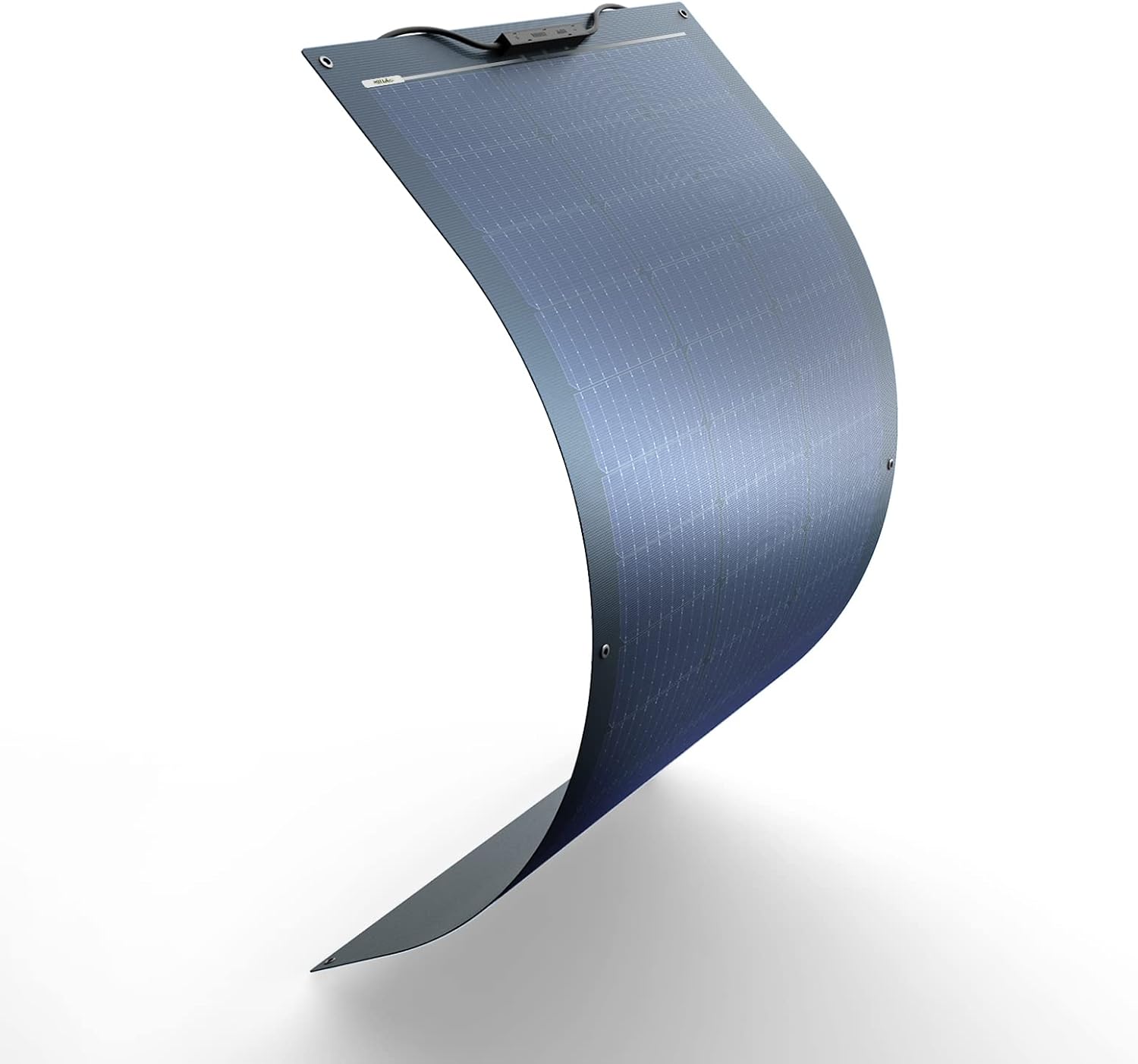
8. DOKIO 100W Flexible Solar Panel — Best for Beginners on a Budget
Overview: DOKIO’s lightweight 100W panel targets RVs, caravans, boats, and irregular surfaces.
Key Features: 100W rating; monocrystalline construction; ETFE-style surface; low weight; modest bending capability.
Pros: Beginner-friendly capacity; affordable positioning; easy to transport before installation.
Cons: Documentation is less detailed than leading brands; included accessories can vary.
Best For: First-time buyers assembling a small 12V charging system.
Verdict: It is a simple entry point when package contents and specifications are verified.

9. XINPUGUANG 100W 12V Flexible Solar Panel — Best for Low-Cost DIY Installations
Overview: This white 100W panel uses fiberglass reinforcement for projects prioritizing price and low roof load.
Key Features: 100W rating; 12V nominal format; fiberglass backing; approximately four-pound listed weight; solar connectors.
Pros: Budget-friendly; light enough for small structures; neutral white appearance.
Cons: Limited long-term feedback; sparse support documentation; controller is separate.
Best For: Experienced DIY buyers comfortable checking every electrical detail.
Verdict: It is the budget winner for useful rated capacity at an accessible position.

10. VEVOR 200W Semi-Flexible Monocrystalline Solar Panel — Best for Large RV Roofs
Overview: VEVOR’s 200W panel supplies higher capacity from one curved-surface module for larger RVs, cabins, and boats.
Key Features: 200W rating; monocrystalline cells; semi-flexible body; IP67-listed protection; solar connector output.
Pros: Highest rated wattage here; reduces panel count; current Amazon page showed US stock during research.
Cons: Large dimensions require careful measuring; newer model history is limited.
Best For: Spacious roofs supporting higher daily energy demand.
Verdict: It is the capacity specialist, but confirm controller limits, mounting area, and ventilation.
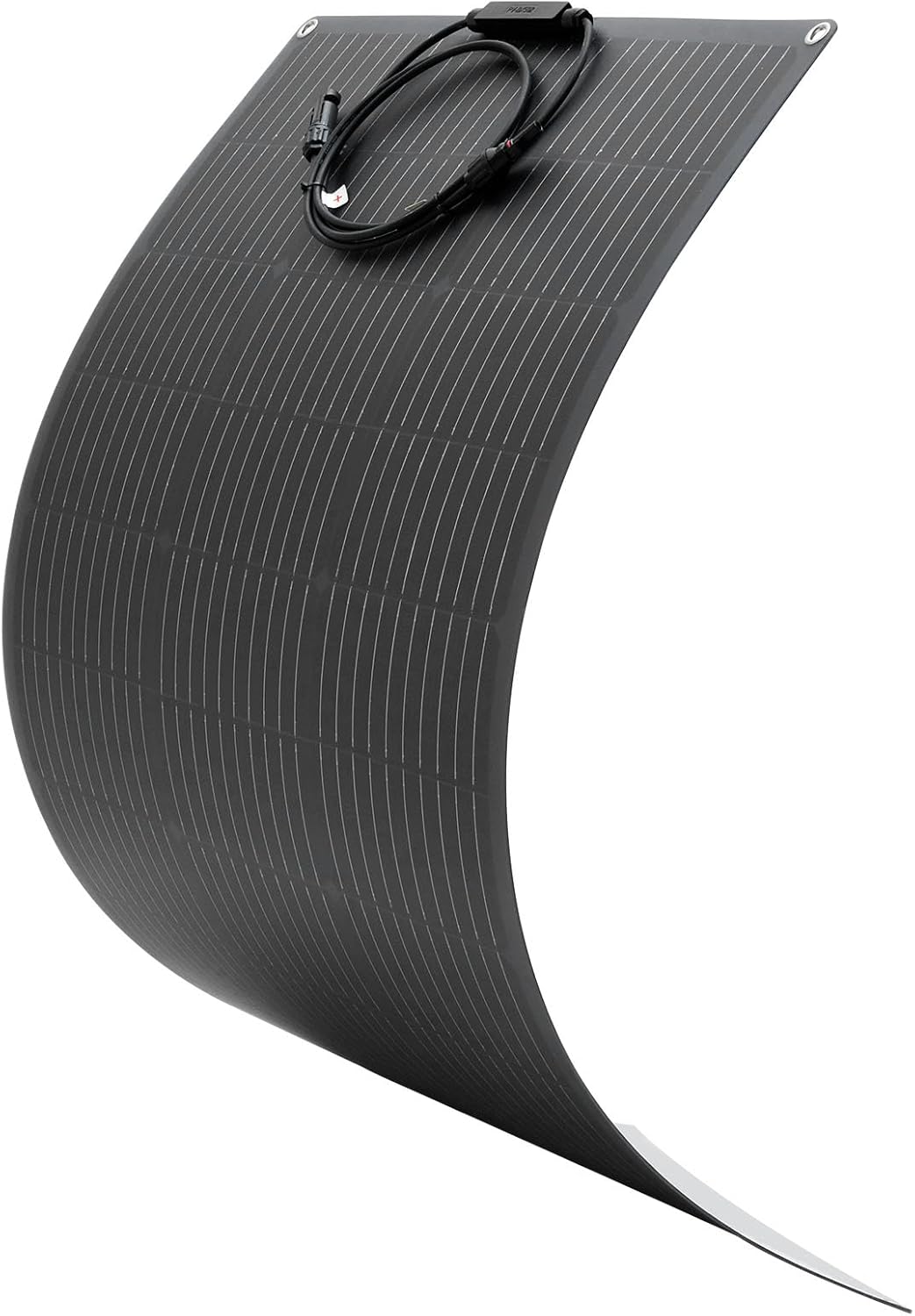
How to Choose the Best Flexible solar panels
Start with daily energy use, then size panel wattage and battery capacity around realistic sunlight rather than ideal laboratory output. Check open-circuit voltage, operating voltage, current, connector type, and charge-controller limits. A “12V” panel still needs regulation before charging most batteries.
Measure the entire mounting surface, including cable paths, junction-box clearance, vents, shadows, and safe edge spacing. Flexible does not mean repeatedly foldable; observe the manufacturer’s minimum bend guidance and support the panel evenly. ETFE surfaces are generally preferred for demanding exposure, while PET can suit lighter-duty budgets.
Plan ventilation because direct bonding may increase heat. Use approved adhesives, fasteners, sealants, and strain relief for the roof material. Before fixing anything permanently, review SolarFlez’s guide to the best solar panel angle so orientation, shade, and roof curvature do not undermine output. Finally, compare warranty coverage, replacement support, cable length, required adapters, and whether the package includes only the panel.
Frequently Asked Questions About Flexible solar panels
Can flexible solar panels charge a 12V battery directly?
Usually no. Use a compatible PWM or MPPT charge controller unless your power station already includes a suitable regulated solar input.
Are flexible panels waterproof?
Many carry IP67 or IP68 manufacturer listings, but connectors, roof penetrations, junction boxes, and installation workmanship also determine weather resistance.
Can I walk on a flexible solar panel?
Avoid it unless the manufacturer explicitly permits foot traffic. Concentrated pressure can damage cells, wiring, or protective layers.
How long do flexible panels last?
Service life varies with materials, heat, UV exposure, mounting, vibration, and care. Confirm the stated warranty rather than assuming rigid-panel longevity.
Are flexible panels better than rigid panels?
They are better for weight-sensitive or curved surfaces. Rigid panels usually offer better airflow, structural protection, and value per watt.
Final Verdict
For Flexible solar panels, Renogy 100W is best overall for its balanced design and documentation. XINPUGUANG is the best budget option for capable DIY buyers. BougeRV Yuma is the best premium and specialized choice because its adhesive CIGS construction handles demanding curves. DOKIO is the best beginner option for a modest 12V project, while VEVOR is best for higher-capacity installations.
Compare electrical specifications, roof dimensions, connectors, and controller limits before choosing. Confirm warranty terms, contents, availability, and latest information on Amazon.com before purchasing.