Solar Panels for Off-Grid Living: Buyer’s Guide
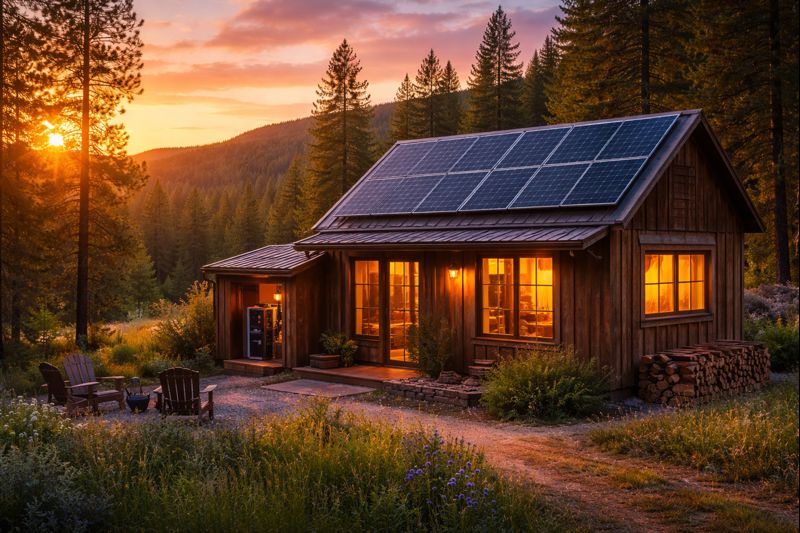
Picture this: you’re finally away from outages, crazy bills, and “why is the power out again?” stress… but you don’t want to live like you’re camping forever. You want lights, cold food, charged phones, maybe a fan at night—and you want it without babysitting a noisy generator.
That’s exactly where solar panels for off grid living shine (literally). In this guide, I’ll walk you through how to size a system that fits your real life, what to buy (and what to ignore), and how to avoid the classic “I bought the wrong thing and now I’m mad at the sun” moment.
The “why” behind going solar off grid
Off-grid solar isn’t just about saving money. It’s about control.
- You stop planning your day around power availability.
- You keep essentials running during storms or load shedding.
- You can build a calm, quiet home—no fumes, no constant fuel runs.
And honestly? There’s something deeply satisfying about making breakfast while your roof is casually doing the work.
Quick reality check: what off-grid solar can and can’t do
Solar is amazing… but it’s not magic.
Solar can do this well:
- Daily household basics (lights, charging, internet, fans)
- Efficient appliances (DC fridges, inverter fridges, laptops)
- Quiet, consistent power if your battery bank is sized right
Solar struggles with this (unless you size big):
- Electric water heaters
- Large AC units (especially older ones)
- Electric cooking all day (induction can work, but it needs planning)
A good off-grid setup is less “unlimited electricity” and more “smart electricity.”
Step 1: Do a simple power audit (without becoming an engineer)
Here’s the friend-version of a power audit:
- List what you want to run
Fridge, lights, phone charging, Wi-Fi, fan, TV, laptop, water pump, etc. - Estimate hours per day
Be honest. If the fan runs all night… it runs all night. - Convert into daily energy (Wh/day)
Most devices show watts.
Watts × hours = watt-hours (Wh)
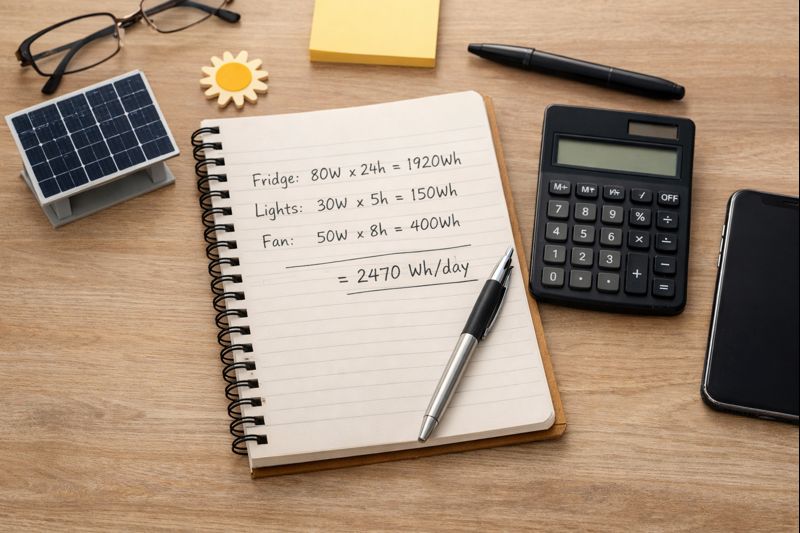
Quick example (tiny cabin vibe):
- Fridge: 80W average × 24h = 1,920Wh
- Lights: 30W × 5h = 150Wh
- Wi-Fi: 10W × 24h = 240Wh
- Fan: 40W × 8h = 320Wh
Total ≈ 2,630Wh/day (2.63 kWh/day)
That “Wh/day” number becomes your north star.
Step 2: Understand the four core parts of an off-grid solar system
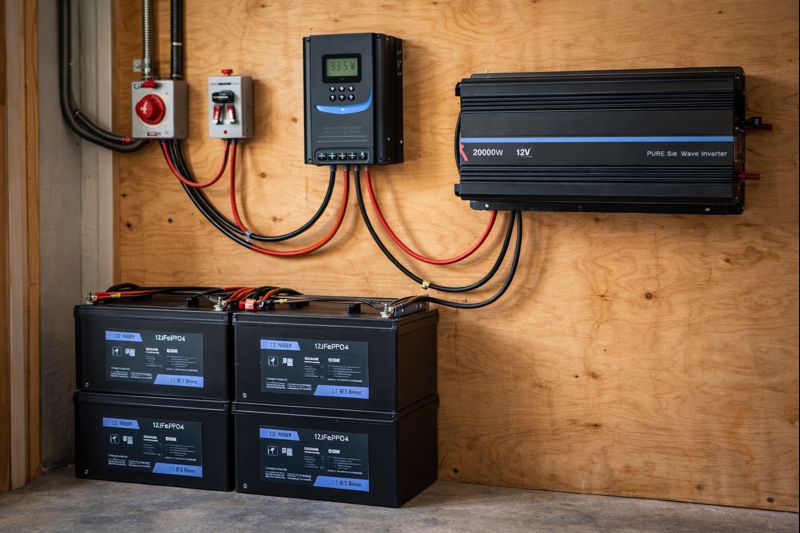
Think of an off-grid solar system like a little team:
Solar panels (the income)
They produce energy when the sun is available.
Charge controller (the traffic cop)
It regulates power going into batteries so you don’t overcharge them.
Battery bank (the savings account)
It stores energy for night, cloudy days, and “I need coffee now” mornings.
Inverter (the translator)
It converts battery power (DC) into household power (AC) for regular appliances.
Once you get these four, everything else is just choosing the right sizes.
Solar panel types: monocrystalline, poly, thin-film—what I’d buy
For most people buying solar panels for off grid living, the practical choice is:
Monocrystalline (best all-around)
- Higher efficiency (more power in less space)
- Great for roofs, small cabins, vans, tiny homes
Polycrystalline (fine, but less common now)
- Often cheaper, slightly less efficient
- If you have lots of space and a deal pops up, it can still work
Thin-film (niche)
- Flexible options exist, but generally lower efficiency
- Useful when weight/flex matters more than output
If your space is limited, mono panels save you headaches.
How many solar panels for off grid living? (easy sizing method)
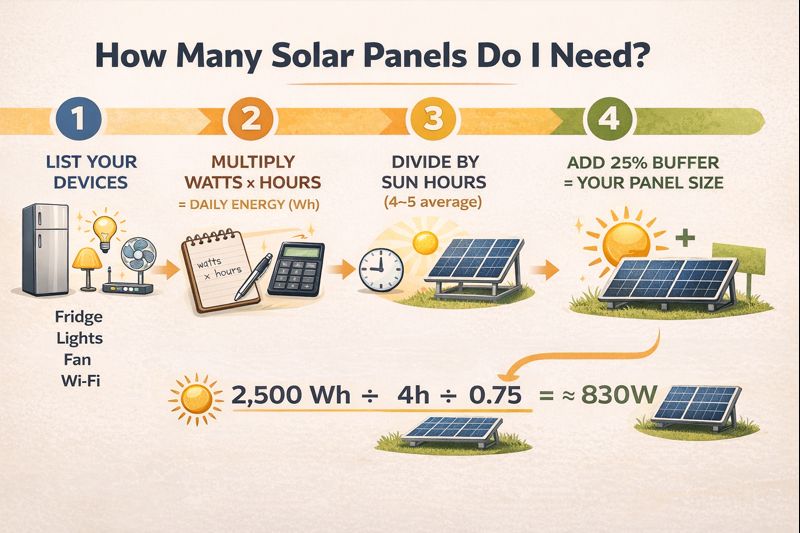
Here’s the simple sizing shortcut:
Daily energy need (Wh/day) ÷ sun hours ÷ system efficiency = panel watts needed
- Sun hours: often 3–6 hours/day depending on location/season
- Efficiency factor: use 0.75–0.80 to account for real-world losses
Example (2,630Wh/day):
- Assume 4 sun hours/day and 0.75 efficiency
2,630 ÷ 4 ÷ 0.75 ≈ 877W of solar
That’s roughly:
- Nine 100W panels, or
- Five 200W panels, etc.
Pro tip: if winter matters where you live, size for winter—or plan a generator backup.
Battery bank basics: LiFePO4 vs lead-acid for real life
This choice affects comfort more than people realize.
LiFePO4 (lithium iron phosphate)
- Higher usable capacity (you can use more of it daily)
- Better cycle life
- Lighter, cleaner, low maintenance
Lead-acid (AGM/flooded)
- Lower upfront cost
- Heavier, shorter lifespan, needs more careful charging
- Flooded types need maintenance (and ventilation)
If your setup is small and budget-tight, lead-acid can work.
If you want “set it and breathe,” LiFePO4 usually feels better long-term.
Inverters: pure sine wave, surge watts, and “will my fridge start?”
This is where people accidentally buy frustration.
Pure sine wave vs modified sine wave
- Pure sine wave = safe for fridges, laptops, microwaves, sensitive electronics
- Modified sine wave = cheaper, but can cause buzzing, heat, or device issues
The two numbers that matter
- Continuous watts (what it can run nonstop)
- Surge watts (what it can handle for a few seconds at startup)
Fridges, pumps, and power tools spike at startup—so surge capacity matters a lot.
If you want the “normal house” feel off grid, go pure sine.
Charge controllers: MPPT vs PWM (and why MPPT usually pays off)
Charge controllers aren’t glamorous… but they make or break performance.
PWM (basic)
- Works best when panel voltage matches battery voltage
- Cheaper, simpler
- Leaves power on the table in many setups
MPPT (smarter)
- Converts higher panel voltage into usable battery charging more efficiently
- Especially helpful in cold weather, partial shade, or longer wire runs
For most off-grid builds, an MPPT charge controller is worth it because it squeezes more usable energy out of the same panels.
Mounting and placement: roof, ground rack, pole, or portable
Mounting is less “hardware” and more “daily happiness.”
Roof mount
- Clean, space-saving
- Harder to adjust angle
- Heat buildup can reduce output a bit
Ground rack
- Easier to clean and tilt
- Great if you have space
- Can be expanded later without climbing on roofs
Pole mount
- Awesome sun access and tilt control
- More work upfront, but super efficient
Portable solar panels
Perfect for:
- seasonal cabins
- RV solar setup
- temporary camps
- renters who can’t drill into anything
The sun is messy: shade, seasons, heat, and dust
Solar panels love sun… but reality has trees, clouds, and dust storms.
Shade is the #1 silent killer. Even a small shadow can drag output down. So:
- Keep panels away from chimney/branch shadows
- Trim trees if possible
- Consider microinverters/optimizers in complex shading situations
Seasons matter.
- Winter sun is lower (shorter days, different angle)
- Snow can block panels (but panels also shed snow better when tilted)
Heat matters too.
Panels lose efficiency when very hot. Good airflow behind panels helps.
And yes—dirty panels reduce output. A quick rinse every so often can make a noticeable difference.
Wiring and safety: fuses, breakers, and cable sizing in plain English
This part scares people, but it’s mostly common sense:
- Fuses/breakers protect wires, not appliances
- Long wire runs need thicker cable (to reduce voltage drop)
- Use proper connectors and weather-rated components
Tiny checklist (worth printing)
- DC-rated breakers/fuses on the battery side
- Disconnect switch (so you can safely work on the system)
- Correct wire gauge for the amps and distance
- Grounding according to your local code
If you’re not comfortable here, hiring a pro for wiring is money well spent. It’s your home—not a science fair project.
Costs & budgeting: what solar panels for off grid living cost in 2026
Pricing swings based on brand, system size, battery type, and how “house-like” you want life to feel.
A practical way to think about it:
- Starter micro setup (charging, lights, small loads): lower cost, quick wins
- Comfort cabin setup (fridge, lights, fan, Wi-Fi): mid-range, common sweet spot
- Full-time home setup (bigger battery bank, inverter, expansion-ready): higher cost, best lifestyle result
Budgeting tip that saves regret
Spend enough on:
- batteries (so nights don’t feel stressful)
- inverter (so appliances behave normally)
- MPPT controller (so your panels actually deliver)
Panels are important, but storage + conversion is where comfort lives.
Product picks: 5 Friendly off-grid essentials
Below are five well-known, high-intent pieces people commonly use for solar panels for off grid living. Ratings and review counts can vary by storefront, but these listings show strong review volume and solid average ratings.
1) Renogy 200 Watt 12 Volt Monocrystalline Solar Starter Kit
Why it’s useful: A beginner-friendly solar panel kit that gets you generating quickly.
Features:
- Starter-friendly bundle approach
- Monocrystalline panels (space-efficient)
- Good base for small cabins/RV/off-grid sheds
Best for: First-time off-grid setups, small weekend cabins, RV solar beginners.
2) Renogy 100 Watt 12 Volt Monocrystalline Solar Panel
Why it’s useful: A classic add-on panel for scaling your array as your needs grow.
Features:
- Easy to expand in multiples
- Works for ground/roof racks
- Popular choice for modular builds
Best for: Anyone building in stages (“I’ll add one more panel next month” people… which is most of us).
3) Renogy Rover 40A MPPT Solar Charge Controller
Why it’s useful: A solid MPPT charge controller option when you’re ready to level up efficiency.
Features:
- MPPT efficiency advantages
- Common fit for cabin and RV systems
- Helps harvest more power in variable conditions
Best for: Off-grid cabins, vans, and anyone who wants better charging performance.
4) LiTime 12V 100Ah LiFePO4 Battery
Why it’s useful: A popular LiFePO4 battery size for building a practical battery bank.
Features:
- Lithium chemistry for strong usable capacity
- A common building block for DIY battery banks
- Good fit for scalable systems
Best for: People who want lower maintenance and a calmer “it just works” experience.
5) Renogy 2000W 12V Pure Sine Wave Inverter
Why it’s useful: A pure sine wave inverter helps appliances run smoother and safer off-grid.
Features:
- Pure sine wave output (appliance-friendly)
- Strong option for fridge + small kitchen loads
- Helps reduce weird buzzing/overheating risks
Best for: Off-grid homes that want “normal outlet” behavior.
Bonus (small-but-mighty backup)
If you want a lighter “grab-and-go” layer for outages, trips, or charging on the move, check out these solar power banks for off-grid backup. They’re not a whole-home solution, but they’re genuinely handy when life gets unpredictable.
Research-backed guidance + FAQs for solar panels for off grid living
What experts emphasize (and why it matters)
Two credible takeaways you can lean on when planning:
- Sizing is a process, not a guess. NREL lays out a clear sequence: define goals, estimate hourly load, confirm space for panels, estimate costs, and set operating constraints before final sizing. That “load-first” approach helps you avoid buying random hardware and hoping it works. See NREL’s off-grid solar design and modeling guidance (2024).
- Battery choice depends on system size—and operations matter. IEA PVPS notes lithium-ion storage can be economically feasible at larger scales, while lead-acid can still make economic sense in smaller systems, and they strongly highlight monitoring and maintenance planning as a success factor for long-term performance. See IEA PVPS “Li-Ion Battery Systems in Off-Grid Applications” executive summary (2025).
FAQs
How many solar panels do I need for off-grid living in a small cabin?
Start with your daily Wh/day, then size panels using your worst-season sun hours. Many small cabins land around 600W–1,200W depending on fridge, fans, and internet use. If you want comfort year-round, size for winter and add battery capacity.
Are solar panels worth it for off-grid living if I already have a generator?
Yes—because solar reduces fuel dependence and noise. Think of the generator as your “storm insurance,” not your daily engine. A hybrid approach often feels the most relaxed.
What’s the best battery for solar panels for off grid living?
If you can afford it, LiFePO4 usually gives the best day-to-day experience (more usable capacity, longer lifespan, less maintenance). If budget is tight and your system is small, AGM lead-acid can still work with careful charging.
Do I really need an MPPT charge controller for my off-grid solar setup?
Not always, but most people benefit from MPPT—especially if you have limited panel space, colder seasons, longer wire runs, or partial shading. MPPT often pulls more usable energy from the same array.
Can I power an air conditioner off-grid using solar panels?
They can, but it’s a “system design” decision, not a simple add-on. AC needs high surge power and lots of daily energy, so you’ll need a bigger array, bigger battery bank, and a strong inverter. Many off-grid homes choose efficient cooling strategies first (insulation, shade, ventilation) and then size solar.
If you take one thing from all this, let it be this: you don’t need a perfect setup on day one. You need a thoughtful first step—a real power audit, a system that matches your lifestyle, and room to grow.
When you build it that way, solar stops feeling like a gamble… and starts feeling like freedom.