Everything You Need To Know About Solar Inverters
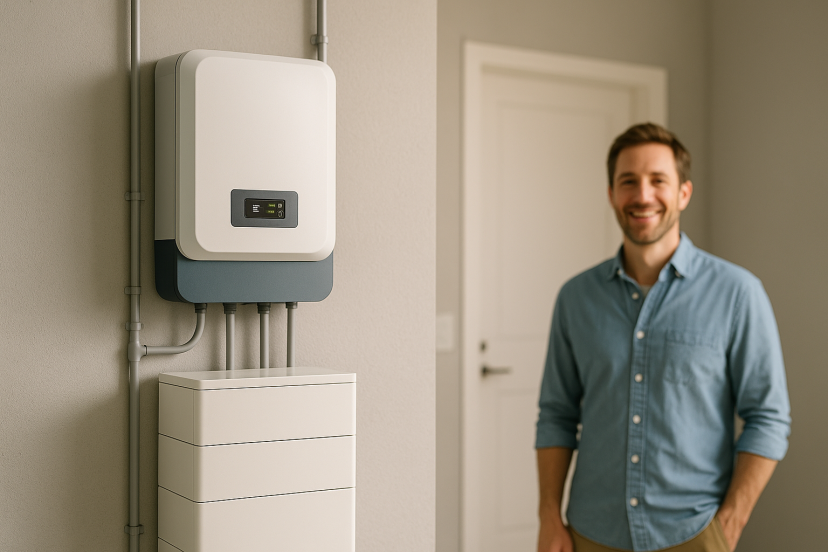
You can have the shiniest solar panels on the block, but without the right solar inverter, you’ve basically got a beautiful DC sculpture on your roof. The inverter is the translator—the brain—that turns panel DC into the AC your home and the grid actually use. In this friendly deep-dive, you’ll learn how inverters work, which type fits your setup, how to size them, what “smart inverters” do for grid stability, and which popular models people love (and why). By the end, you’ll feel confident choosing and living with the right inverter for your system.
What does a solar inverter actually do?
Short version: it converts DC to AC safely and efficiently so appliances, EV chargers, and the grid can use your solar energy. It also continuously tracks the best operating point for your panels, keeps an eye out for faults, and reports performance to your monitoring app.
The big three: string, microinverters, and DC optimizers
- String inverters: One centralized unit handles power from a “string” of panels. Simple, cost-effective, easy to service.
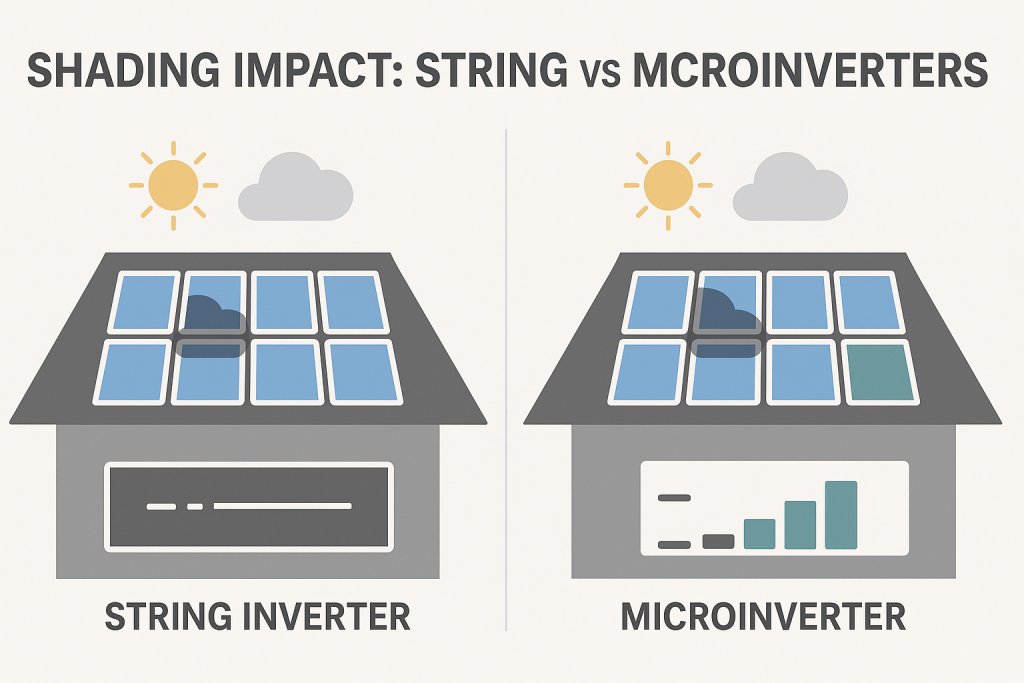
- Microinverters: One per panel. Great for shade or complex roofs; more granular monitoring; higher up-front cost.
- DC optimizers + string inverter: Per-panel optimization plus a central inverter—often a sweet spot for tricky roofs.
Off-grid, grid-tie, or hybrid (battery-ready)?
- Grid-tie: Send power to your home and export excess (where net-metering or similar applies).
- Off-grid inverter: Built for standalone systems (cabins, RVs, tiny homes).
- Hybrid solar inverter: Combines grid-tie and battery control in one box—seamless backup and self-consumption control.
Pure sine wave vs. modified sine wave
Choose pure sine wave for clean, appliance-friendly power—especially for fridges, pumps, electronics, or power tools. Modified sine wave can cause hum, heat, or misbehavior in inductive loads. Stick with pure sine unless you have a very specific, rugged use case.

Inverter sizing 101 (and the DC/AC ratio)
A practical rule: size the inverter at ~70–120% of your array’s STC power, depending on climate and your goals. Slight “over-paneling” is common in hot climates to maximize energy harvest at non-peak times. Consider:
- Start from your loads (and future EV or heat-pump plans).
- Check voltage windows (open-circuit and operating) against strings.
- Leave headroom if you expect to add panels later.
Efficiency and performance (and why 1–2% matters)
Modern inverters often exceed 96–98% peak efficiency. Over a year, every percentage point counts. You’ll see “European” or “CEC” weighted efficiency—use these for apples-to-apples comparisons, not just peak numbers.
MPPT: the cruise control for your panels
Maximum Power Point Tracking (MPPT) constantly nudges operating voltage/current to pull the most energy from your array despite temperature and irradiance shifts. More MPPT trackers = more flexibility for multiple roof planes or mixed orientations.
Safety features you shouldn’t skip
Look for ground-fault detection, arc-fault protection (AFCI), anti-islanding, robust surge protection, and clear fault codes in the app. For rooftops with multiple strings, good DC disconnects and labeling matter to your installer and future service techs.
Smart inverters and grid support (why your utility cares)
So-called smart inverters do more than convert power. They can ride through minor grid disturbances, help regulate voltage with Volt-VAR and Volt-Watt functions, and coordinate with utilities. This keeps neighborhoods stable as solar adoption grows. (Research section below digs into this with sources.)
Batteries + inverters: what changes with storage?
Add a battery and your inverter becomes a traffic cop—charging when it’s sunny, discharging during outages or peak prices, and switching between grid-forming and grid-following modes. Hybrid models integrate battery control and often offer fast transfer for “keep the lights on” backup.
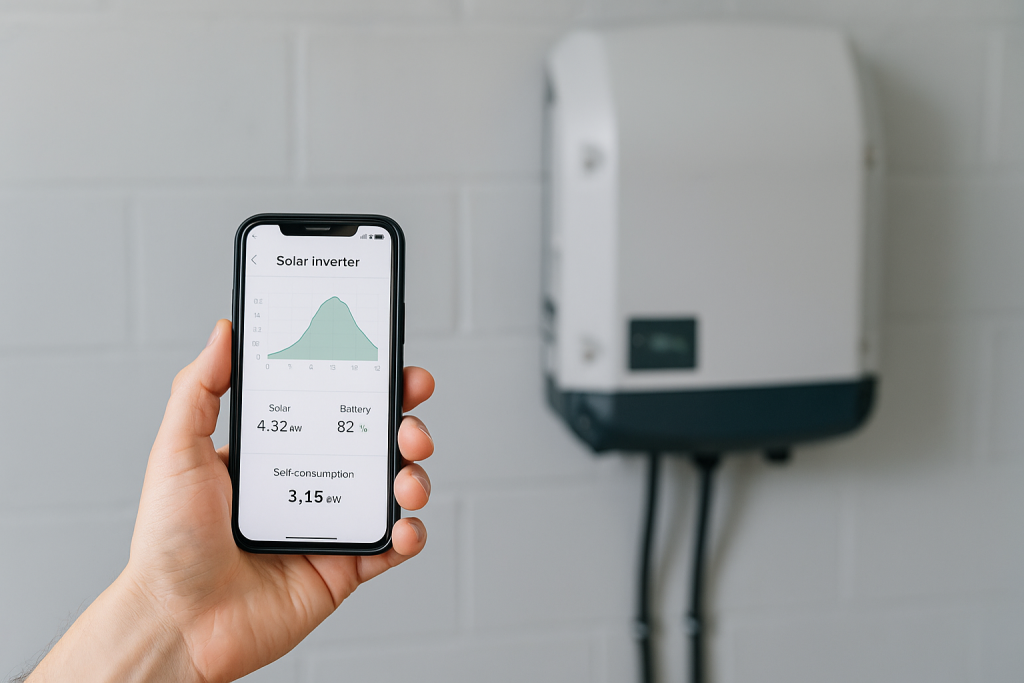
Monitoring and troubleshooting like a pro
A good app lets you spot shading issues, confirm MPPTs are balanced, and catch error codes early. If production dips:
- Compare daily kWh to similar weather days.
- Check for tripped breakers, debris on panels, or firmware updates.
- Log serial numbers and firmware before calling support.
Common mistakes to avoid
- Undersizing wiring or overstuffing strings outside voltage windows.
- Poor ventilation—inverters derate (produce less) when hot.
- Ignoring shade—microinverters or optimizers shine here.
- Skipping surge protection in lightning-prone areas.
Maintenance + lifespan expectations
Panels often go 25+ years; inverters typically last 10–15 years in residential settings (environment and brand matter). Keep them cool, dust-free, and away from corrosive air (e.g., salt spray) if possible.
Costs and warranties—what to look for
Prioritize:
- Warranty length (and who honors it).
- Local service network and parts availability.
- UL/IEEE compliance for interconnection.
- Replaceability—is it a drop-in unit or a full rewire?
Quick picks by scenario
- Complex roof / partial shade → Microinverters or optimizers.
- Battery-ready home → Hybrid solar inverter with strong backup specs.
- Cabin/RV → Off-grid pure sine wave inverter/charger with robust surge.
- Budget grid-tie → Reliable string inverter sized near your array.
🔹 Top 5 Solar Inverters on Amazon (Quick Reviews)
(Heads up: if you buy through links, I may earn a small commission—at no extra cost to you.)
For a deeper primer on how hybrids blend battery backup with grid-tie, see this quick guide to hybrid solar inverters.
1) Victron Energy MultiPlus-II Pure Sine Wave Inverter/Charger, 5000VA (24V)
Why people love it: Rock-solid build, PowerAssist (blends grid/generator + battery), excellent app ecosystem, and wide installer support.
Key features: Inverter/charger, transfer switch, programmable modes, UL listings, strong surge.
Pros: Premium reliability; flexible system design; great documentation.
Cons: Premium price; configuration has a learning curve.
Best for: Whole-home backup with batteries; prosumers who value control.
Warranty: 5-year limited warranty from Victron (extendable).
2) Renogy 2000W 12V Pure Sine Wave Inverter (12V DC → 120V AC)
Why people love it: Solid entry for cabins, vans, and small off-grid loads.
Key features: 2000W continuous, 4000W surge, high conversion efficiency.
Pros: Compact footprint; friendly pricing; widely available accessories.
Cons: Not an inverter/charger (no AC charging); 12V only; basic app options.
Best for: RVs, vans, tiny cabins running essential appliances.
Warranty: Typically 1-year material and workmanship (check SKU).
3) AIMS Power 5000W 48V Pure Sine Inverter (120V AC)
Why people love it: Big continuous output for larger off-grid systems, industrial grade chassis.
Key features: 5000W continuous, hardwire terminals, GFCI outlets, cooling fans.
Pros: High power at approachable cost; simple, rugged hardware.
Cons: No built-in charger/transfer; plan for separate charge gear.
Best for: Off-grid homes or shops with higher AC loads.
Warranty: 1-year parts and labor (check model).
4) SUNGOLDPOWER 6000W 48Vdc Hybrid Solar Inverter (120/240V split-phase)
Why people love it: Split-phase output for US homes, integrated MPPT charger, and “batteryless” PV-to-load assist mode in some configs.
Key features: 120/240V output, pure sine wave, high-amp PV charger, AC charger.
Pros: All-in-one hybrid convenience; whole-home compatibility.
Cons: Heavier chassis; plan ventilation; app/firmware varies by batch.
Best for: Budget-friendly whole-home hybrid builds.
Warranty: Commonly listed as ~2 years via vendors; confirm your seller terms.
5) Fronius Primo 6.0-1, 6kW 208/240 VAC String Inverter
Why people love it: Super reliable residential string inverter with built-in Wi-Fi (WLAN), easy SnapINverter mounting, and strong monitoring—great for straightforward grid-tie systems.
Key features: 6 kW output, 2 independent MPPTs, ~96.5% efficiency (CEC-style), communication package included.
Pros: Proven brand; smooth app/monitoring; wide installer familiarity.
Cons: Not an all-in-one hybrid (no built-in battery control); premium pricing.
Best for: Reliable, code-clean residential grid-tie installs without batteries.
Warranty: Fronius lists a 10-year U.S. inverter warranty, with extensions available; some 2024 updates note eligibility up to 12 years depending on commissioning/registration. Verify for your unit/region.
Comparison table
| Model | Key Spec(s) | Warranty | Approx Price/Tier | Best For |
| Victron MultiPlus-II 5000VA (24V) | Inverter/charger, PowerAssist, UL, app ecosystem | 5-year (extendable) | Premium | Whole-home backup + batteries |
| Renogy 2000W 12V | 2000W cont., 4000W surge, pure sine | ~1-year | Budget | RVs, vans, tiny cabins |
| AIMS 5000W 48V | 5000W cont., hardwire terminals, GFCI | ~1-year | Mid | Larger off-grid loads |
| SUNGOLDPOWER 6000W 48V Hybrid | Split-phase 120/240V, MPPT, AC charger | ~2-year (vendor) | Value | Budget hybrid whole-home |
| Fronius Primo 6.0-1 6kW | String inverter, 2 MPPT, Wi-Fi, 208/240 VAC | 10-year US (extensions/updates possible) | Premium | Reliable grid-tie residential |
*Warranty varies by region/model—always confirm for your exact SKU.
🧪 Research-backed insights (with links)
- Inverter availability & reliability: An NREL analysis of over 1,100 PV systems reported P50 inverter availability in the 98.5–99.5% range, with lower availability in the first six months before stabilizing—useful context for what “normal” uptime looks like in the field.
- Smart inverters support the grid: The California Energy Commission has documented how smart-inverter communications and control (e.g., Volt-VAR/Volt-Watt, ride-through) are crucial as DERs scale—informing policy and utility interconnection requirements.
(If you’re interconnecting in California, the CPUC Smart Inverter Working Group page is the go-to for Rule 21 phases and functions.)
FAQs
What size solar inverter do I need for a 6 kW array?
Most homes pair a 6 kW array with a 5–6 kW inverter, depending on climate and goals. Slightly smaller inverters are common to reduce cost and boost shoulder-hour harvest, but confirm voltage windows and expansion plans.
Is a hybrid inverter worth it if I don’t have a battery yet?
If you plan to add storage later, yes—a hybrid can save rewiring and gives you backup-ready wiring from day one. If batteries aren’t in your 5-year plan, a solid grid-tie inverter is perfectly fine.
String inverter vs. microinverters: which is more efficient?
On perfect roofs with even sun, string inverters compete on efficiency and cost. On shaded or multi-plane roofs, microinverters or optimizers can win on energy yield and diagnostics.
Do I need pure sine wave for power tools and fridges?
Yes. Motors and compressors hate choppy waveforms. A pure sine wave inverter runs them cooler and quieter, and reduces risk of nuisance trips or overheating.
How long do solar inverters last?
Plan on 10–15 years for residential units, with some premium gear lasting longer. Heat is the enemy—keep units cool and ventilated to avoid derating and extend life.
Conclusion
Think of the solar inverter as your system’s conductor—quietly coordinating DC, AC, safety, and sometimes backup power. Choose the type that fits your roof and goals (string, micro, or hybrid), size it thoughtfully, and favor brands with clear warranties, strong monitoring, and good service networks. You’ve got this—and your future self (charging the car on sunshine during a brownout) will thank you.
Ready to go deeper on battery-ready systems? Revisit the hybrid solar inverter basics & pros/cons to map your next step.