How To Choose The Right Solar Contractor
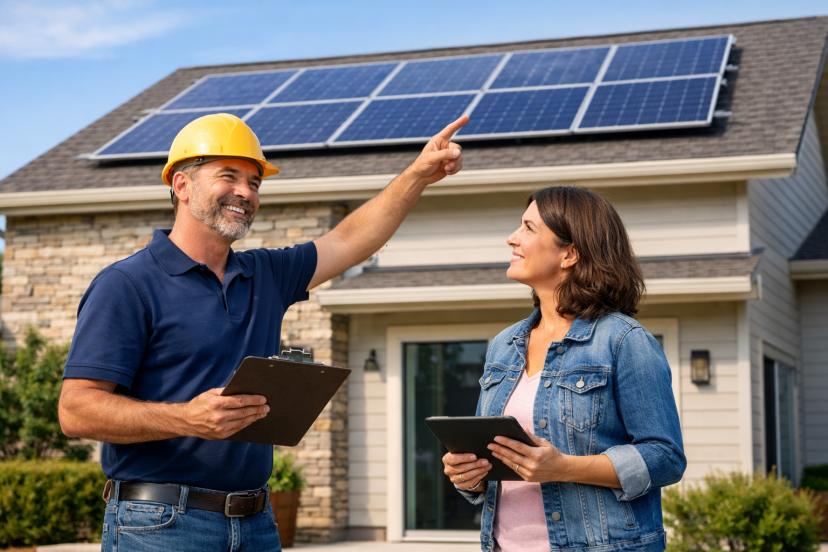
Choosing a Solar Contractor can feel a little like dating and buying a roof at the same time. Someone is promising long-term savings, asking for serious money, and using words like “production estimate” while you’re just trying to figure out whether your house is actually a good fit.
That is exactly why this decision matters so much. Solar is not some fringe idea anymore. SEIA says the U.S. solar industry installed 43 GW of new capacity in 2025, and the residential segment alone installed 4,647 MWdc. In other words, solar is mainstream now, which is great, but it also means you need to sort through more companies, more pitches, and more fine print.
Affiliate note: this article includes product suggestions that can be used in affiliate content.
By the end of this guide, you’ll know how to vet a Solar Contractor, compare quotes without getting overwhelmed, and move forward with a lot more confidence and a lot less guesswork.
Why Choosing the Right Solar Contractor Matters
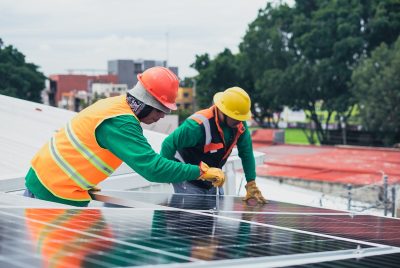
Panels matter, sure. Inverters matter too. But the Solar Contractor is the person or company connecting all the dots. They size the system, inspect the roof, handle permits, coordinate installation, and shape your experience from first quote to final inspection. DOE guidance makes this pretty clear: the installer is central to determining whether your roof is suitable and how the process unfolds.
A great contractor makes solar feel organized and understandable. A bad one can leave you with vague numbers, sloppy communication, and that sinking “what did I just sign?” feeling. So yes, hardware matters. Still, the human being behind the proposal often matters more than people realize.
Start With Your Electric Bill, Not the Sales Pitch
Before you talk to any installer, look at your last 12 months of electric bills. Not because you need to become an energy nerd overnight, but because your usage tells the story of what kind of system you actually need. DOE specifically recommends reviewing past electricity bills and considering future changes such as an EV purchase or new appliances before finalizing system size.
What to check first
- Your average monthly kWh usage
- Seasonal spikes in summer or winter
- Planned changes like an EV, pool pump, or home addition
- Old appliances that may be driving your bill up
This step helps you avoid two expensive mistakes: buying too much system or buying too little. A trustworthy Solar Contractor will want this information. If someone skips it and jumps straight to “Here’s our package,” that’s not efficiency. That’s laziness wearing a polo shirt.
Make Sure Your Roof Is Ready for Solar
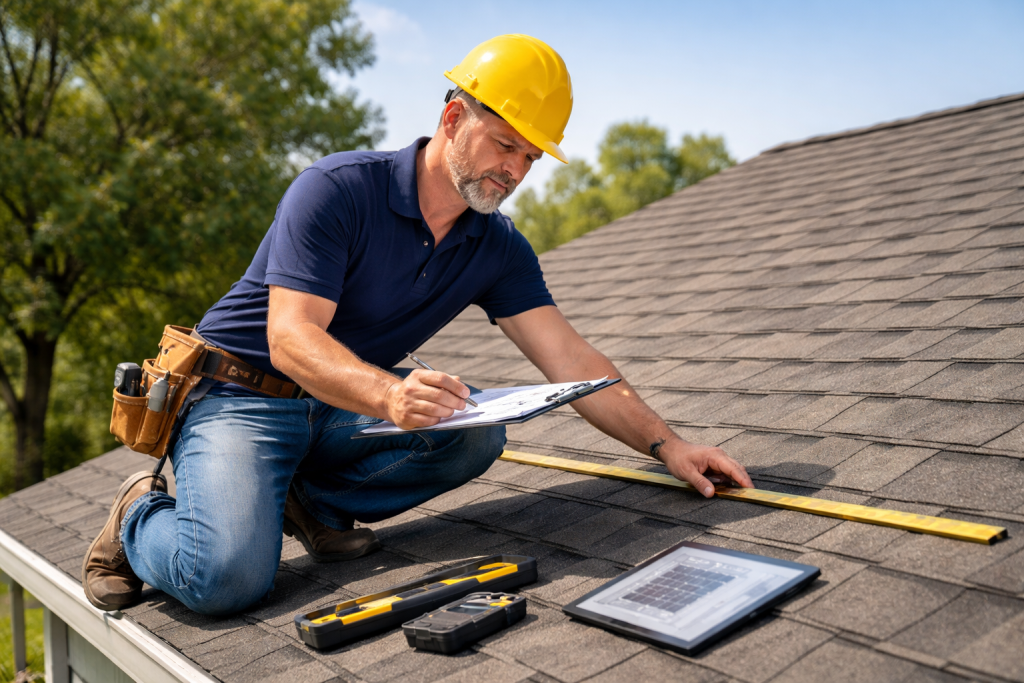
This is the part people love to ignore because it’s not exciting. Nobody dreams about roof age. Yet it matters. DOE says your installer, a roofing expert, or a structural engineer can help determine solar suitability, and it may save money to combine solar with a roof replacement if needed.
Roof basics that matter
- Age of the roof
- Shading from trees or nearby buildings
- Orientation toward the sun
- Available unblocked space
- Structural condition
Think of it this way: installing solar on a worn-out roof is like buying custom cabinets for a kitchen with a leaking floor. The shiny part is not the real problem.
What a Good Solar Contractor Should Handle
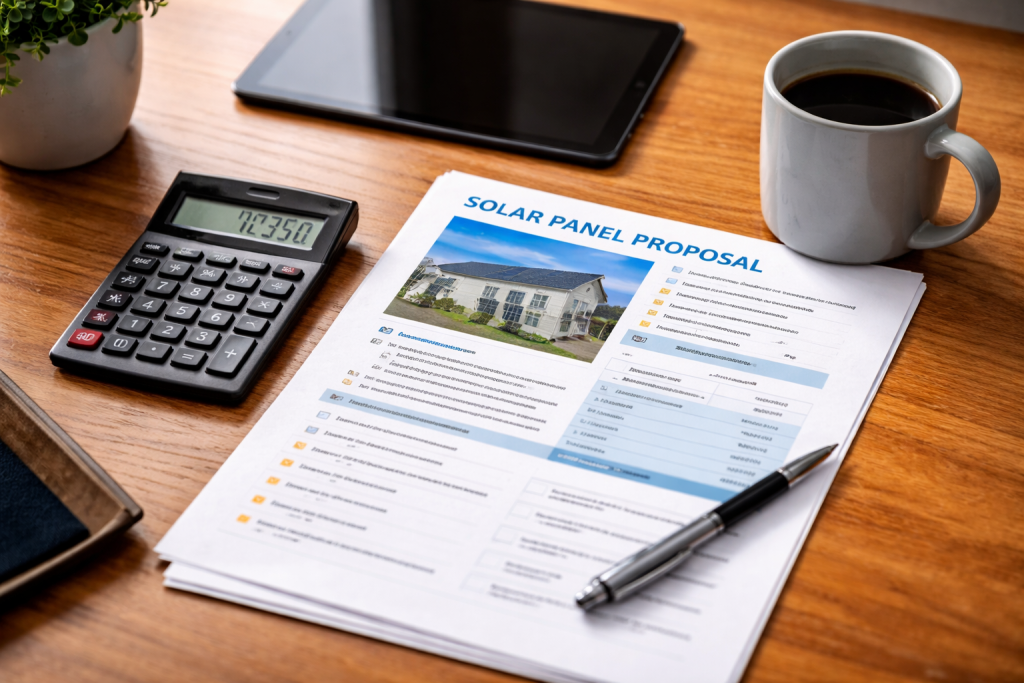
A solid Solar Contractor does more than sell panels. They should evaluate your site, explain system design, estimate production, outline financing options, manage permits, coordinate installation, and help with utility interconnection. DOE notes that some installers guide homeowners through nearly the entire process, including the permitting and inspection path.
A good contractor usually provides
- A site assessment
- A clear proposal with projected output
- Equipment details and warranty terms
- Permit and inspection support
- Timeline expectations
- Post-install guidance or monitoring setup
If you have to drag basic answers out of them one crumb at a time, imagine how fun warranty support will feel later.
Verify Licenses, Insurance, and Certifications
This is non-negotiable. DOE says PV systems should be installed by an appropriately licensed installer, often involving an electrical contractor’s license, and local rules may also require a general contractor’s license. DOE also points homeowners toward certifications like NABCEP, which it describes as the industry-standard or gold-standard credential for renewable energy system installers.
What to verify
- Electrical contractor license
- General contractor license if your area requires it
- Liability insurance
- Worker’s compensation coverage
- NABCEP certification or equivalent credentials
- Whether subcontractors will be used
Do not feel awkward asking for proof. This is not being “difficult.” This is being an adult with a roof.
Local Experience Beats Generic Promises
A contractor with real local experience understands your permitting office, utility rules, weather patterns, roof styles, and neighborhood quirks. That matters more than glossy branding. DOE also recommends comparing multiple installers and getting site assessments rather than relying on one generic quote.
Look for a contractor who can speak specifically about projects in your area. Not “we work everywhere,” but “we’ve installed on tile roofs in your county” or “we know how your utility handles interconnection.” That kind of detail tells you they live in the real world, not just inside a sales script.
How To Compare Solar Quotes Without Getting Lost
Three quotes is a good starting point. More than that can become a spreadsheet romance that goes nowhere. DOE recommends comparison-shopping by asking multiple installers to assess your roof.
Compare these items side by side
- System size in kW
- Estimated annual production
- Total installed cost
- Price per watt
- Panel and inverter brands
- Workmanship warranty
- Timeline
- Assumptions about shade, offset, and utility rates
Do not compare only the final price. One quote may look cheaper because it uses weaker warranty terms, lower-tier equipment, or optimistic production numbers. A quote is not just a number. It is a story about risk.
Understand Financing Before You Commit
DOE says homeowners can buy outright, use a solar loan, lease a system, or enter a power purchase agreement, and ownership typically affects who receives incentives.
The quick homeowner version
- Cash: highest upfront cost, best long-term control
- Loan: spreads the cost, still usually lets you own the system
- Lease: lower upfront burden, but less ownership control
- PPA: you pay for the electricity produced rather than the equipment itself
None of these is automatically “best.” The right choice depends on your budget, how long you plan to stay in the home, and whether you want ownership or simplicity. A good Solar Contractor explains tradeoffs calmly. A pushy one makes one option sound like a miracle cure.
Read the Warranty Details Carefully
Warranties are where solar proposals stop sounding romantic and start sounding real. You want to know who covers what, for how long, and what happens if production dips or something breaks.
Pay attention to three layers
- Product warranty: covers the physical equipment
- Performance warranty: covers long-term output expectations
- Workmanship warranty: covers installation-related issues
The workmanship warranty is where your Solar Contractor really shows character. Panels can be excellent, but poor installation can still cause headaches. So if the workmanship warranty sounds thin, vague, or hard to enforce, that is worth pausing over.
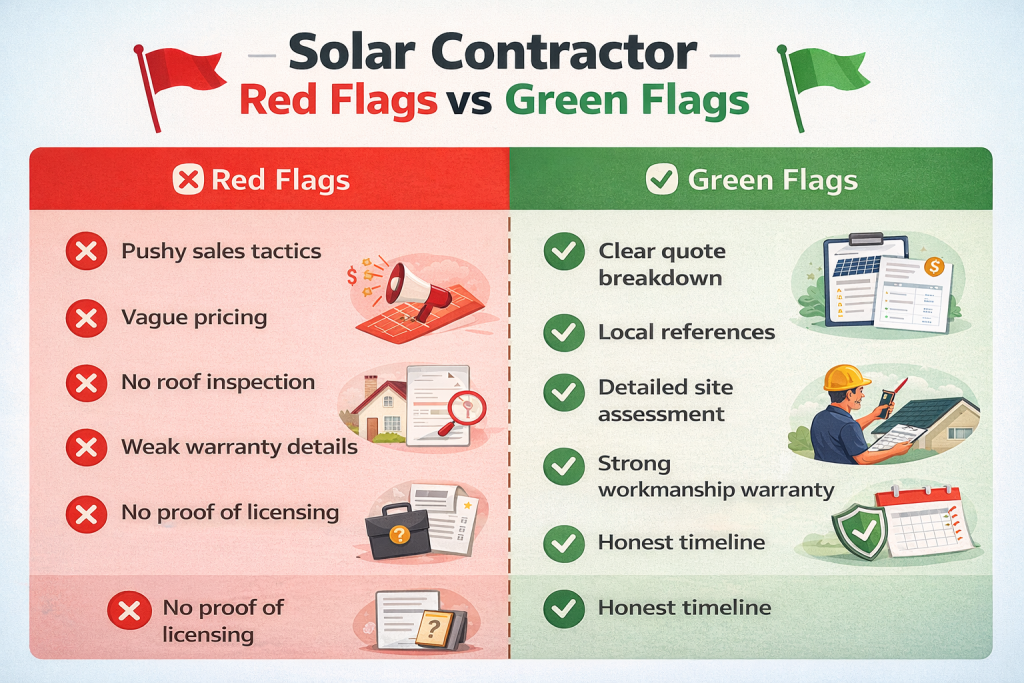
Red Flags That Should Slow You Down
Some warning signs are subtle. Others are basically wearing a neon jacket.
Watch for these
- Pressure to sign “today only”
- Refusal to share license or insurance details
- Vague production estimates
- No roof inspection before quoting
- Confusing financing language
- Promises that sound too perfect
- Poor reviews mentioning service after installation
DOE’s homeowner guidance also warns that rapid industry growth has opened the door to a subset of bad actors, so your caution is not paranoia. It is good judgment.
Questions To Ask a Solar Contractor Before You Sign
Ask questions like you plan to live with the answer for 20 years. Because, well, you might.
Smart questions to ask
- How many systems like mine have you installed locally?
- Will you use subcontractors?
- What assumptions did you use for production?
- What happens if my roof needs work first?
- Who handles permits and inspections?
- What monitoring comes with the system?
- What exactly is covered under workmanship?
- What happens if the timeline slips?
You are not interviewing for “best personality.” You are hiring for clarity, competence, and follow-through.
Timeline, Permits, and Interconnection
Homeowners often assume the actual install is the longest part. Funny enough, it often isn’t. DOE says installation may take only a few days, while permits, inspections, and interconnection can take weeks to months depending on local rules.
That is why timeline conversations matter early. A reliable Solar Contractor should tell you what part is under their control and what part depends on your city, county, or utility. Honest timelines build trust. Fantasy timelines build frustration.
5 Helpful Products for Solar-Savvy Homeowners
These are not substitutes for a qualified Solar Contractor. They are simply useful tools and add-ons that can help you understand your energy use, prep for conversations, or maintain a system after installation.
1) Emporia Vue 3 Home Energy Monitor
Short description: A whole-home monitor that tracks real-time energy use and supports solar and net metering.
Features: App-based monitoring, solar and net-metering support, UL/CE listing, cloud data export.
Who it’s for: Homeowners who want better load data before sizing solar or who want deeper visibility after installation.
2) P3 P4400 Kill A Watt Electricity Usage Monitor
Short description: A simple plug-in meter for checking how much electricity individual appliances use.
Features: Tracks kWh, voltage, line frequency, and estimated cost over time.
Who it’s for: Anyone trying to understand energy hogs before requesting solar quotes.
3) BOSCH GLM165-22 165 Ft Blaze Laser Distance Measure
Short description: A laser measure that helps with rough dimensions for garages, patios, and ground-mount conversations.
Features: 165-foot measurement range and an easy-read display.
Who it’s for: Homeowners who want cleaner site notes before meeting an installer.
4) KASTLITE Solar Panel Bird Guard Mesh Kit – 6in x 100ft PVC Coated Galvanized Wire Screen, 100 Stainless Clips, Pliers & Gloves
Short description: A critter guard kit designed for the space under solar panels.
Features: PVC-coated mesh, stainless clips, pliers, gloves, and a no-drill style setup.
Who it’s for: Homeowners in areas where birds or squirrels love making rooftop drama.
5) 20FT Water Fed Solar Panel Cleaning Kit, Telescopic Solar Panel Cleaning Brush with Extension Pole & Soap Dispenser for Household & Outdoor
Short description: A water-fed cleaning tool for light panel maintenance.
Features: Telescoping pole, adjustable brush head, attached hose, and soap dispenser.
Who it’s for: Homeowners who want a safer way to handle occasional cleaning without improvising with sketchy ladders.
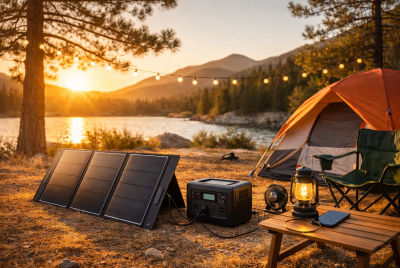
And if you want to get familiar with solar on a smaller scale before committing to rooftop work, this guide to portable camping solar panels is a practical place to start.
What Research and Experts Say About Hiring a Solar Contractor
DOE guidance on choosing a Solar Contractor
The U.S. Department of Energy consistently tells homeowners to focus on qualifications, comparison shopping, roof suitability, electricity usage, and financing structure before signing. That advice is refreshingly boring, which is exactly why it is useful. Boring protects your wallet. You can review the Department of Energy’s guide to planning a home solar electric system and its DOE advice on choosing a solar installer for the core checklist.
Berkeley Lab research on solar and home value
A well-installed solar system can affect resale value too. In a Berkeley Lab study covering 22,822 home sales across eight states, buyers were consistently willing to pay premiums for homes with PV systems; the average premium worked out to about $4 per watt, or roughly $15,000 for an average-sized 3.6-kW system. That does not mean every home gets the same boost, of course, but it does reinforce the idea that quality installation matters beyond monthly utility savings. You can read Berkeley Lab’s solar home value study here.
Frequently Asked Questions About Hiring a Solar Contractor
How do I know if a Solar Contractor is legit?
Check licenses, insurance, certifications, and local references. Also ask whether subcontractors will be used and verify their credentials too. DOE recommends confirming that the installer is properly licensed and certified.
How many solar quotes should I get?
Three is a smart target for most homeowners. It gives you enough variety to compare pricing, equipment, and warranty terms without drowning in paperwork. DOE specifically recommends comparison-shopping with multiple installers.
Should you replace your roof before installing solar panels?
Maybe. If your roof is old or needs repairs soon, it can make sense to handle that first. DOE notes that combining solar with roof replacement can sometimes save money.
What is more important: panels or the Solar Contractor?
Both matter, but the contractor often has the bigger impact on your overall experience. Great equipment installed poorly is still a bad outcome. A good contractor helps with design, permits, inspections, and long-term support.
How long does a standard solar installation normally take?
The physical install may take only a few days, but permitting, inspections, and utility interconnection can stretch the overall timeline to weeks or even months depending on your area.