Best Home Solar Installation Kit for DIY Power Savings
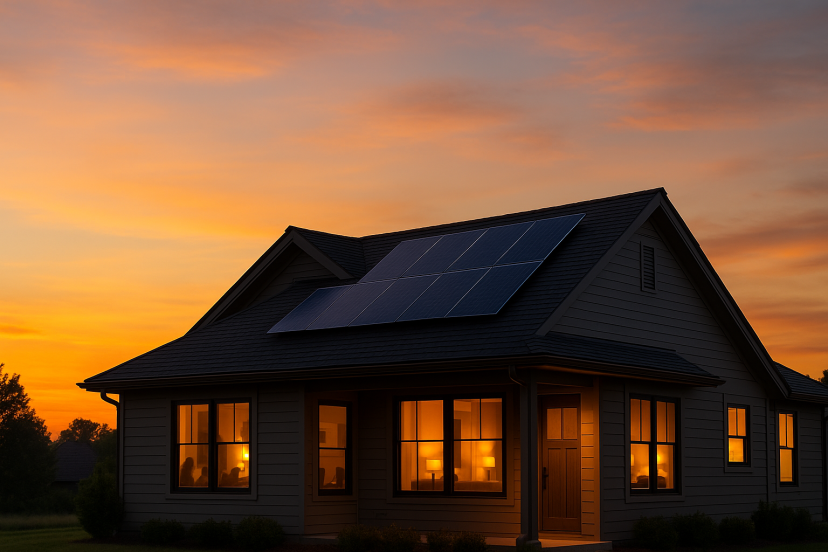
If you’re staring at your electric bill thinking, there has to be a better way, a home solar installation kit might be exactly what you need.
Instead of piecing together panels, inverters, batteries, and cables one by one, a kit gives you a matched set of components that are designed to work together. Think of it like a “solar bundle” for your house, cabin, or even a rental where you want backup power.
In this guide, we’ll walk through what’s in a kit, how to size it, the different types, and some solid product options—so you can feel confident before you spend a single peso/dollar.
This article may mention products that are sold through affiliate links, which can help support the site at no extra cost to you.
Why a Home Solar Installation Kit Might Be Perfect for You
A home solar installation kit is ideal if you:
- Want to cut your monthly power bill
- Need backup power for outages
- Live off-grid (or dream about it)
- Prefer a DIY-friendly route instead of a full custom install
Instead of hiring someone to design your system from scratch, a kit gives you:
- Pre-matched solar panels, inverter, charge controller, and often batteries
- Clear wattage and daily energy output estimates
- A more predictable total cost than starting from zero
Kits are especially helpful if you’re building a small home solar power system for a cabin, tiny house, shed, or as a backup system for your main home.
What’s Inside a Typical Home Solar Installation Kit?
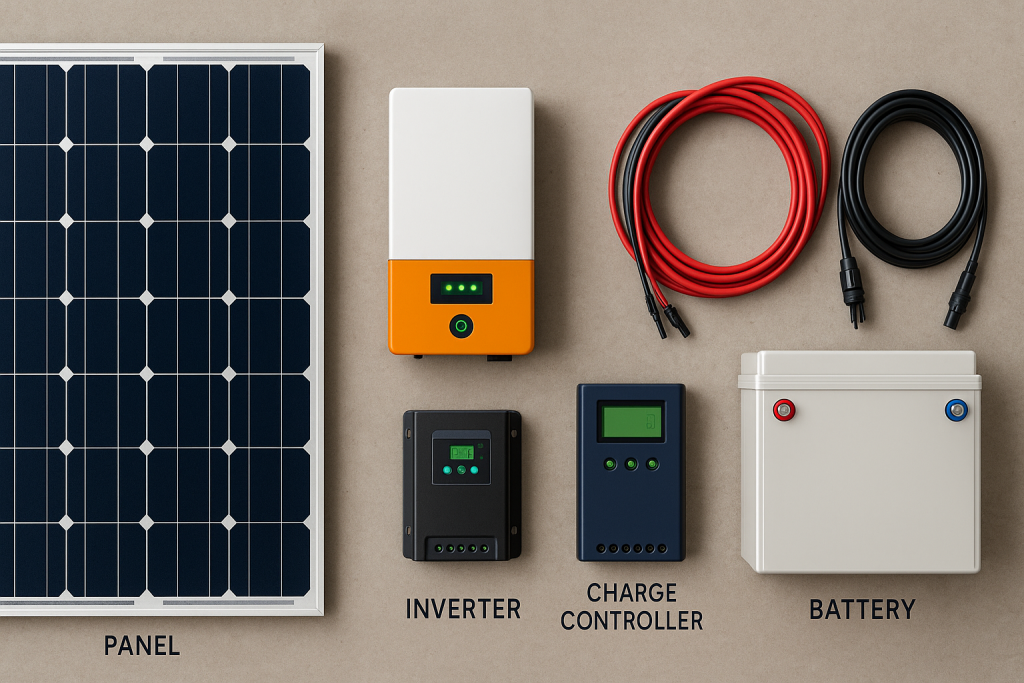
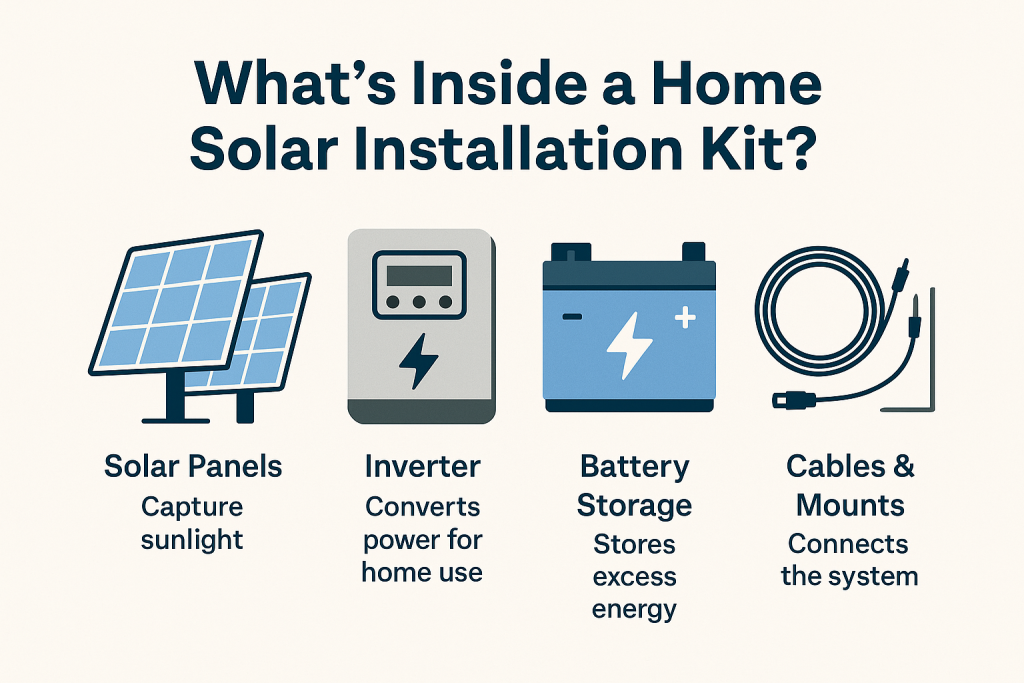
Most kits will include some mix of:
- Solar panels (rooftop or ground-mount)
- Solar inverter (turns DC into usable AC power)
- Charge controller (protects batteries and optimizes charging)
- Battery storage (LiFePO₄ or AGM, in many off-grid kits)
- Mounting hardware and cabling
Some budget kits are just solar panel kits (panels + controller), meant to be paired with your own battery and inverter. Others are “complete kits” that give you everything you need for an off grid solar power system or backup power.

Grid-Tied vs Off-Grid vs Hybrid Kits
When you’re shopping for a home solar installation kit, you’ll see three main system types:
Grid-Tied Kits
- Connect to your utility grid
- No batteries (your home draws from solar first, grid second)
- Best if your grid is reliable and you want to reduce bills
Off-Grid Kits
- Use battery storage to power loads when the sun is down
- Great for cabins, remote homes, or areas with frequent outages
- You’re responsible for having enough capacity
Hybrid Kits
- Can feed the grid and use batteries
- More flexible (backup + savings)
- Often use “hybrid” inverters that manage multiple power sources
Ask yourself: Do I mainly want bill savings, or do I want backup power even if the grid is out? Your answer will steer you toward grid-tied vs off-grid/hybrid.
How to Size Your Home Solar Installation Kit
A quick way to estimate kit size:
- List your key loads
- Fridge, lights, router, fans, a computer, maybe an aircon or TV.
- Fridge, lights, router, fans, a computer, maybe an aircon or TV.
- Check their wattage and hours of use
- Example: 150W fridge × 24h ≈ 3.6 kWh/day
- Example: 150W fridge × 24h ≈ 3.6 kWh/day
- Add up your daily energy
- Many households aiming for partial coverage land around 5–10 kWh/day.
- Many households aiming for partial coverage land around 5–10 kWh/day.
Then match your needs to kit specs:
- An 8 kWh/day kit can handle basic household loads plus a few “luxury” items.
- Smaller 1.6–4.8 kWh/day kits are better as backup systems or for tiny homes, sheds, and RVs.
Remember: kits usually give estimated “ideal daily output” (e.g., based on 4–5 hours of strong sun). If you live somewhere with frequent clouds, give yourself some buffer.
Choosing a Mounting Location for Your Panels
Your solar panel kit for home will only perform as well as its location. Aim for:
- Maximum sun exposure (south-facing in the northern hemisphere, north-facing in the southern)
- Minimal shading from trees, chimneys, or nearby buildings
- A sturdy roof or a safe ground-mount
If your roof isn’t ideal, don’t panic. Many people use:
- Carport roofs
- Backyard racks
- Balcony railings for smaller kits
Think of your panels as sun-hunters. If they’re staring at a wall or a big tree, they can’t do much.
Understanding Solar Inverters in Your Kit
The solar inverter is the brain of your system. It converts DC electricity from solar panels or batteries into usable AC power for household devices.
Main inverter types you’ll see in home solar installation kits:
- String inverters – panels wired in series, one central box
- Hybrid inverters – can handle both grid and batteries
- All-in-one “solar generators” – portable units with built-in inverter + battery
If you want a deeper dive into how inverters work, types, sizing, and “smart” inverter features, check out this very friendly solar inverter guide. It’s great if inverters still feel a bit mysterious.
Wiring, Controllers, and Safety Basics
Even DIY kits need respect—this is high-current DC and AC power. Your kit will usually include:
- Charge controller (often MPPT for better efficiency)
- Appropriately sized cables and breakers
- Basic safety guidelines
Tips:
- Use the wire sizes recommended in the manual.
- Add DC and AC disconnects so you can safely service the system.
- If you’re unsure about local electrical code, get a licensed electrician to do final connections.
DIY Installation Overview: From Box to Sun-Powered
Every kit will have its own manual, but the process often looks like this:
- Mount the panels on roof or rack.
- Run the DC wiring from panels to charge controller and inverter.
- Connect the battery bank (if included), following polarity and grounding instructions.
- Wire the inverter output to dedicated outlets, a small sub-panel, or a transfer switch.
- Turn on in the right sequence (often battery → inverter → solar).
Go slowly, label everything, and don’t hesitate to call in a pro for the parts you’re not comfortable with.
Top Home Solar Installation Kits to Consider
Here are five well-specced kits from Amazon US that cover different needs—from full home systems to compact backup setups:
1. ECO-WORTHY 8KWh 2000W Solar Power Kit System for Home
A large off-grid solar power system with:
- 10 × 195W solar panels
- 2 × 12.8V 280Ah LiFePO₄ batteries
- 60A MPPT controller + 3000W inverter
- Rated around 8 kWh daily output under good sun
Best for: Small homes, homesteads, or serious backup where you want to run a fridge, lights, devices, and some heavier loads.
2. ECO-WORTHY 4.8KWH Solar Power Complete Kit 1200W 24V
A mid-sized home solar installation kit that includes:
- 6 × 195W solar panels (≈1200W)
- 25.6V 100Ah LiFePO₄ battery
- 3000W MPPT hybrid inverter/charger
Best for: Backup power for essential loads, small homes, or off-grid cabins that don’t need full-house coverage.
3. ECO-WORTHY 1.6KWH Complete Solar Panel Kit 400W 12V
A compact DIY solar kit with:
- 4 × 100W solar panels (400W total)
- 40A MPPT charge controller
- 12V 100Ah LiFePO₄ battery
- 1100W inverter, about 1.6 kWh ideal daily output
Best for: RVs, tiny homes, sheds, or partial backup for a few appliances and lights.
4. TXL 200 Watt Solar Starter Kit (200W Panels + 100Ah LiFePO₄ + 600W Inverter)
A starter solar panel kit for home or RV that includes:
- 2 × 100W mono solar panels (200W)
- 12V 100Ah LiFePO₄ battery
- 600W pure sine wave inverter
- 40A PWM charge controller, ~800Wh daily output under good sun
Best for: Beginners who want a simple, all-in-one starter system for a shed, tiny cabin, or weekend cabin.
5. Jackery Solar Generator 2000 PRO (2160Wh + SolarSaga Panels)
A portable solar generator for home backup that can still serve as a semi-permanent setup:
- 2160Wh battery capacity
- Up to 2200W AC output
- Works with SolarSaga 200W panels
- Great for plug-and-play backup power and outdoor use
Best for: Renters, emergency backup, or anyone who wants solar power without hardwiring.
Comparison Table: Home Solar Installation Kits at a Glance
| Model | Key Specs (Panels + Storage + Inverter) | Best For |
| ECO-WORTHY 8KWh 2000W Kit | 10 × 195W panels, LiFePO₄ battery bank, 60A MPPT, 3000W inverter | Small homes, serious off-grid or backup |
| ECO-WORTHY 4.8KWH 1200W Kit | 6 × 195W panels, 25.6V 100Ah LiFePO₄, 3000W hybrid inverter | Essential loads, cabins, partial home coverage |
| ECO-WORTHY 1.6KWH 400W Kit | 4 × 100W panels, 12V 100Ah LiFePO₄, 1100W inverter | Tiny homes, RVs, sheds |
| TXL 200W Solar Starter Kit | 2 × 100W panels, 12V 100Ah LiFePO₄, 600W inverter | Beginners, small off-grid projects |
| Jackery Solar Generator 2000 PRO | 2160Wh battery, 2200W AC inverter, portable with folding panels | Renters, backup power, portable use |
What Research Says About Home Solar Savings
Real talk: does a home solar installation kit actually save you money—or is it just a feel-good project?
- A 2025 analysis from the Resolution Foundation, reported via The Guardian, found that rooftop solar could cut energy bills for fuel-poor UK households by around 24%, potentially lifting 1.2 million people out of fuel poverty when widely adopted.
- A 2023 National Renewable Energy Laboratory (NREL) cost benchmark report shows that residential solar and storage costs keep falling, making small-scale solar more competitive with grid power, especially when you factor in long-term bill savings and reduced outages.
If you combine falling system costs with the right kit size for your needs—and install it correctly—your home solar setup becomes less of a “nice green idea” and more of a real, numbers-backed investment.
For the electronics side of things, pairing your kit with the right inverter type can also boost reliability and safety. If you’re still unsure which inverter to choose, this solar inverter explainer breaks down the different options in plain language.
Is a Home Solar Installation Kit Right for You?
Ask yourself:
- Do you want lower bills, backup power, or both?
- Are you comfortable with some DIY, or do you have an electrician who can help?
- Do you have a decent sun-exposed spot—roof, rack, or yard?
If you answered “yes” to most of that, a kit could be a very practical way to start with residential solar energy without getting overwhelmed.
FAQs About Home Solar Installation Kits
1. Can I install a home solar installation kit myself?
For smaller kits (like 200–400W systems or portable solar generators), many handy homeowners can handle most of the work. For anything that connects to your main home electrical panel, it’s smart—and often required—to have a licensed electrician handle final wiring and permits.
2. How big should my home solar installation kit be?
Work backward from your daily energy needs. Add up the watt-hours (W × hours used) of your most important devices. If your “must-have” loads total 4–6 kWh/day, choose a kit whose ideal daily output meets or slightly exceeds that. Don’t forget to plan for cloudy conditions and shifts throughout the year.
3. Do I still get an electric bill with a home solar installation kit?
If you’re grid-tied, yes—you’ll still have a bill, but it can be much lower. If you go fully off-grid, you won’t have a bill, but you’ll rely entirely on your panels and batteries, so sizing and storage become critical.
4. How long do home solar kits last?
Well-made solar panels commonly provide reliable performance for 25+ years. Inverters typically last around 10–15 years. Lithium batteries typically have a lifespan of 8 to 15 years, depending on how deeply they’re discharged and how well they’re maintained. Cheaper components may wear out faster, so don’t judge on price alone—look at warranties and reviews.
5. What maintenance does a home solar installation kit need?
Mostly:
- Keeping panels clean and free from heavy shading
- Checking wiring and connections periodically
- Monitoring battery health and following the recommended operating range
Many modern inverters and solar generators have apps that show real-time performance, so you’ll know right away if something looks off.