Best Camping Solar Panels for Reliable Power
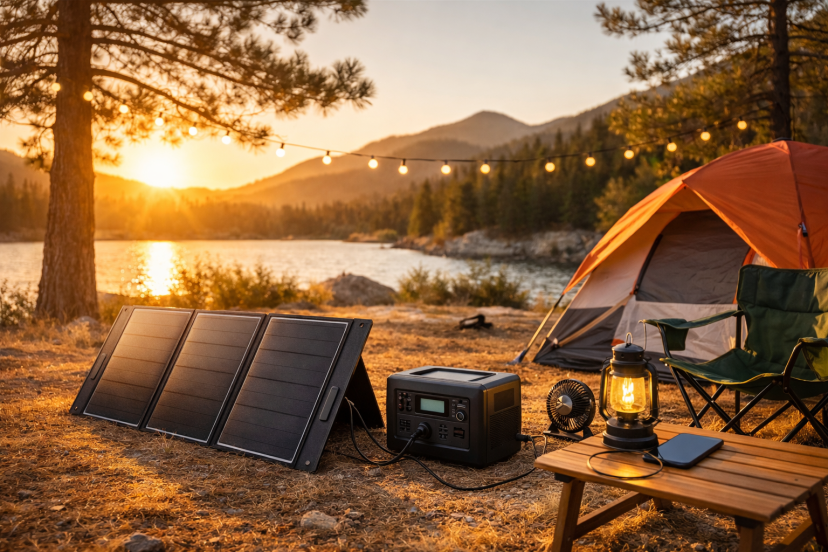
You know that moment at camp when your phone drops to 12%, your lantern starts acting dramatic, and your power station suddenly feels less “adventure-ready” and more “expensive paperweight”? That is exactly where camping solar panels stop sounding like a cool extra and start feeling like the smartest thing you packed.
The good news is you do not need a giant off-grid setup to make solar useful. You just need the right panel for the way you actually camp. Not fantasy-you. Real-you. The one with a cooler, a few devices, maybe a power station, and a mild obsession with staying comfortable outdoors.
In this guide, I’ll walk you through what size to buy, which features matter, what real-world performance looks like, and five Amazon options worth a close look. You’ll leave knowing which kind of panel fits your trips and which ones are mostly marketing in a shiny fabric case.
Affiliate note: This article may include Amazon product recommendations, which means I may earn a small commission at no extra cost to you.
Why camping solar panels feel like a luxury until you use one
At first, portable solar can seem optional. Then you spend one weekend rationing battery life like it is canned soup.
A good solar panel gives you freedom in a very unglamorous but wonderful way. You can top up a power station, keep lights running, recharge phones, and stretch your trip without hunting for outlets or idling your vehicle. That is the real win. Not “survival mode.” Just less friction.
And honestly, that matters whether you are tent camping, car camping, overlanding, or sitting at a family campsite trying to keep a fan running for one more hour.
How much power do you really need at camp?
This is where most people either overspend or underbuy.
If you only want to charge a phone, headlamp, or small power bank, a compact solar charger can work. However, if you want to recharge a portable power station, run a CPAP, keep camera batteries ready, or support a longer weekend, you are usually looking at a 100W to 200W foldable panel.
A simple way to think about it is this:
- 20W to 40W: phones, small USB devices, minimalist trips
- 60W to 100W: light weekend use, small power stations, mixed gadgets
- 120W to 200W+: longer trips, bigger batteries, more comfort gear
That “sweet spot” idea lines up with current expert testing too. Outdoor Life tested 14 portable solar panels from 100W to 400W and emphasized that portability, setup ease, and power-station compatibility matter just as much as raw wattage.
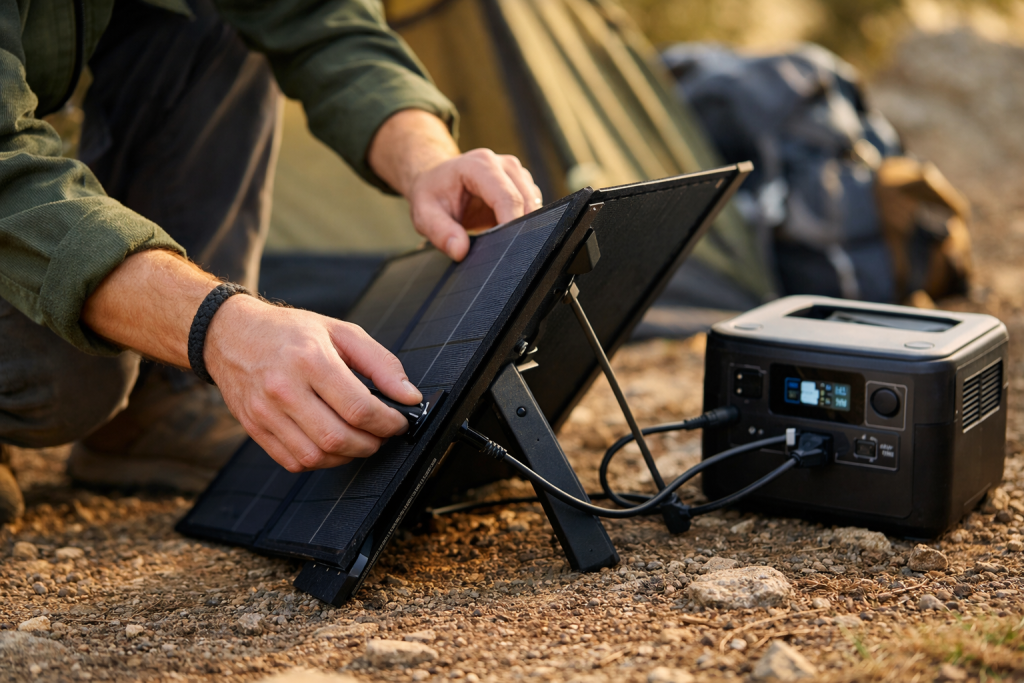
What size panel makes sense for your camping style?
If you are a weekend tent camper, a 100W panel is usually the safest bet. It is big enough to be useful but still manageable to carry, store, and angle toward the sun.
If you are traveling with kids, running a bigger battery, or camping for several days, a 120W to 200W panel gives you more breathing room. Less waiting. Less device triage. Less “who used the fan last?”
If you are mostly backpacking or just need emergency USB charging, a smaller USB-focused panel may be enough. But for most commercial buyers searching camping solar panels, 100W is where practical starts to beat theoretical.
Features that matter more than marketing
Some product pages throw around buzzwords like confetti. A few specs actually matter.
Look closely at these:
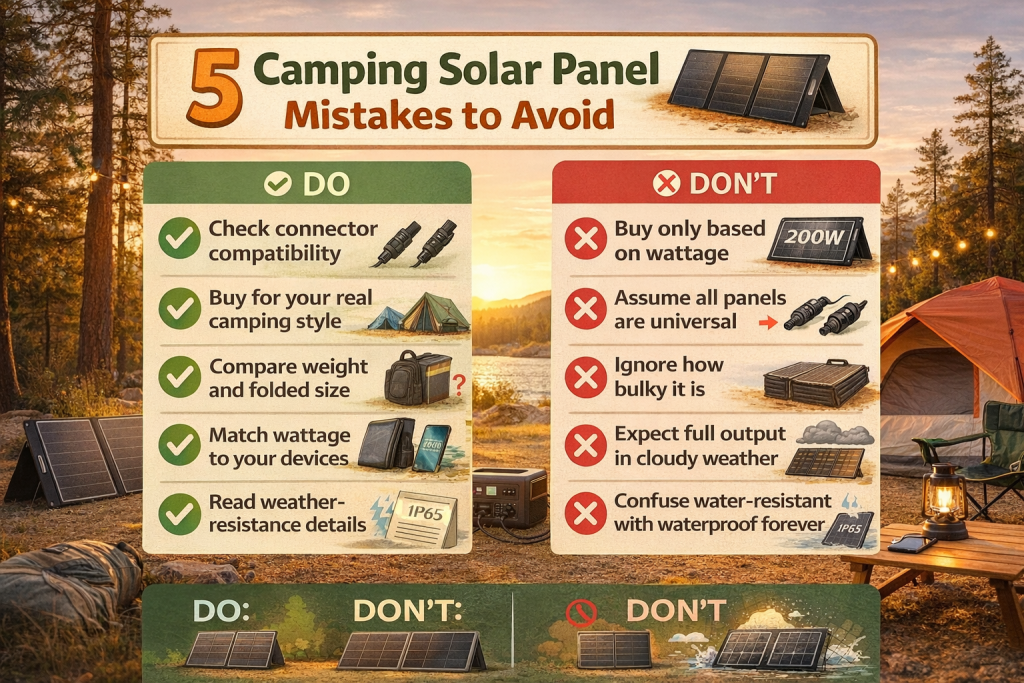
- Cell type: monocrystalline is usually the better choice for portability and efficiency
- Weather rating: IP65, IP67, or IP68 gives better outdoor confidence
- Kickstands or angle support: this matters more than people think
- Connector compatibility: especially if you already own a power station
- Weight and folded size: because “portable” can still mean annoyingly bulky
- Included controller or adapters: useful if you want battery charging flexibility
A panel can have strong wattage on paper and still be annoying in real life if it tips over, packs awkwardly, or needs adapter gymnastics every time you use it.
Monocrystalline, bifacial, and other terms made simple
Here is the plain-English version.
Monocrystalline panels are the usual safe choice for camping. They are efficient, common, and widely used in portable foldable panels.
Bifacial panels are designed to capture sunlight on both sides. In the right conditions, that can boost output. In normal camp conditions, it can help, but it is not magic. Think of it as a bonus, not a reason to ignore the basics.
And if a listing talks about conversion efficiency, treat it as useful but not sacred. A high-efficiency panel is good. A well-designed, easy-to-position panel is often better in real use.
Foldable panels vs suitcase panels vs compact USB chargers
These three categories feel similar until you actually use them.
Foldable panels are the most versatile for most campers. They pack flatter, pair well with power stations, and balance power with portability.
Suitcase-style panels are often sturdier and sometimes include a controller. They are great for RV, van, or battery-focused setups, but they can be heavier.
Compact USB solar chargers are best for direct phone and small-device charging. They are handy, but they are not usually the right answer if you want to recharge a serious power station.
So if you want dependable off-grid power, start with foldable 100W or 200W models first.
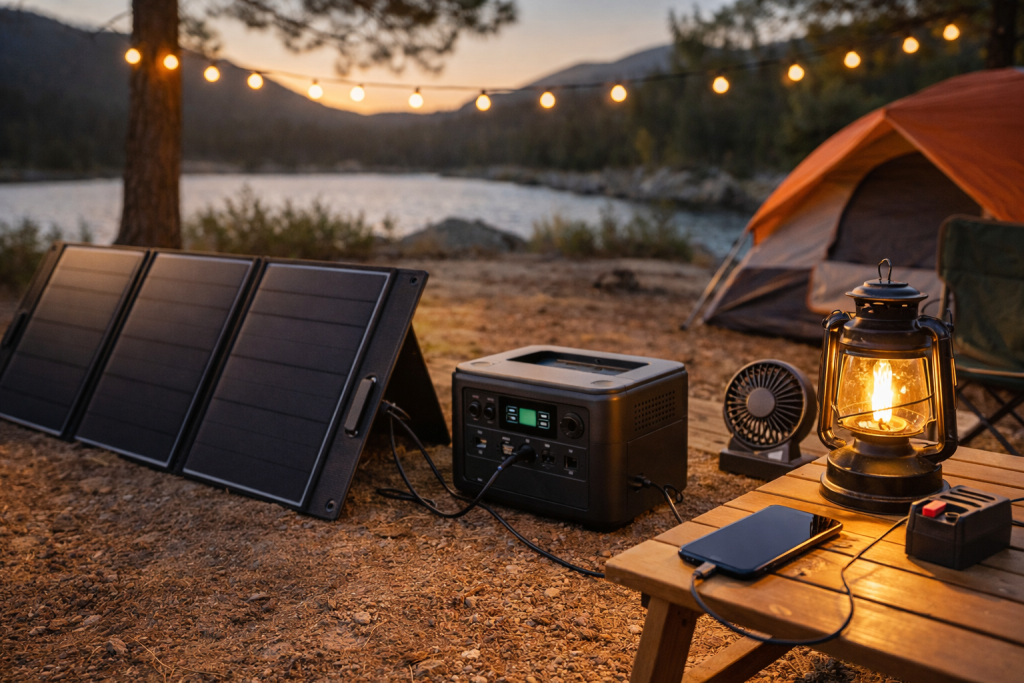
How to match a panel with your power station
This part is boring. It is also where smart buyers save themselves a headache.
Outdoor Life’s testing notes that you need to check both power potential and port compatibility before buying. In other words, make sure your power station can safely accept the solar input and that the connector actually fits. Different brands use different ports, and some even vary within their own product lines.
That is why adapter bundles and cable options matter. A panel is only “universal” until you find out your battery disagrees.
What real-world output actually looks like
This is the part sellers love to blur.
The U.S. Department of Energy explains that solar module ratings are measured under standard test conditions: 1,000 W/m² of sunlight and a cell temperature of 25°C. In real life, sunlight is often lower and cell temperatures are often higher, so actual output usually falls below the lab number.
That means a 100W panel is not lying to you. It is just quoting its best-behavior number.
Outdoor Life’s field testing makes this feel very real. In its testing, the Bluetti PV120 produced 110W in full sun and 25W in cloudy conditions. That is a great reminder that weather, angle, and conditions matter just as much as the label.
How shade, heat, and weather change performance
Solar panels are a little like houseplants. They do best when you pay attention to placement.
The Department of Energy notes that solar cells generally work better at lower temperatures, while higher temperatures reduce voltage and efficiency.
Shade is even trickier. An NREL study found that partial shading can cause a disproportionate power drop. In one example, shading a single cell could trigger a bypass diode and reduce module power significantly. Tiny shadow, surprisingly big attitude.
So yes, moving your panel three feet to escape a branch can matter a lot.
Best camping solar panels on Amazon right now
Amazon inventory changes fast, so treat these as strong current options to compare rather than eternal truths carved into granite.
Jackery SolarSaga 100W Bifacial Portable Solar Panel
This is a strong pick for campers who want a premium-feeling, easy-to-set-up panel from a well-known power-station brand. Jackery’s listing highlights a bifacial design, 25% conversion efficiency, dual kickstands, and IP68 water resistance.
Best for: campers already using Jackery gear, premium 100W buyers, simple grab-and-go setups.
Renogy 100 Watt 12 Volt Portable Solar Panel with Waterproof 20A Charger Controller Foldable Solar Suitcase
Renogy’s suitcase-style panel feels more like a mini system than just a panel. The listing says it includes a 100W suitcase, a 20A waterproof charge controller, alligator clips, and weighs about 26.6 pounds.
Best for: RV campers, battery charging setups, buyers who want controller-included convenience.
EF ECOFLOW 110W Portable Solar Panel
EcoFlow’s 110W panel is a balanced choice if you care about packability and weather resistance. Amazon lists 23% conversion efficiency, IP68 water and dust protection, and a carry case that doubles as a kickstand.
Best for: car campers, EcoFlow users, buyers who want a clean all-around option.
GRECELL 100W Solar Panel, 21.5V Portable Foldable Solar Panel
This one stands out for compatibility and value. Amazon lists multiple connectors, adjustable kickstands, IP67 waterproofing, and up to 24% efficiency. The listing also shows strong visible customer activity for the product family.
Best for: shoppers who want broad power-station compatibility without paying premium-brand pricing.
BLUETTI 100W Solar Panel for Solar Generator
If you are in the BLUETTI ecosystem, this is the obvious short-list option. Amazon lists 23.4% conversion efficiency, IPX67 protection, a folded size of 23.4 × 22.2 × 1.2 inches, and a weight of 10.9 pounds.
Best for: BLUETTI owners, buyers who want a foldable panel that stays simple and brand-matched.
Setup tips that help you squeeze out more power
A decent panel used well can beat a better panel used lazily.
Try this:
- Angle the panel toward the sun instead of laying it flat
- Reposition it as the sun moves if you are parked for hours
- Keep the power station in shade, not the panel
- Wipe off dust and debris
- Avoid partial shading, even from tent lines or chair backs
This sounds obvious, but camp setups get messy. Little fixes make a real difference.
When a portable panel is not enough anymore
Sometimes portable solar is the gateway drug.
You start with a panel for camp. Then you want backup for outages. Then you start thinking about a shed, cabin, van, or a larger home setup.
If that sounds like you, this guide to planning a solar installation for home or cabin use is a helpful next step. Portable panels are great, but there is a point where a more permanent system becomes the smarter long-term play.
What the research and expert testing say
A 2022 Department of Energy assessment of solar photovoltaic performance explains why solar panels rarely hit nameplate output in the field: the rated number comes from lab-style conditions, while real systems usually operate with less sunlight and higher temperatures. That is why “100W” should be read as a peak rating, not an all-day promise.
A classic National Renewable Energy Laboratory study on shading and PV output found that even small amounts of shade can cause surprisingly large losses because of how bypass diodes and cell groups behave. In real camping terms, one bad patch of shadow can mess with your charging more than you expect.
On the practical side, Outdoor Life’s hands-on testing of 14 portable panels reinforces the shopping lesson most buyers need: do not judge on wattage alone. Portability, ease of setup, kickstand design, and connector compatibility matter a lot once you are actually outside using the thing.
FAQs about camping solar panels
Are camping solar panels worth it for weekend trips?
Yes, especially if you use a power station, lights, fans, cameras, or multiple phones. Even a single 100W panel can make short trips feel much easier by extending battery life and reducing charging anxiety.
What wattage camping solar panels do I need for a power station?
For most small to mid-size power stations, 100W is the practical starting point. If your station accepts more solar input and you camp longer, 120W to 200W can make more sense. Always check the station’s input limits first.
Can camping solar panels charge a phone directly?
Some can, especially models with USB-A or USB-C outputs. Others are designed mainly for power stations. Check the output ports before buying, because not every foldable panel is meant for direct phone charging.
Can camping solar panels still work when it’s cloudy?
Yes, but output drops. Outdoor Life’s testing showed a large difference between full-sun and cloudy performance, and the Department of Energy notes that real-world conditions rarely match lab ratings.
Are camping solar panels waterproof?
Many are weather-resistant, and some carry ratings like IP67 or IP68. Still, treat them like outdoor gear, not submarine equipment. Water resistance helps, but careful use helps more.
The best camping solar panels do not just give you power. They give you breathing room. More light at night. More battery in the morning. More freedom to camp the way you want without watching every percentage point like it owes you money.
If you want the safest overall buying path, start with a quality 100W foldable panel that matches your power station. Keep the setup simple. Learn what you actually use. Then scale up only if your trips demand it.
That is the nice thing about portable solar. You do not have to build the perfect system on day one. You just have to buy the panel that makes your next trip easier.