Solar Panel Cleaning Brush: How to Choose the Right One
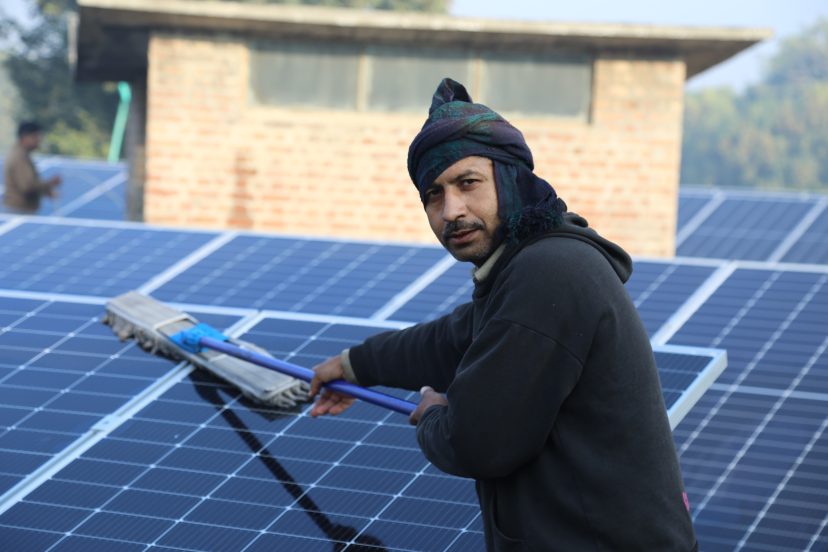
Dusty solar panels can be frustrating, especially when you cannot reach the glass without a ladder. A solar panel cleaning brush promises an easier way to remove pollen, grime, and bird droppings, but choosing one takes more than finding the longest pole. Bristle material, water delivery, weight, and your panel manufacturer’s instructions all matter.
Some brushes are simple hand-operated tools. Some use hoses or motors. Choose based on panel access and safe footing. This guide compares the main designs, explains the features worth paying for, and highlights five options for different cleaning needs. It also explains when to hire a professional.
What Are the Benefits of Using a Solar Panel Cleaning Brush?
A purpose-built brush can loosen adhered dirt that a gentle rinse leaves behind. It helps on reachable arrays with pollen or stubborn deposits.
Controlled contact matters more than scrubbing. A suitable brush spreads gentle pressure across a soft head. However, some module manufacturers restrict or prohibit brushes because even soft bristles can trap abrasive particles. Check your exact panel’s cleaning instructions before shopping; a brush advertised for solar glass is not automatic approval to use it.
Water-Fed Brushes Versus Traditional Manual Brushes
A manual brush is straightforward: wet the glass separately and guide the head over the surface. It suits smaller ground-mounted systems, RV panels, or other installations that are comfortably accessible. They also have fewer fittings.
A water-fed model routes water through or alongside the pole to outlets near the bristles. This makes multi-panel rinsing easier. The trade-off is a hose to manage, possible leaks, and additional weight. Neither guarantees a streak-free result. If your module requires contact-free cleaning, a gentle rinse or approved professional method takes priority over either brush type.
What Makes Brush Bristles Suitable for Solar Glass?
Look for clean, soft, nonabrasive bristles and smooth edges around the head. Synthetic bristles alone do not guarantee compatibility with anti-reflective coatings.
Avoid stiff brushes, scouring pads, and exposed screws. Grit lodged in even a soft brush can scratch glass when dragged across it. Rinse the bristles thoroughly before each use and do not press down to remove stubborn marks. If soaking fails, never scrape. Manufacturer guidance determines whether brushing is allowed.
Choosing the Right Extension Pole Length
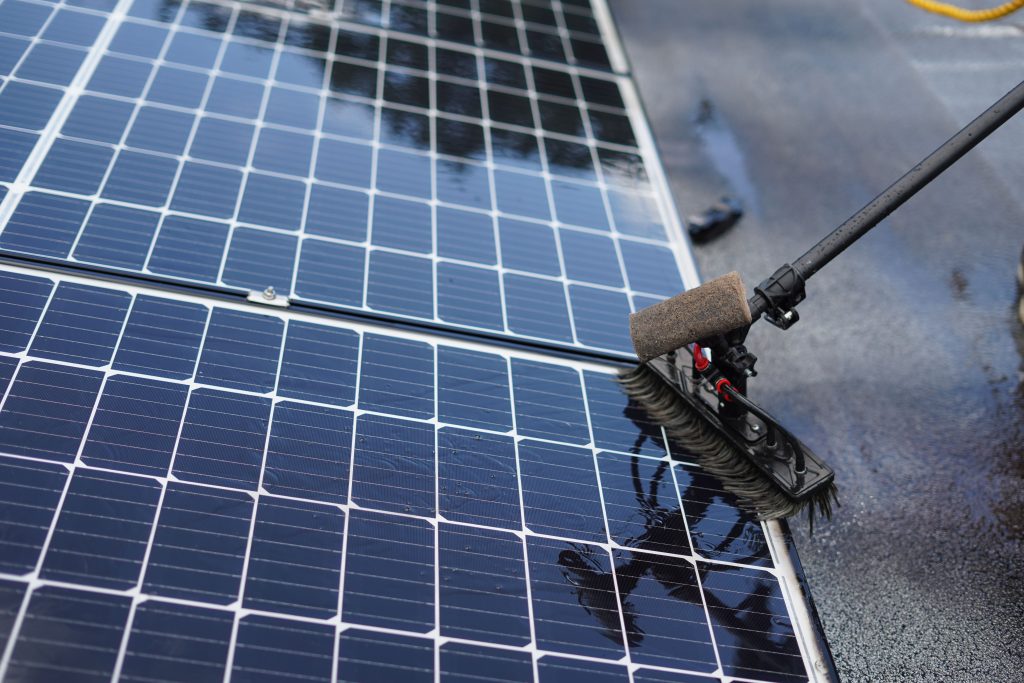
Measure the actual distance from your safe standing position to the farthest panel edge. Roof slope and setback mean a 20-foot pole may not reach panels 20 feet above ground.
Longer poles also become harder to steer, particularly when fully extended and carrying water. Shorter, rigid poles are often easier. Check storage length, locks, and grip. If you cannot maintain controlled, light contact without leaning, stretching, or approaching overhead electrical lines, the panel is not a suitable DIY cleaning target.
Brush Head Width and Adjustable Angles
A wider brush covers more surface per pass, which can help on broad ground-mounted arrays. Wet bristles add drag. Narrower heads are easier to position around module frames and tight installation gaps.
An adjustable or swiveling head can follow the slope of a panel while you remain in a comfortable stance. Choose an angle lock that holds firmly. Protective bumpers help around frames. Before buying, check whether replacement heads fit the pole’s thread or connector; proprietary fittings can make inexpensive replacements difficult to find.
Water Quality, Hose Connections, and Soap Dispensers
Water quality matters as much as the brush. Hard tap water can leave mineral spots after evaporation, especially on warm glass. Purified water reduces spotting; basic sediment filters may not remove dissolved minerals.
For water-fed kits, check hose length, connector compatibility, and whether the valve lets you control flow near the handle. Soap dispensers help only with approved solutions. Many modules should be cleaned with water alone. Avoid assuming that a supplied bottle or generic window detergent is safe for coated solar glass. Gentle flow is preferable to high-pressure spraying.
Manual Versus Electric Brushes: Is a Motor Worth It?
Electric cleaning brushes rotate or oscillate the head, potentially reducing repetitive hand movement over larger areas. They suit frequent cleaning of reachable, dirty arrays.
But a motor adds cost, charging requirements, mechanical parts, and the possibility of applying more friction than intended. Extra power can be counterproductive. Check speed controls, battery care, and replacement heads. Use motors only when your panel maker allows them. For occasional light dust, a manual system is usually simpler.
Matching a Brush to Rooftop, Ground, and RV Panels
Ground-mounted panels typically offer safer footing. A modest manual pole may be sufficient if the array is low and clear on all sides. RV and portable panels similarly favor a compact, easy-to-store brush, provided the panel maker allows it.
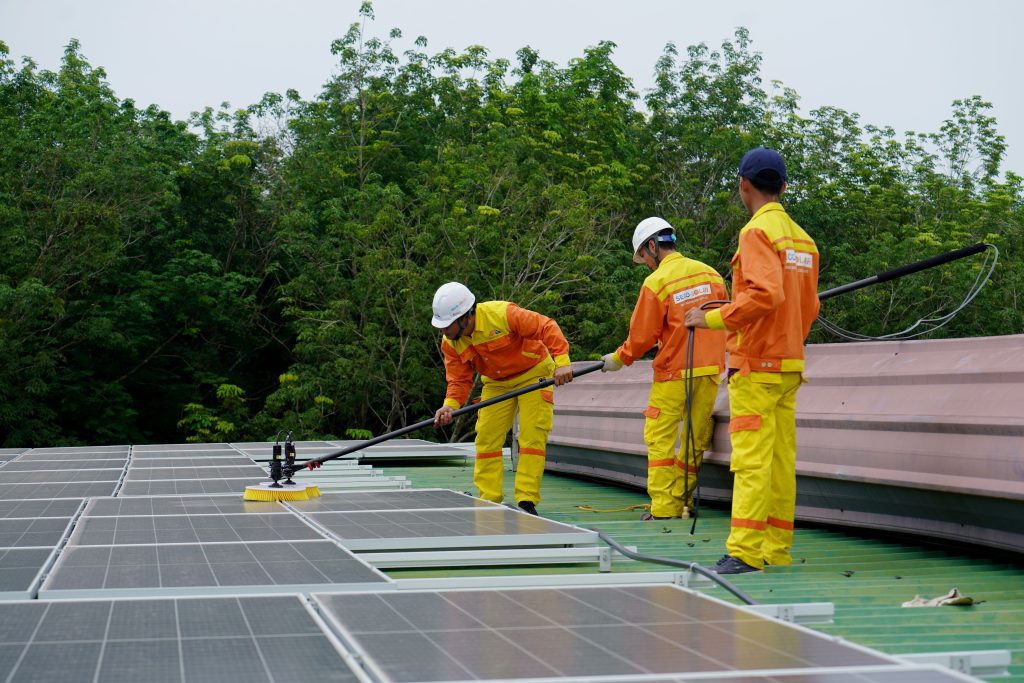
Rooftop installations change the decision. An extension pole is only useful when it reaches the surface from stable ground without dangerous overhead obstructions. Leave steep or high roofs and damaged systems to professionals. Do not mistake longer poles for safer access.
How to Clean Panels Without Damaging Them
Inspect safely for damaged glass, wiring, or connections. Never clean damaged equipment. Read the module manual and follow any installer-approved shutdown procedure; panels can continue producing electricity in daylight even when other equipment is switched off.
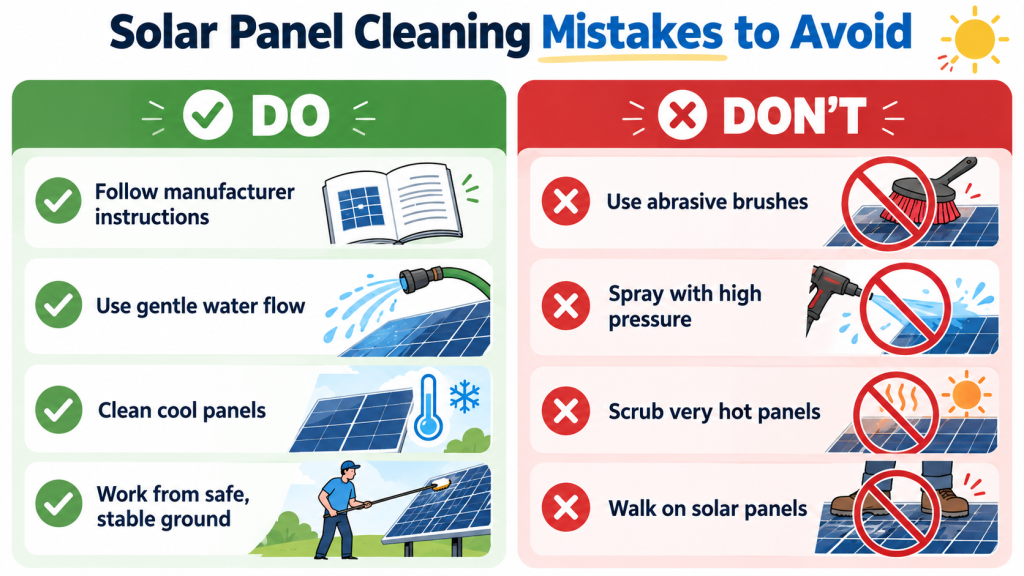
If contact cleaning is permitted, work when the modules are cool. Use a gentle rinse to soften dirt, then move a clean brush lightly without grinding particles across the surface. Rinse thoroughly. Avoid pressure washers, scrapers, harsh chemicals, and directing water at electrical connections. Never step on panels or climb onto an unsafe roof to finish a missed spot.
How Often Is Buying a Brush Worthwhile?
A brush is worth owning when your panels are safely reachable and regularly collect dirt that rain does not remove. Dust, pollen, and birds affect cleaning needs.
There is no universal schedule. Check visible buildup and compare energy generation across similar weather conditions before assuming that soiling explains lower output. Shading, faults, and seasons can cause similar changes. Balance costs and risk against possible energy gains. If your panels usually stay clean after rainfall, purchasing a large cleaning kit may deliver little practical benefit.
Maintaining Your Brush Between Cleaning Sessions
A cleaning brush needs its own care to avoid carrying grit onto the next panel. Rinse the head after use, inspect for lodged sand, and replace worn or stiffened bristles. Dry fittings and motor housings before storage.
Drain hoses, clean locks, and store poles straight. Recharge and store powered brushes according to the battery instructions. Before purchasing any kit, check whether you can get replacement heads, hose connectors, and seals. Replaceable components can lower long-term costs.
Recommended Solar Panel Cleaning Brush Options
Compare these five options only after checking manufacturer instructions.
EVERSPROUT Car Brush with Rubber Bumper 5-to-12 Ft with Extension Pole
Best for: Ground-mounted, RV, and other easily accessible panels.
This nonmotorized brush-and-pole combination adjusts from 5 to 12 feet and has a protective rubber bumper. It can serve several outdoor cleaning jobs without requiring a built-in water hose. The limitation is that you must provide rinsing water separately, and the longer reach should not encourage cleaning from a precarious position.
20FT Water Fed Solar Panel Cleaning Kit, Telescopic Solar Panel Cleaning Brush with Extension Pole & Soap Dispenser for Household & Outdoor
Best for: First-time buyers wanting a bundled water-fed kit.
This kit combines an extendable pole, water-fed brush, and soap dispenser to simplify basic setup. Feeding water near the head helps loosen residue as you work across reachable panels. Check the hose fittings and available replacement parts before purchasing, and leave the dispenser unused unless your module manufacturer approves the cleaning solution.
Briliantwerk Solar Panel Cleaning Brush 20 ft Extension Pole
Best for: Households wanting one tool for panels, windows, and siding.
The Briliantwerk combines an extension pole with a water-fed head and soap dispenser for multiple exterior surfaces. That versatility can justify storage space when window cleaning is also on your maintenance list. Its advertised length still requires careful reach calculations, and detergent suitable for siding should never automatically be used on photovoltaic modules.
EQUIPMAXX 24 Foot Solar Panel Cleaning Brush & Pole with Inline Water Filter System
Best for: Accessible arrays needing extra reach and a filtered supply.
The EQUIPMAXX kit pairs an extendable water-fed pole with an inline filter, making it attractive for owners who want a more complete washing setup. Its longer reach and water system add complexity compared with a compact brush. Remember that an inline filter is not necessarily a deionizer, and tall or awkward roof positions can remain unsafe despite the pole length.
LyriFine Electric Solar Panel Cleaning Brush, 20Ft, Soap Dispenser & Water Fed Pole
Best for: Frequent cleaning where a powered brush is permitted.
LyriFine offers a powered brush with two speed settings, an extension pole, water delivery, and a soap dispenser. Adjustable rotation may reduce the hand effort needed for repeated passes on accessible panels. The battery needs maintenance, and powered contact can increase abrasion risk if dirt is trapped, so check the module’s permitted cleaning methods first.
What Solar Soiling Research Means for Brush Buyers
Cleaning can recover lost energy, but results depend heavily on local conditions. In a 2023 National Renewable Energy Laboratory investigation of pollen on North Carolina solar arrays, performance fell by as much as 15% during peak pollen season. Wet-brush cleaning yielded 5% to 11% gains at those sites. These are not guaranteed residential gains.
Earlier NREL research on dust and solar-panel soiling also describes how rain may remove loose material while some deposits become harder to dislodge. Match your method to the contamination, not a promised gain. Prioritize manufacturer rules, access, and local conditions.
Frequently Asked Questions About Solar Panel Cleaning Brushes
Can using a solar panel cleaning brush damage or scratch the glass?
Yes. Even soft bristles can drag sand or grit across a surface, and some panel coatings require specific cleaning methods. Rinse the brush and panel before contact, avoid heavy pressure, and never use abrasive attachments. Follow your module manual rather than “solar-safe” marketing.
Is a water-fed pole more effective than a standard cleaning brush?
A water-fed pole is more convenient when you need repeated rinsing across several accessible panels. A traditional brush has fewer parts and may be easier to handle on a small RV or ground array. Water-fed kits require a hose and suitable water. Neither is automatically safer for delicate panel surfaces.
What length cleaning pole do I need for a two-story house?
You need enough reach for the actual distance and angle from stable ground, not simply a pole labeled “two-story.” Measure the farthest panel edge and account for roof setback. Very long poles can be difficult to control, and overhead electrical hazards change what is safe. If safe ground access fails, hire a cleaner.
Can I use ordinary tap water with a cleaning brush?
Often yes, if your panel manufacturer permits it, but mineral-rich water can dry into spots. A gentle rinse with purified or deionized water may leave less residue. Sediment filters may not remove minerals. Avoid spraying cold water onto very hot glass or using high-pressure jets.
Is it better to clean solar panels yourself or use a professional service?
DIY cleaning makes sense only when the panels are sound, the manufacturer permits your method, and you can work entirely from a stable, safe location. Professional cleaning is preferable for steep rooftops, inaccessible arrays, nearby electrical hazards, or extensive deposits. Professional service may also prevent damage.
Final Recommendation: Choosing the Right Solar Panel Cleaning Brush
The best solar panel cleaning brush is not necessarily the longest or most powerful one. Begin with your module manufacturer’s cleaning instructions, then consider how far you must reach, whether you need water through the pole, and how comfortably you can control the brush head. For easy access and occasional washing, the compact EVERSPROUT is a straightforward option. For reachable arrays where a water-fed setup and filtering are useful, consider the EQUIPMAXX kit.
No brush makes a steep roof safe. For a fuller maintenance routine, see our guide to cleaning solar panels for better efficiency. Choose the least aggressive approved method that reaches your panels safely, and hire a professional when it does not.