How Solar Panel Shading Affects Output
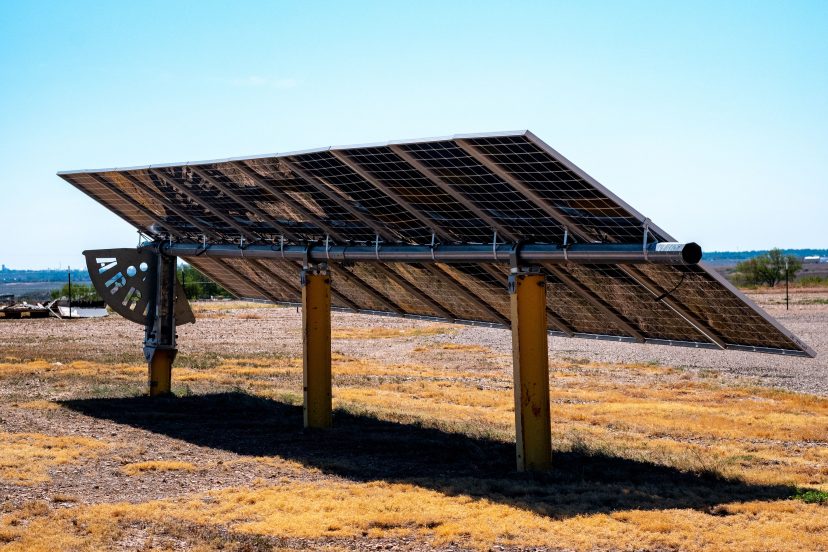
Solar panels love open sky, but real homes rarely offer a perfectly clear horizon. Trees grow, chimneys cast narrow shadows, neighboring buildings block late-afternoon sun, and even a vent pipe can cross a panel at the wrong time. Solar Panel Shading matters because the electrical loss can be larger than the shaded area suggests.
That does not mean every partly shaded roof is unsuitable for solar. What matters is where the shadow falls, how long it lasts, how the panels are wired, and what inverter technology the system uses. This guide explains those factors, shows how to assess shade before and after installation, and compares useful tools and equipment for diagnosing or reducing shading-related losses.
What Solar Panel Shading Actually Does to Output
A photovoltaic cell produces electrical current when sunlight reaches it. Reduce the incoming light, and that cell produces less current. The complication begins because solar cells inside a module are electrically connected, so one shaded area can influence more than the cells directly beneath the shadow.
Think of several people carrying a long table through a narrow hallway. If one person suddenly slows down, everyone else has to adapt. A series-connected group of solar cells behaves somewhat similarly: current through the group becomes constrained when one section receives much less light.
Shade therefore causes two losses. First, less sunlight reaches the panel. Second, electrical mismatch can prevent the remaining illuminated cells or modules from operating at their ideal point.
Why a Small Shadow Can Cause a Bigger Energy Loss
It is tempting to assume that covering 10% of a panel simply reduces its power by 10%. Solar arrays do not always behave that neatly.
Research on partial shading consistently shows that output losses depend on the shadow pattern, electrical configuration, module design, inverter operating point, and bypass-diode behavior—not just the percentage of panel area covered. A 2021 review in Renewable and Sustainable Energy Reviews found that partial shading can create disproportionate energy-yield losses because of electrical mismatch.
A thin shadow from a chimney, pole, antenna, or branch can be especially troublesome when it crosses cells belonging to one electrical section. Therefore, both the shape and position of a shadow matter.
Common Sources of Solar Panel Shading Around a Home
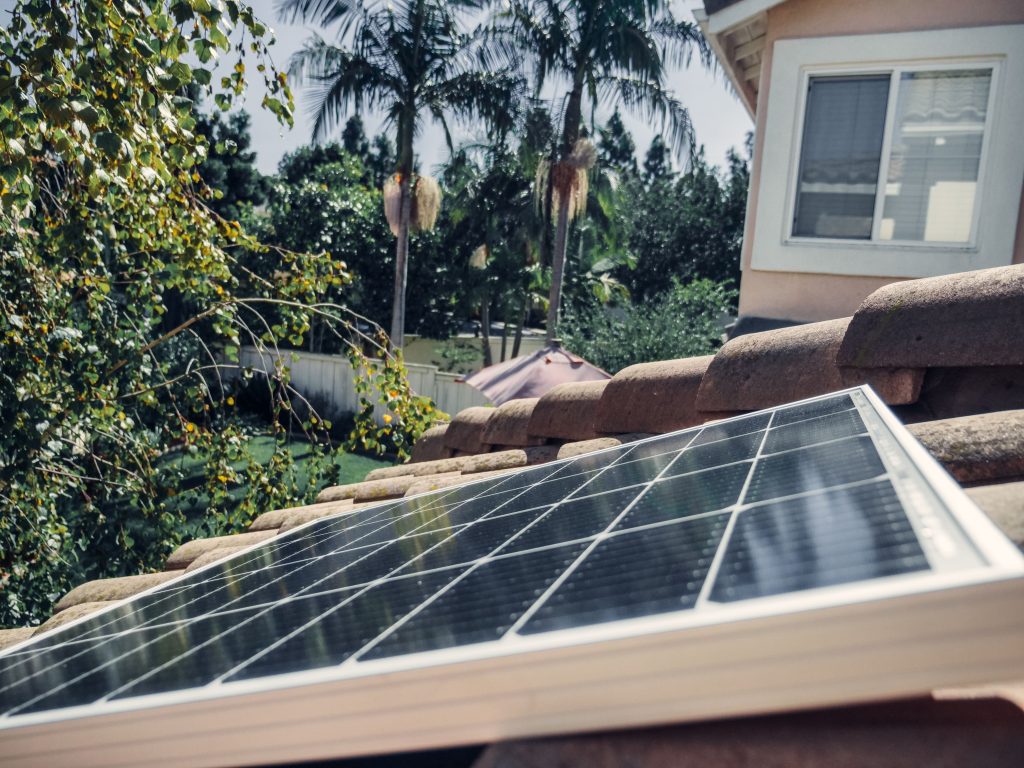
Trees receive most of the attention, but they are only one source of shade. Roof features such as chimneys, dormers, plumbing vents, antennas, satellite equipment, and parapet walls can create surprisingly long shadows when the sun sits low.
Nearby houses, apartment buildings, utility poles, fences, mountains, and mature landscaping can also reduce solar exposure. Ground-mounted arrays may face vegetation growth or shadows from additional panel rows.
Then there are temporary obstacles. Fallen leaves, bird debris, accumulated snow, and objects placed near a small portable system can produce localized shading that looks like an equipment problem.
Before installation, consider obstacles in every direction rather than judging the roof from one sunny afternoon.
Morning, Afternoon, and Seasonal Shade Are Not Equal
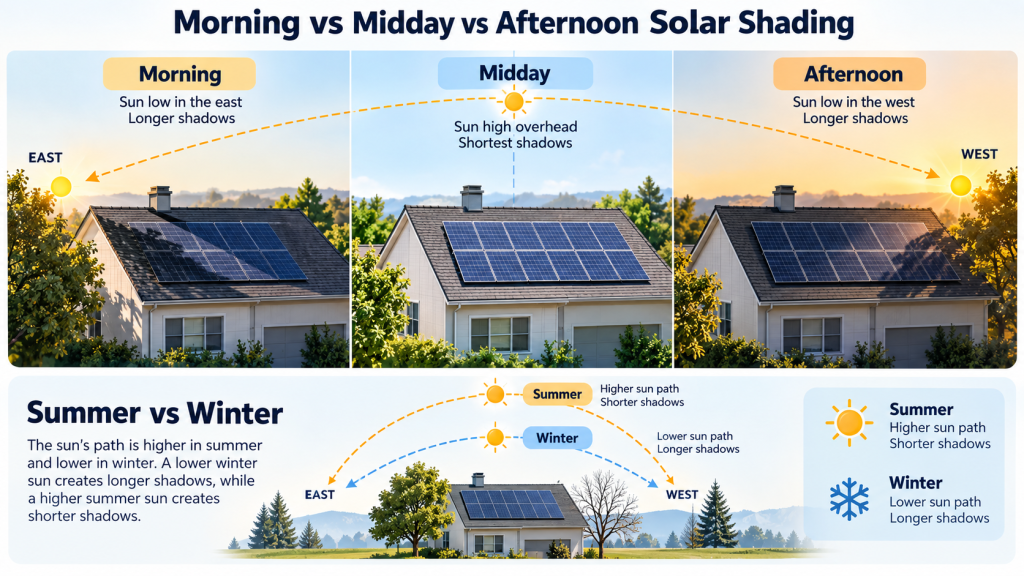
The sun does not follow the same path year-round. A tree that appears harmless during summer can cast a long shadow across the array during winter, when the sun stays lower in the sky.
Likewise, a roof may receive excellent midday sunlight while losing several hours in the morning or afternoon. Whether that matters financially depends partly on your electricity-use pattern, tariff, battery strategy, and annual solar resource.
This is why one photograph cannot provide a reliable annual shade assessment. A professional site model can calculate how obstacles interact with the changing solar path throughout the year.
When deciding between locations, SolarFlez’s guide to Solar Panel Placement: Roof vs Ground Mount explains how shade, roof geometry, available land, and annual production estimates affect the choice.
How String Inverters and Microinverters Handle Shade
System architecture changes how a shaded module interacts with neighboring panels.
With a traditional string inverter, several panels connect electrically in series. Modern string inverters use maximum power point tracking, and well-designed arrays may divide panels across multiple MPPT inputs. However, uneven shade within a string can still create mismatch losses.
Microinverters operate at individual modules, so a shaded panel generally has less influence on the conversion of power from neighboring modules. Power optimizers also provide module-level electronics that can improve operation under certain mismatch conditions.
Neither technology creates sunlight. A heavily shaded module remains heavily shaded. Their advantage is reducing some electrical consequences of mismatch rather than magically restoring the missing irradiance.
What Bypass Diodes Do When a Panel Is Shaded
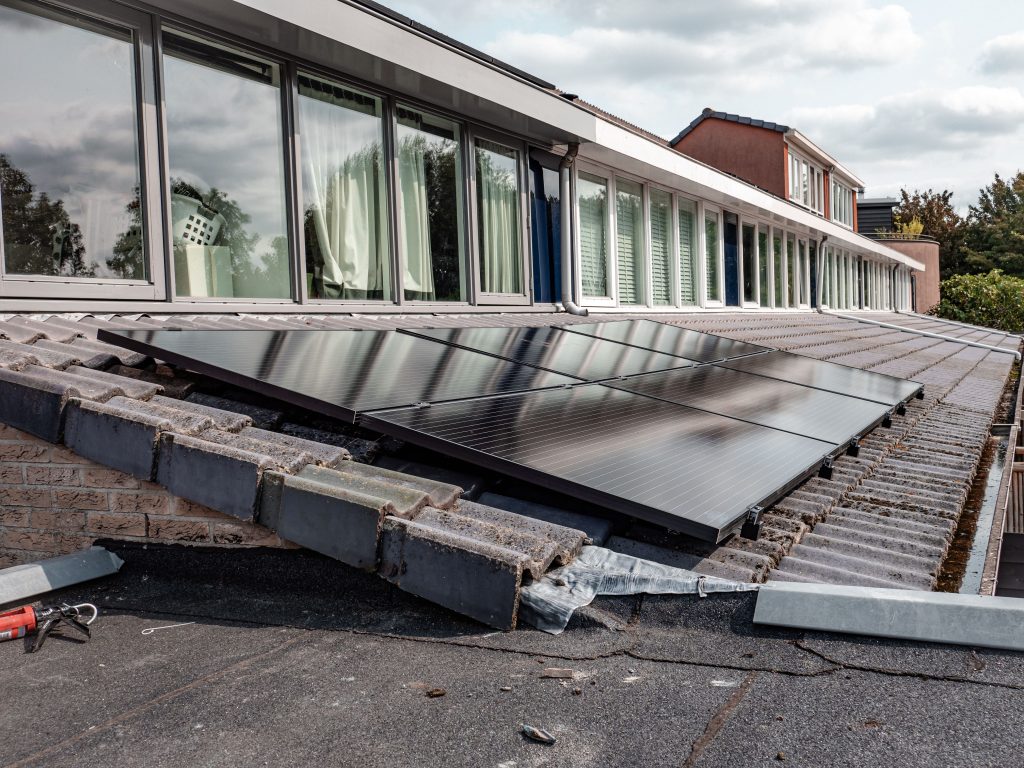
Most conventional modules divide their cells into electrically protected sections called submodules. Bypass diodes allow current to flow around a poorly performing section when conditions require it.
Their primary job is protection. A severely shaded cell can experience reverse bias and heat because current from other illuminated cells continues flowing through the circuit. Bypass diodes help limit that condition.
However, activating a bypass diode means part of the module may effectively stop contributing normal voltage. PVsyst’s technical documentation explains that shading losses can therefore be strongly nonlinear.
So bypass diodes help a module cope with shade, but they do not make shade harmless.
How Much Output Can Solar Panel Shading Cost?
There is no reliable universal percentage because every site is different.
NREL’s PVWatts Version 5 documentation uses a 3% default shading loss for systems regarded as generally unshaded, based on surveys that still found small losses from distant or minor obstructions. NREL specifically advises increasing the shading assumption when nearby trees or structures create meaningful shadows.
Real partial shading can create much larger losses. PVsyst demonstrates scenarios where electrical configuration dramatically amplifies losses beyond the physical area covered.
Instead of relying on rules such as “one shaded panel loses the whole string,” request an annual production model that represents the actual roof geometry, obstacles, module layout, strings, MPPT inputs, and inverter.
How to Assess Shade Before Installing Solar
Start by identifying every permanent obstruction around the proposed array. Look east and west as well as south in the Northern Hemisphere, because morning and afternoon shadows may stretch far across a roof.
Next, consider seasonal changes. Deciduous trees lose leaves, but bare branches can still produce shadows. Evergreens may create year-round obstruction, while a building stays fixed but casts longer winter shadows.
Professional design software and shade-analysis tools can model these effects across the year. Ask installers to show their shade assumptions rather than presenting only a final production number.
Also compare alternative layouts. Moving several modules to another roof plane or choosing an open ground location may beat spending money on electronics to compensate for avoidable shade.
How to Reduce Shading on an Existing Solar System
Begin with the obstruction rather than the electronics. If safe, legal, and environmentally reasonable, trimming vegetation may solve a growing shade problem more directly than replacing system components.
For permanent structures, changing the panel layout may help during a reroof or major system renovation. Installers may also separate differently shaded groups onto suitable MPPT inputs or evaluate module-level power electronics.
Small portable and off-grid arrays have another advantage: you may simply move them into clearer sunlight.
Before modifying anything, examine production monitoring over several clear days. A repeating drop at approximately the same time each sunny day often points toward a predictable obstruction, although equipment faults and other factors still need to be ruled out.
Recommended Products for Solar Panel Shading
The products below serve different jobs: measuring sunlight, investigating temperature differences, checking electrical output, addressing module mismatch, or building a small system that can be positioned away from shade.
| Product | Best for | Main purpose |
| Tigo TS4-A-O | Professionally designed shaded arrays | Module-level optimization |
| DANOPLUS Solar Power Meter | Budget shade surveys | Irradiance comparison |
| Klein Tools IR1 | Spot temperature checks | Non-contact temperature measurement |
| Klein Tools CL390 | Electrical troubleshooting | AC/DC clamp measurements |
| Renogy RNG-100D-SS 100W Panel | Small movable systems | Compact off-grid generation |
Tigo TS4-A-O Module Add-On
Best for: Existing or new systems with selective module mismatch
The TS4-A-O adds module-level optimization, monitoring capability, and rapid-shutdown functionality when incorporated into a compatible system. Tigo specifically positions it for shaded and mismatched modules. Compatibility, system design, connector requirements, and electrical-code compliance need professional review; it should not be treated as a universal plug-in solution for every solar installation.
DANOPLUS Digital Solar Power Meter
Best for: Homeowners comparing sunlight between possible panel locations
This handheld irradiance meter measures incident solar energy in W/m², making it useful for comparing sunlight at different locations or times. It provides a more objective reference than judging brightness by eye. However, a handheld reading captures only that moment, so it cannot replace an annual solar-path and shading model.
Klein Tools IR1 Infrared Thermometer
Best for: Budget-friendly surface-temperature investigation
The IR1 measures surface temperature without physical contact and includes laser targeting with a 10:1 distance-to-spot ratio. Temperature comparisons may help identify unusual panel areas during troubleshooting. However, an infrared thermometer is not a complete photovoltaic diagnostic system, and rooftop electrical investigation should be left to qualified professionals when safe access or live circuits are involved.
Klein Tools CL390 AC/DC Digital Clamp Meter
Best for: Technicians diagnosing electrical performance
The CL390 measures AC and DC current and voltage, giving trained users a useful tool for solar and electrical troubleshooting. Comparing electrical behavior can help distinguish shading from wiring or equipment problems. Its usefulness depends heavily on proper measurement procedures, however, and homeowners should not open or test energized PV circuits without appropriate training.
Renogy RNG-100D-SS 100W Monocrystalline Solar Panel
Best for: Small off-grid systems where panel position can be changed
This compact 100-watt monocrystalline module suits RV, cabin, marine, and other small off-grid projects where users can often choose a clearer mounting position. That flexibility can be valuable where fixed rooftop Solar Panel Shading would be difficult to avoid. Remember that the panel itself does not eliminate shade; thoughtful placement remains the advantage.
Research-Backed Findings About Partial Shading
The evidence strongly supports treating shade as both an irradiance and electrical-design problem.
The NREL PVWatts Version 5 Manual includes shading among system losses and states that nearby trees or structures should be modeled using site-specific shading information rather than relying on its general default. PVWatts uses 3% as a default shading assumption for nominally unshaded systems.
A 2021 peer-reviewed review of partial-shading mitigation concluded that partial shading can produce disproportionate energy-yield losses and examined microinverters, power optimizers, and array-level approaches as mitigation strategies.
Meanwhile, PVsyst’s bypass-diode documentation shows why the fraction of panel physically shaded does not directly predict the electrical loss. String configuration, parallel strings, diode operation, and inverter voltage limits can substantially change the result.
The practical message is simple: model the actual system instead of estimating shade loss from panel area alone.
When Tree Trimming or Moving Panels Makes More Sense
Electronics should not be the first solution to an avoidable obstacle.
If a healthy tree needs only modest professional pruning to prevent a recurring shadow, that may be simpler than redesigning a PV system. However, tree health, property boundaries, local regulations, wildlife, cooling benefits, and landscaping value also deserve consideration.
Likewise, shifting panels several feet during the design stage can sometimes avoid a chimney or dormer shadow entirely. Ground mounting may also provide a clearer solar window when a roof is heavily obstructed.
Compare annual energy estimates for each layout before choosing. Preventing shade usually makes more sense than purchasing equipment solely to manage a poor location.
Monitoring Output After You Address Shade
After trimming vegetation, changing the layout, or adding approved module-level electronics, compare production over similar weather conditions rather than judging one afternoon.
Look at daily energy totals and, when available, panel-level production. A repeating performance gap between neighboring modules can reveal a persistent obstruction or equipment issue.
Weather matters, too. Cloud cover, temperature, season, and soiling can all change output, so comparisons work best across multiple clear days with similar conditions.
Record what you changed and when. That simple note makes future monitoring far easier and helps an installer distinguish a new problem from the normal seasonal movement of shadows.
Solar Panel Shading FAQs
Does shade on one solar panel reduce the whole system?
It can, but the effect depends on system design. Series-connected modules can experience mismatch when one panel receives less light, while microinverters and power optimizers can isolate or reduce some module-level effects. Bypass diodes and inverter MPPT design also influence the outcome, so a shaded panel does not automatically reduce every system by the same percentage.
Can solar panels still generate power when they are partially shaded?
Yes. Panels can still generate electricity from available direct and diffuse light, but output falls when irradiance decreases. Partial Solar Panel Shading can also create electrical mismatch, making the loss larger than the physical shaded area suggests. The result varies with module construction, shadow pattern, wiring, inverter configuration, and time of day.
Are microinverters always better for shaded roofs?
No. Microinverters can reduce the extent to which one shaded module affects neighboring modules, making them useful on complicated roofs. However, they cannot recover sunlight that an obstruction blocks. Cost, roof layout, equipment compatibility, service access, warranty terms, and annual modeling should all influence the decision.
Can trimming trees noticeably improve solar output?
It can when vegetation creates substantial recurring shade, especially during productive daylight hours. The improvement depends on the tree’s location, the amount removed, season, and array design. Before trimming, confirm that the tree is actually responsible for meaningful losses and consider local rules, arborist guidance, property boundaries, and the tree’s other benefits.
How can I tell whether shading is causing low solar production?
Check production data on clear days and look for output drops that repeat at similar times. Then compare those times with shadows crossing the array. Module-level monitoring, irradiance measurements, professional shade modeling, and inspection can provide stronger evidence. Do not assume every output drop is Solar Panel Shading, because equipment faults, soiling, weather, and temperature can produce similar symptoms.
Final Recommendation for Managing Solar Panel Shading
The best response to Solar Panel Shading starts before equipment is purchased. Map seasonal shadows, compare possible array locations, and ask for annual production estimates that account for nearby trees, roof features, and system wiring.
When shade cannot reasonably be avoided, inverter architecture and module-level electronics deserve careful consideration. A professionally designed Tigo TS4-A-O setup may help where selective module mismatch exists, while tools such as an irradiance meter can help investigate potential shade patterns. Small movable systems, including a Renogy 100W panel, offer more freedom to chase clear sunlight.
Most importantly, do not judge shade by the percentage of glass covered. Evaluate the complete electrical system and the shadow over time. Prevent avoidable shade first, then choose mitigation technology only where the expected energy benefit justifies it.