How To DIY Solar Window Screens
Hot afternoon sun can turn one bright room into the uncomfortable corner everyone avoids. Curtains reduce glare, but the heat has already crossed the glass. Exterior Solar Window Screens address the problem earlier by shading the window before much of that solar energy reaches the pane.
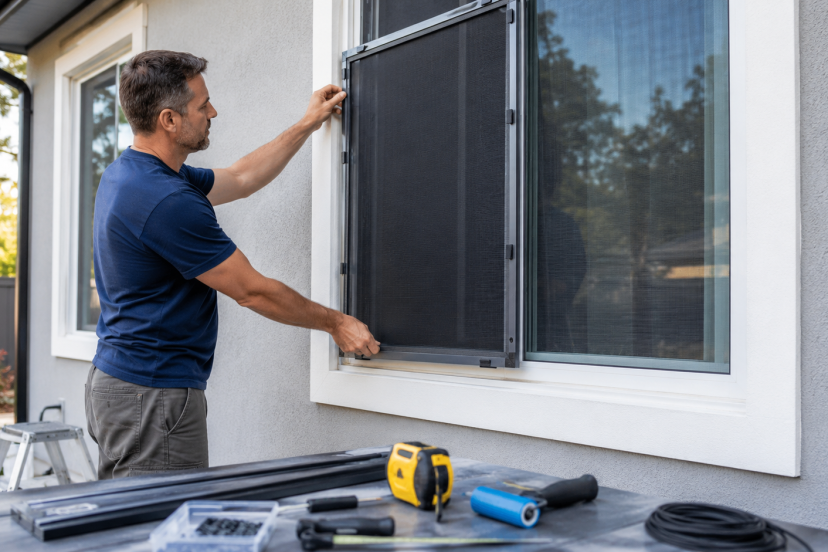
Building a removable screen is a realistic weekend project. You need accurate measurements, compatible frame parts, suitable mesh, and patience with a spline roller. This guide explains how Solar Window Screens work, how to choose mesh density, build and mount a frame, and select supplies for different window sizes.
The goal is a cooler, more usable room without sacrificing every bit of daylight or your view.
What Solar Window Screens Actually Do
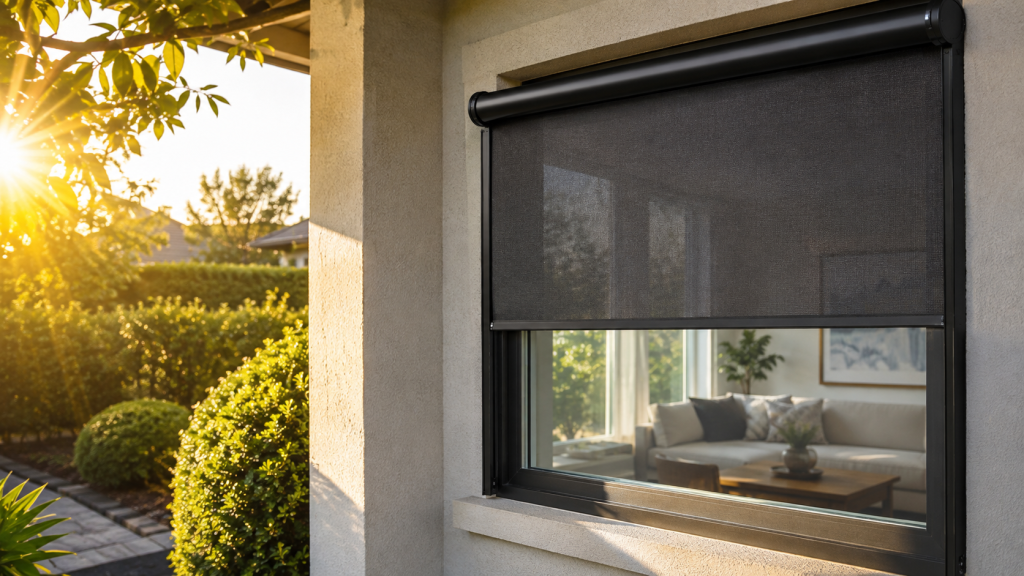
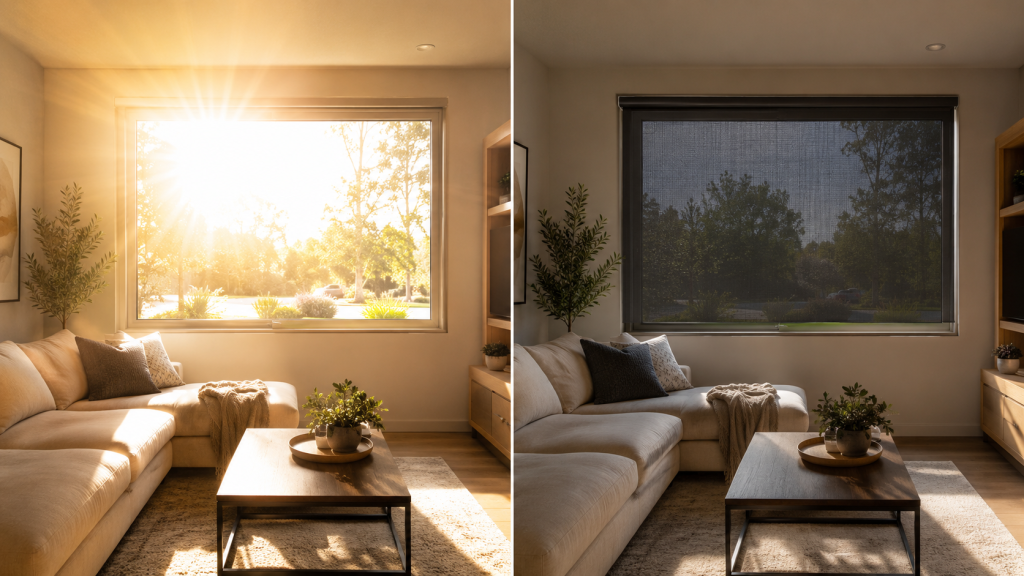
A solar screen is a woven exterior attachment, not a blackout panel. It intercepts sunlight before it reaches the glass while preserving some daylight, airflow, and outward visibility. It suits west-facing rooms, sunny offices, and patio doors.
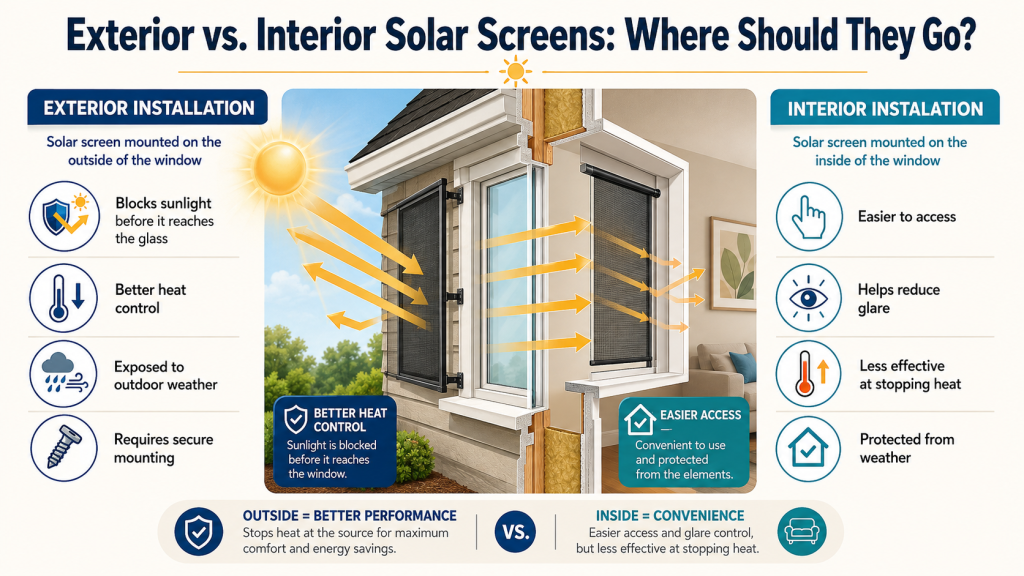
Solar Window Screens work best outside because absorbed and reflected energy stays largely beyond the glass. They may add daytime privacy, but that effect reverses after dark. They are not insulation, storm protection, or a substitute for repairing leaky windows.
Decide Whether This DIY Project Fits Your Window
Before buying materials, look for a screen track, recessed channel, clips, turn buttons, springs, or another safe mounting point. A well-fitting insect-screen frame may be reusable.
DIY suits reachable rectangular windows. Consider professional fabrication for arches, oversized frames, upper-story openings, fragile trim, or windows without an obvious attachment method. Renters should obtain permission before drilling into exterior surfaces.
Choose the Right Shade Level and Mesh Type
For Solar Window Screens, 80% fabric usually preserves more daylight and airflow than 90% fabric. Choose 90% for severe west-facing exposure or when glare control matters more than a bright view.
The percentage is only a guide. Openness, color, orientation, climate, and placement affect results. Dark mesh often gives a clearer outward view. Test one panel for several sunny days before covering every window.
Measure for a Screen That Fits Without Binding
Measure the opening or track, not the visible glass. Record width in three places and height in three places, then use the smallest values because openings are not always square.
Follow the frame-kit instructions for corner allowances and clearance; connector depths vary. Label every window and note the exterior side.
Compare both diagonals after assembly; equal measurements indicate a square frame. Test-fit it before adding Solar Window Screens mesh.
Gather Tools and Materials Before Cutting
For Solar Window Screens, gather mesh, aluminum rails, corners, spline, mounting hardware, and any needed tabs or springs. Use a tape measure, pencil, miter box, fine-tooth hacksaw, file, utility knife, spline roller, gloves, and safety glasses.
Match spline diameter to the groove and fabric thickness; old spline may be too large. Consider a crossbar for a wide frame and test a short scrap first.
Recommended Solar Window Screens and DIY Supplies
These products cover small repairs, wide openings, moderate or strong shade, missing frames, and multi-window projects.
| Product | Best use | Main tradeoff |
| ADFORS Premium 36 x 84 | One or two small windows | Limited width |
| ADFORS 48 x 84 | Wide window or door | More trimming |
| PHIFER SunTex 80 | Brighter multi-window project | Large roll |
| PHIFER SunTex 90 | Strong glare control | Darker view |
| Prime-Line PL 7803 | Building a new small frame | 36-inch parts |
| ADFORS 36 x 100 | Batch of narrow windows | Hardware sold separately |
ADFORS Premium Solar Screen, 36 ” x 84″, Charcoal
Best for: First-time DIYers covering one or two small windows
This manageable fiberglass roll is listed to block 75% of the sun’s rays and is sized for focused projects. It creates less leftover material and is easier to handle than a contractor roll. Measure first: a 36-inch width cannot cover a broader frame without a seam, which should be avoided.
ADFORS Solar Screen, 48 Inches x 84 Inches Roll – UV-Resistant Replacement Screen for Windows and Doors – Charcoal
Best for: Wider windows or one screen door
The 48-inch width accommodates broader openings while remaining manageable on a worktable. Its PVC-coated fiberglass mesh is listed for 0.140-inch spline. Because solar fabric is thicker than standard insect screen, test that spline size against your actual frame groove before securing all four sides.
PHIFER Wire Suntex 80 Screen 60″ X 100′ Black
Best for: Homeowners screening several large windows
This large vinyl-coated polyester roll suits repeated projects and wide frames. SunTex 80 favors a brighter view and more airflow than denser SunTex 90 while still targeting heat and glare. The 100-foot length is excessive for one window, so it makes more sense for whole-home work or property maintenance.
PHIFER Black 3004167 SunTex 90, 48″ x 100′
Best for: Strong glare control across multiple sunny windows
SunTex 90 suits severe afternoon exposure and greater daytime privacy. The polyester material is made for exterior sun-control applications and comes in a contractor-scale roll. Expect a darker view and less airflow than with 80% fabric, and verify that the frame groove and spline accept its thickness.
Prime-Line PL 7803 Screen Frame Kit, 5/16 In. x 3/4 In. x 36 In., Aluminum, Mill Finish (1 Kit)
Best for: Replacing a missing frame on a small window
This kit provides aluminum frame pieces, corners, and spline for a screen within its stated dimensions. It helps when no reusable frame exists. Its 36-inch components will not suit larger openings, and the supplied spline may not fit thick Solar Window Screens fabric, so test compatibility before final assembly.
Saint-Gobain ADFORS Solar Screen, 36 Inches x 100 Feet Roll – UV-Resistant Replacement Screen for Windows and Doors – Charcoal
Best for: Repeated narrow windows with a consistent exterior
This long fiberglass roll suits rows of similarly sized windows or rental-property maintenance. Its 36-inch width limits waste on narrow frames, while the 100-foot length supports repeated cuts. Frames, corners, spline, tools, and mounting hardware are separate, making it better for organized batch work than one-window beginners.
Cut and Assemble the Aluminum Frame
Mark the rails, secure each in a miter box, and cut slowly with a fine-tooth hacksaw. File sharp burrs afterward.
Lay the rails flat with every groove facing the same direction. Insert the corners, join the pieces, compare the diagonals, and test the frame. It should fit without being forced.
Install the Mesh Without Warping the Frame
Place the frame groove-side up and leave at least an inch of mesh beyond every edge.
Crease the fabric into the groove, then press in the spline. Complete opposite sides in sequence and keep the mesh smooth, not drum-tight.
Excess tension can bow large Solar Window Screens inward. If distortion appears, remove the latest spline section and reinstall it gently. Trim excess only after the frame remains square.
Mount the Finished Screen Safely
Use hardware designed for the window. Channels may accept spring-loaded frames, while wood trim may use clips or turn buttons. Brick clips fit only certain masonry profiles.
Do not drill near insulated-glass seals, drainage paths, or hidden wiring. Never cover weep holes, and preserve bedroom egress.
Finally, press each corner and confirm that wind cannot lift the frame.
Research-Backed Benefits and Important Limits
The U.S. Department of Energy’s window-attachment analysis reported in 2013 that exterior attachments are generally more effective at reducing cooling energy because they lower solar heat gain before it enters a building. It also found that results vary by climate; blocking useful winter sun can increase heating demand.
The Efficient Window Coverings exterior solar-screen guide lists substantially lower shading-coefficient ranges for exterior screens than interior installations. Placement therefore matters almost as much as mesh density.
The Attachments Energy Rating Council explains that Solar Window Screens and other attachments affect comfort, glare, and energy use, but results depend on climate, glazing, and behavior. Exterior shading is well supported, yet no single bill-savings percentage applies to every home.
That seasonal balance also matters in passive solar design, where useful winter sunlight and unwanted summer heat require different window-control choices.
Avoid These Common DIY Mistakes
Measure the mounting opening, not the glass, and include the connector allowance. Label every set and test the empty frame.
Standard spline may be too large for thick mesh. Test a short section rather than forcing it, and remember that spline adds tension as it seats.
Start with the hottest west- or east-facing room rather than covering every window with the densest fabric.
Maintain and Store Screens for Longer Service
Clean Solar Window Screens with a soft brush, low-pressure water, and mild soap when needed. Avoid pressure washers, solvents, and abrasive brushes.
Inspect corners, spline, clips, and alignment each season. Re-seat loose spline, and store labeled removable screens flat or upright in a dry area.
Do not fold solar mesh sharply because creases may remain visible.
Estimate Cost, Waste, and Project Time
Reusing a sound frame usually costs least. New construction adds rails, corners, mounting hardware, and cutting tools. Large rolls save money only when most material gets used.
Plan cuts before ordering. Allow extra fabric for trimming and a test piece, and make sure the roll is wider than your largest frame.
For your first attempt, schedule one unhurried screen. Repeated windows become faster after confirming measurements and spline size.
Frequently Asked Questions About Solar Window Screens
Do Solar Window Screens make rooms completely dark?
No. They reduce sunlight and glare while allowing some daylight and outward visibility. An 80% mesh usually feels brighter than a 90% mesh. Results also change with fabric color, window direction, surrounding shade, and room finishes, so test one window before covering the whole home.
Should solar screens go inside or outside?
Exterior placement generally controls solar heat more effectively because the screen intercepts sunlight before it passes through the glass. Interior solar shades can still reduce glare, but more absorbed heat remains inside the window system. Use an attachment method suited to your window and local weather.
Can I reuse my existing insect-screen frame?
Often, yes, if the frame is square, undamaged, correctly sized, and strong enough for thicker material. Remove the old spline and mesh, clean the groove, and test the new fabric with compatible spline. Replace bowed rails, cracked corners, or loose hardware first.
Is 80% or 90% solar screen better?
Choose 80% when daylight, airflow, and visibility matter most. Choose 90% for severe glare, strong west-facing sun, or greater daytime privacy. Climate matters too: removable dense screens may be preferable where winter sunlight helps warm the house. Local sun intensity matters too.
Can solar screens damage windows?
Problems can arise from drilling in unsuitable locations, covering weep holes, trapping debris, or interfering with operation. A correctly sized, ventilated screen should not press against the glass. Follow manufacturer instructions, preserve emergency egress, and ask a professional when the mounting surface is unclear.
Final Recommendation for DIY Solar Window Screens
Begin with one problem window, preferably a room that overheats during late-afternoon sun. Reuse a sound frame when possible, choose 80% mesh for a lighter view or 90% mesh for stronger glare control, and confirm spline compatibility before cutting the full panel.
For a small first project, the ADFORS Premium roll is easy to manage. For several wide windows, PHIFER SunTex 80 offers a large format with a lighter view than SunTex 90. Accurate measurements and gentle tension matter more than speed.
DIY Solar Window Screens are most worthwhile when exterior shade, removable installation, and preserved visibility match your needs. Build one carefully, observe it through changing weather, and repeat the design only where it genuinely improves comfort.