Top 10 Solar electric-fence chargers
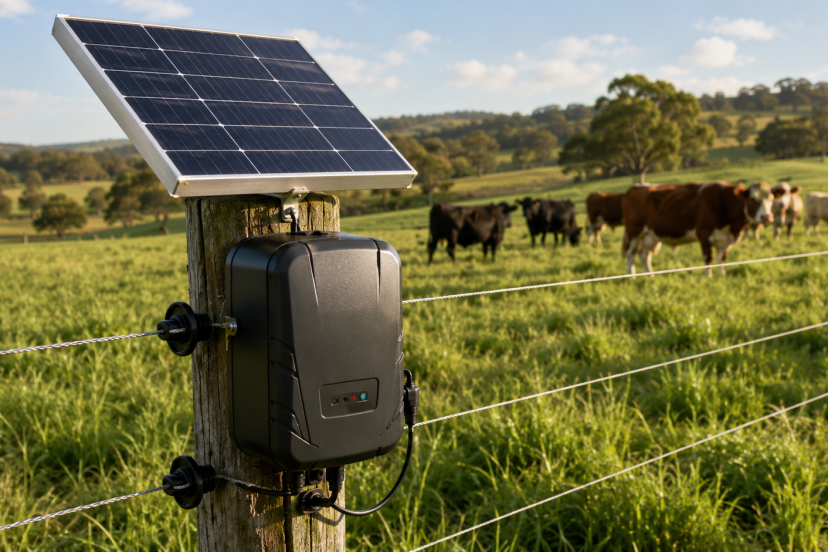
Solar electric-fence chargers combine a solar panel, rechargeable battery, and pulsed energizer in one off-grid unit. They suit farmers, homesteaders, gardeners, and rotational grazers who need livestock containment or wildlife exclusion where outlets are unavailable. Choosing the right model matters because fence length, wire type, vegetation, grounding, and target animals can dramatically change usable performance. We compared current Amazon.com products using manufacturer specifications, mounting features, power class, maintenance needs, warranties, and limitations rather than ratings alone.
Advertised mileage is only a starting point. A charger that powers a long clean steel wire may support far less polywire, netting, or multi-strand fence. This roundup therefore favors realistic use cases and clearly separates compact boundary tools from pasture-scale energizers for easier comparison.
Solar Electric-Fence Chargers Comparison
| Product | Best for | Key feature | Main limitation | Price category | Overall recommendation |
| Gallagher S30 | Versatility | Lithium power management | Moderate output | Premium | Best all-rounder |
| ANDMON MINI400 | Budget buyers | Day/night modes | Support needs checking | Budget | Feature-rich value |
| Gallagher S200 | Large acreage | 2 stored joules | Heavy | Premium | Serious pasture choice |
| Gallagher S12 | Beginners | Built-in earthing | Limited range | Mid-range | Simple setup |
| Gallagher S6 | Gardens | Compact rod mount | Light-duty | Budget | Small-area pick |
| Parmak MAG12-SP | Weedy pasture | 3.1+ joules | Bulky | Premium | Powerful choice |
| Parmak DF-SP-LI | Medium pasture | Analog meter | Heavy | Premium | Easy monitoring |
| Gallagher S80 | Portable netting | Strong lithium output | Expensive | Premium | Mobile performer |
| Zareba ESP5M-Z | Flexible mounting | Multiple mounting options | Light weeds only | Mid-range | Practical unit |
| Zareba ESP2M-Z | Pets and gardens | Two-week reserve claim | Very short range | Budget | Light-duty pick |
1. Gallagher S30 Lithium Solar Fence Energizer — Best for Overall Versatility
Overview: The portable S30 suits small pastures, temporary paddocks, netting, and predator control.
Key Features: 0.3 stored joule; 20-mile ideal rating; lithium-iron-phosphate battery; 3.8-watt panel; adaptive energy control.
Pros: Lightweight, versatile mounting, efficient power management.
Cons: Premium cost; practical range falls below ideal mileage.
Best For: Mixed livestock and movable fencing.
Verdict: It earns best overall by handling varied everyday jobs without the bulk of high-output farm units.

2. ANDMON MINI400 Solar Electric Fence Charger — Best for Budget Buyers
Overview: The MINI400 targets buyers seeking strong published specifications without premium pricing.
Key Features: Manufacturer-claimed 0.4-joule output; 3-watt panel; 12-volt 4.5Ah sealed lead-acid battery; automatic day/night modes; IPX4 enclosure.
Pros: Competitive output, useful modes, included battery.
Cons: Warranty needs confirmation; IPX4 is not submersible.
Best For: Cost-conscious smallholders with clean fences.
Verdict: It is the budget winner, provided you confirm support terms and protect it from standing water.

3. Gallagher S200 Solar Fence Energizer — Best for Large Acreage
Overview: The S200 serves remote pastures, multiwire fencing, livestock, and wildlife pressure.
Key Features: 2 stored joules; 45-mile ideal and 14-mile typical ratings; up to 160 acres; two modes; 360-degree mounting; one-week no-sun reserve claim.
Pros: High capacity, flexible orientation, established support.
Cons: Heavy, costly, excessive for small pens.
Best For: Ranches and demanding permanent fences.
Verdict: Large-property buyers gain useful reserve, while smaller operations should avoid paying for unused capacity.

4. Gallagher S12 Lithium Solar Fence Energizer — Best for Beginners
Overview: The S12 mounts directly to a compatible metal rod that can provide its earth connection, simplifying compact or temporary fences.
Key Features: 0.12 stored joule; lithium battery; built-in earthing capability; portable housing; four-mile ideal rating.
Pros: Fast mounting, lightweight body, simple controls.
Cons: Limited for weeds, long poly lines, or difficult animals.
Best For: First installations and movable paddocks.
Verdict: Straightforward mounting reduces setup friction, though users must still test voltage and follow grounding instructions.

5. Gallagher S6 Lithium Solar Fence Energizer — Best for Gardens and Pets
Overview: The S6 is intended for backyard gardens, chickens, pets, and short clean fences.
Key Features: 0.06 stored joule; lithium battery; direct steel-rod mounting; compact weather-resistant body; fence lead included.
Pros: Highly portable, tidy installation, low maintenance.
Cons: Unsuitable for long, weedy, or high-pressure fences.
Best For: Garden protection and small-animal boundaries.
Verdict: For genuinely short lines, the S6 avoids the expense and bulk of unnecessarily powerful equipment.

6. Parmak Magnum Solar-Pak 12 — Best for Weedy Large Pastures
Overview: The MAG12-SP is a high-output solar charger for large pastures and vegetation loads.
Key Features: 12-volt sealed battery; 3.1+ joules high output; 30-mile ideal rating; low-impedance circuitry; analog performance meter; weatherproof housing.
Pros: Strong vegetation tolerance, visible condition feedback, broad animal suitability.
Cons: Bulky, premium-priced, and covered by a shorter battery warranty.
Best For: Cattle, sheep, goats, predators, and weedy pasture.
Verdict: Its power and meter justify the size where lighter units may struggle.

7. Parmak Deluxe Field Solar-Pak 6 — Best for Medium Pastures
Overview: The DF-SP-LI offers moderate pasture power with Parmak’s outdoor housing and analog meter.
Key Features: Six-volt sealed battery; 1.6+ joules high output; 25-mile ideal rating; low impedance; 21-day darkness reserve claim; performance meter.
Pros: Clear condition display, solid output, replaceable battery.
Cons: Heavier than lithium portables; vegetation reduces range.
Best For: Horses, cattle, pigs, and medium fields.
Verdict: It is a useful middle ground for owners who value immediate fence-status feedback.

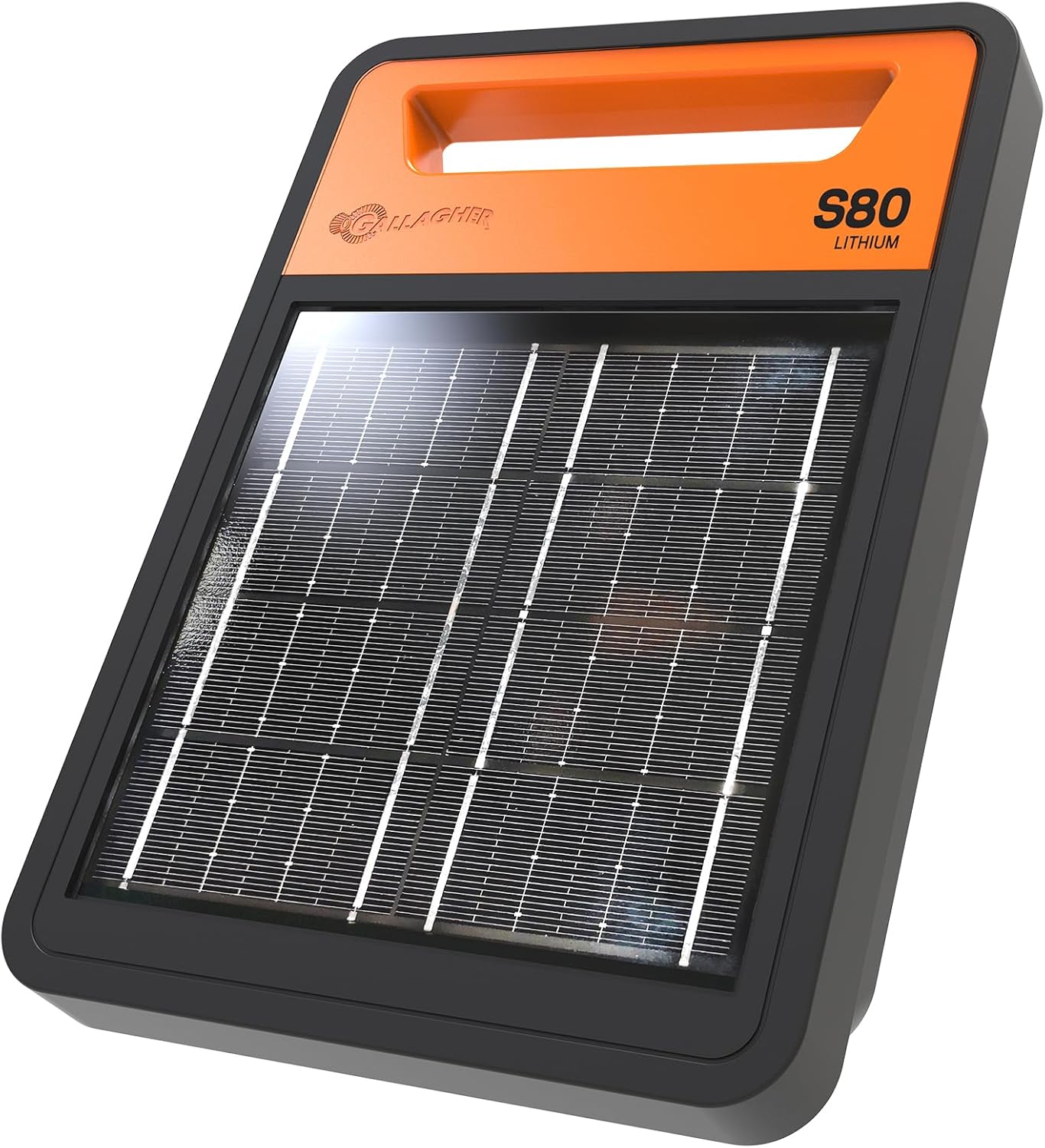
8. Gallagher S80 Lithium Solar Fence Energizer — Best for Portable Netting
Overview: The S80 supplies stronger mobile performance than entry-level chargers without the S200’s bulk.
Key Features: 0.8 stored joule; 0.55 output joule; lithium technology; 5.6-watt panel; seven-mile recommended multiwire range; 30-mile ideal rating.
Pros: Good power-to-weight balance, portable housing, efficient charging.
Cons: Expensive; netting and weeds reduce mileage.
Best For: Sheep, goats, poultry netting, and moved paddocks.
Verdict: Its useful output and mobility make it the premium portable choice.
9. Zareba ESP5M-Z Solar Low-Impedance Fence Charger — Best for Flexible Mounting
Overview: The ESP5M-Z serves remote pens and small livestock areas, with more mounting choices than rod-dependent models.
Key Features: 0.10-joule output; five-mile ideal steel-wire rating; six-volt battery; Fence OK light; post, wall, and hanging mounts; compatibility with wire, polywire, rope, and tape.
Pros: Versatile installation, simple indicator, replaceable battery.
Cons: Intended for no or light weeds; poly products shorten range.
Best For: Small mixed-material fences.
Verdict: Choose it when mounting flexibility matters more than high output.

10. Zareba ESP2M-Z Solar Low-Impedance Fence Charger — Best for Compact Pet Areas
Overview: The ESP2M-Z is a compact energizer for pets, gardens, poultry, and short perimeter lines.
Key Features: 0.04-joule output; two-mile ideal rating; four-volt rechargeable battery; low-impedance design; several mounting options; two-week no-sun reserve claim.
Pros: Compact, accessible, easy to relocate.
Cons: Needs weed-free conditions; unsuitable for large livestock systems.
Best For: Dogs, small animals, gardens, and chickens.
Verdict: It works as a specialized short-fence charger, not a general farm solution.

How to Choose the Best Solar Electric-Fence Chargers
Start with output joules and realistic fence load, not advertised mileage. Mileage generally assumes one clean steel wire under ideal conditions; multiple strands, poly products, vegetation, poor connections, and dry soil increase demand. Choose reserve capacity for seasonal growth and cloudy periods.
Match power to the animal and purpose. Calm horses behind visible wire may require less reserve than sheep, goats, predators, wildlife exclusion, or netting. Use the manufacturer’s application guidance instead of treating voltage alone as a complete measure.
Check grounding, mounting, and sun exposure. Compact models may earth through a metal mounting rod, while powerful units can require several rods. The panel needs dependable sunlight and useful seasonal orientation. Before installation, consult SolarFlez’s solar power electric fence guide for practical placement, grounding, and maintenance guidance.
Compare battery chemistry, serviceability, indicators, and warranty. Lithium units are usually lighter; sealed lead-acid systems may offer familiar replaceable batteries. Confirm included leads, replacement-battery availability, lightning coverage, and current warranty terms.
Frequently Asked Questions About Solar Electric-Fence Chargers
How many joules do I need?
Base your choice on animal type, wire length, strand count, vegetation, wire material, soil moisture, and expansion plans. Manufacturer application charts are more useful than ideal mileage alone.
Do solar fence chargers work on cloudy days?
Yes, stored battery energy covers low-light periods, but autonomy varies. Shade, dirty panels, aging batteries, cold conditions, and heavy fence loads reduce reserve.
Can I use polywire or electric netting?
Many models support them, but resistance and contact points reduce practical range. Choose a charger recommended for your netting quantity and clear vegetation from lower strands.
Is grounding really important?
Absolutely. The animal completes the circuit through soil, so poor grounding creates weak shocks even when the indicator flashes. Follow the manual’s rod and spacing instructions.
Are electric fences safe around children?
They require careful installation, supervision, warning signs, and local compliance. Never alter the energizer, connect two energizers to one fence, or position wires where accidental contact is likely.
Final Verdict
Among these Solar electric-fence chargers, the Gallagher S30 is best overall for balanced portability and capability. The ANDMON MINI400 is the budget choice, while the Gallagher S200 is the premium winner for substantial acreage. Beginners should consider the easy-mounting Gallagher S12. For specialized, vegetation-challenged pasture, the powerful Parmak MAG12-SP stands out.
Compare output, realistic fence load, grounding requirements, dimensions, accessories, replacement batteries, and current warranty details. Check the latest Amazon.com product information and availability before purchasing.