Top 10 Solar battery maintainers
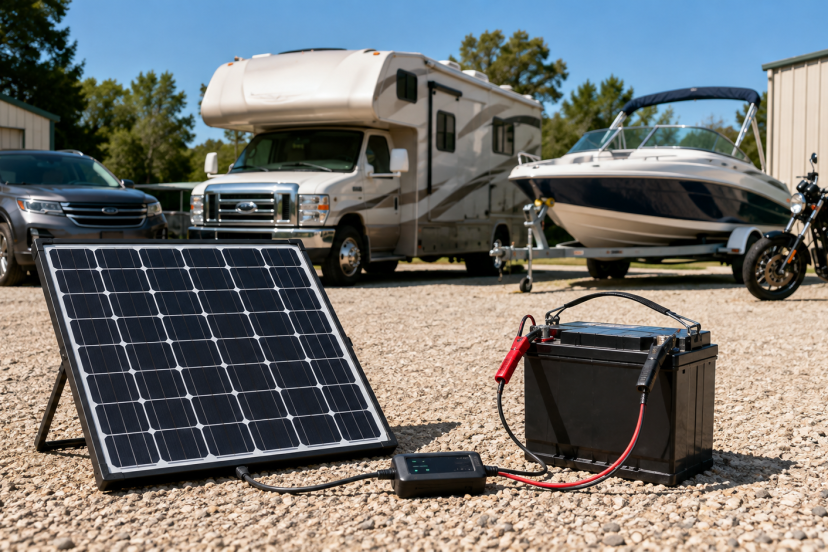
Solar battery maintainers use a small photovoltaic panel and regulated charging circuit to offset the gradual power loss of a stored 12-volt battery. They suit cars, motorcycles, boats, RVs, tractors, lawn equipment, and other infrequently used machines. The right model helps reduce surprise no-start situations, but wattage, battery chemistry, controller design, connectors, mounting, and weather resistance all matter. These Solar battery maintainers were evaluated for verified Amazon.com availability, practical features, construction, compatibility, portability, safety, usability, value, and limitations—not ratings alone.
| Product | Best for | Key feature | Main limitation | Price category | Overall recommendation |
| SOLPERK 20W Kit | Overall use | Controller and adjustable bracket | Rigid panel needs mounting space | Mid-range | Best overall |
| SUNER POWER 12W Pro | Premium compact setups | Built-in MPPT controller | Costs more per watt | Premium | Refined compact choice |
| POWOXI 7.5W | Beginners | Simple dual connection | Maintenance output only | Mid-range | Easy starter |
| Voltset 20W Kit | Fixed outdoor installations | 360-degree bracket | Heavier than dashboard panels | Mid-range | Strong mounted option |
| ECO-WORTHY 10W | Budget buyers | Lightweight SAE design | IP64, not submersible | Budget | Best value |
| FlexSolar 20W | Connector flexibility | Four connection methods | Flexible panel needs careful storage | Mid-range | Most versatile |
| SUNAPEX 1.8W | Small stored batteries | Compact sealed panel | Very low output | Budget | Best compact |
| Sunway Solar 4W | Parked cars | Windshield-friendly format | Slow in weak sunlight | Budget | Convenient vehicle pick |
| Topsolar 20W | Portable higher output | Lightweight panel | Basic status feedback | Mid-range | Good travel option |
| Callsun 7.5W | Durable mounting | IP68 controller | Modest output | Budget | Rugged compact choice |
1. SOLPERK 20W Solar Panel Kit — Best for Overall Battery Maintenance
Overview: This rigid 20W kit balances useful output, broad 12V compatibility, and mounting hardware.
Key Features: monocrystalline panel, smart controller, adjustable bracket, alligator clips, and ring terminals.
Pros: stronger maintenance capacity than tiny dashboard panels; adjustable placement; controller shows operating status.
Cons: bulkier than flexible models and requires space for the bracket.
Best For: RVs, boats, tractors, gates, and vehicles stored outdoors.
Verdict: Its combination of power, mounting control, and accessible mid-range positioning makes it the strongest all-purpose choice.

2. SUNER POWER 12W Solar Charger Pro — Best for Premium Compact Setups
Overview: SUNER POWER packages a 12W panel with its integrated UltraSmart MPPT controller for intelligent regulation without a separate control box.
Key Features: 12V output, built-in MPPT management, status indicators, weather-ready construction, clamps, and ring terminals.
Pros: tidy installation, compact footprint, and broad vehicle or marine usefulness.
Cons: premium pricing and less raw wattage than larger 20W kits.
Best For: owners prioritizing sophisticated control and clean installation.
Verdict: It earns the premium spot by combining compact size with automated control.

3. POWOXI 7.5W Solar Battery Charger — Best for Beginners
Overview: This straightforward glass-panel maintainer offers uncomplicated battery upkeep.
Key Features: integrated controller, reverse-current protection, LED indicators, cigarette-lighter plug, alligator clips, and 12V battery compatibility.
Pros: simple connections, durable construction, and clear feedback.
Cons: 7.5W is intended for maintenance rather than recovering a deeply discharged battery.
Best For: first-time buyers maintaining cars, motorcycles, boats, ATVs, or occasional-use machinery.
Verdict: Its easy setup and protective circuitry suit first-time solar users.

4. Voltset 20W Solar Battery Charger — Best for Fixed Outdoor Installations
Overview: Voltset combines a rigid 20W monocrystalline panel, smart controller, and adjustable aluminum mount for stationary equipment.
Key Features: 360-degree bracket, LED status display, alligator clips, O-ring terminals, and support for several 12V chemistries.
Pros: stable mounting, useful output, and straightforward permanent wiring.
Cons: the four-pound assembly is awkward for dashboards or frequent repositioning.
Best For: boats, trailers, RVs, gate batteries, and equipment sheds.
Verdict: Choose it when secure mounting matters more than compact portability.

5. ECO-WORTHY 10W Solar Car Battery Charger — Best Budget Option
Overview: This lightweight 10W panel covers essential maintenance without a large framed kit.
Key Features: SAE connection, alligator clips, cigarette-lighter adapter, suction cups, blocking diode, and charging indicator.
Pros: low weight, two connection routes, and accessible pricing.
Cons: its IP64 rating suits splashes and light rain, not submersion or careless exposure.
Best For: budget-conscious car, mower, small-boat, or utility-vehicle owners.
Verdict: It offers usable wattage and easy setup at low cost.

6. FlexSolar 20W Battery Charger Maintainer — Best for Connector Versatility
Overview: FlexSolar’s thin 20W panel accommodates several vehicle connection methods.
KeyFeatures: OBD-II, cigarette-lighter, alligator-clip, and O-ring adapters; built-in controller; carabiners; suction cups; IP65 water resistance.
Pros: flexible installation, low weight, and broad compatibility.
Cons: the thin panel should not be sharply folded, compressed, or exposed to punctures.
Best For: households maintaining different cars, tractors, boats, or seasonal machines.
Verdict: Its connector kit reduces the need for extra adapters.

7. SUNAPEX 1.8W Solar Battery Charger — Best Compact Option
Overview: The SUNAPEX targets modest self-discharge rather than meaningful recharging.
Key Features: sealed IP67 design, built-in controller, sunlight and charging LEDs, suction cups, clamps, and 12V socket adapter.
Pros: compact and suitable for tight dashboards.
Cons: 1.8W may be insufficient for vehicles with substantial parasitic loads.
Best For: small batteries, motorcycles, lightly equipped cars, and short seasonal storage.
Verdict: Choose it when sealing and portability outweigh charging speed.

8. Sunway Solar 4W Trickle Charger — Best for Parked Cars
Overview: Sunway Solar’s narrow 4W glass panel fits windshields or dashboards and offsets small drains.
Key Features: suction-cup mounting, cigarette-lighter plug, battery clamps, flashing charge indicator, and reverse-charge protection.
Pros: convenient placement and basic maintenance output.
Cons: it cannot revive a dead battery, and some switched accessory sockets will not work when the ignition is off.
Best For: commuter cars, trucks, and RVs parked between trips.
Verdict: Its plug-in format keeps everyday vehicle storage uncomplicated.

9. Topsolar 20W Portable Trickle Charger — Best for Lightweight Higher Output
Overview: Topsolar provides 20W capacity in a panel weighing roughly one pound, between compact maintainers and heavier kits.
Key Features: monocrystalline cells, water-resistant construction, clips, 12V plug, suction cups, carabiners, and reverse-connection indication.
Pros: strong power-to-weight balance and flexible placement.
Cons: its portable format offers less secure long-term mounting than a framed bracket system.
Best For: travelers moving one charger among cars, boats, trailers, and recreational equipment.
Verdict: Choose it for higher wattage without a heavy rigid assembly.

10. Callsun 7.5W Solar Battery Maintainer — Best for Durable Mounted Setups
Overview: Callsun pairs a 7.5W monocrystalline panel with a regulated controller and adjustable mount.
Key Features: IP68-rated controller, 360-degree bracket, status LEDs, clips, O-ring terminals, and supports 12V LiFePO4, AGM, and gel batteries.
Pros: sturdy frame, flexible positioning, and two connections.
Cons: maintenance-level output and less dashboard convenience.
Best For: boats, trailers, vehicles, and machinery.
Verdict: Its rugged mounting package distinguishes it from similarly powered portable panels.

How to Choose the Best Solar battery maintainers
Start with battery voltage and chemistry. These products target 12V systems, but supported chemistries differ; never assume lithium compatibility from a lead-acid claim. Match wattage to standby drain. Tiny panels can offset natural self-discharge, while alarms, trackers, and control modules may justify 10W or 20W. A maintainer is not a jump starter or fast charger.
Prioritize a regulated controller with overcharge, reverse-polarity, short-circuit, and nighttime reverse-current protection. Choose your connection: clamps are temporary, ring terminals suit permanent installs, OBD-II can simplify car storage, and accessory sockets work only when powered with the ignition off.
Consider placement, cable reach, and sealing. Before installation, confirm that the controller’s charging profile matches the battery maker’s limits, place an inline fuse where the manual requires one, and avoid routing cables across sharp metal, hot engine components, hinges, or areas where water can collect during storage. A rigid bracket suits outdoor equipment; suction cups suit glass; lightweight panels move easily. For more context on choosing and positioning a small 12V charging system, see SolarFlez’s guide to solar power chargers for 12V devices. Verify warranties and inspect cables, connectors, and panel surfaces.
Frequently Asked Questions About Solar battery maintainers
Can a solar maintainer charge a dead battery? Usually not. These low-output products primarily preserve an already serviceable battery; use an appropriate mains charger for deep discharge.
How many watts do I need? Low-parasitic-load equipment may need only a few watts. Vehicles with alarms, trackers, or electronics often benefit from 10W to 20W, subject to sunlight.
Can I leave one connected continuously? A correctly matched model with functioning charge regulation may support long-term connection. Follow its manual and inspect the battery periodically.
Will a cigarette-lighter connection always work? No. Many vehicles disconnect the accessory socket when parked. Test it or use direct clamps, rings, or an approved OBD-II adapter.
Do panels work through windshields? They can, but glass, tint, angle, shade, dirt, and heat may reduce output. Exterior placement usually receives stronger sunlight.
Final Verdict
The SOLPERK 20W is the best overall choice for its balanced output, controller, and adjustable mounting. ECO-WORTHY’s 10W model is the best budget option, while SUNER POWER’s 12W Pro is the best premium pick. POWOXI’s 7.5W kit is best for beginners, and FlexSolar’s 20W panel is the best specialized choice for multi-connector installations. Compare verified specifications, confirm battery chemistry and connector fit, measure the installation area, review current warranty details, and check the latest Amazon.com product information before purchasing.