Top 10 Off-grid solar kits
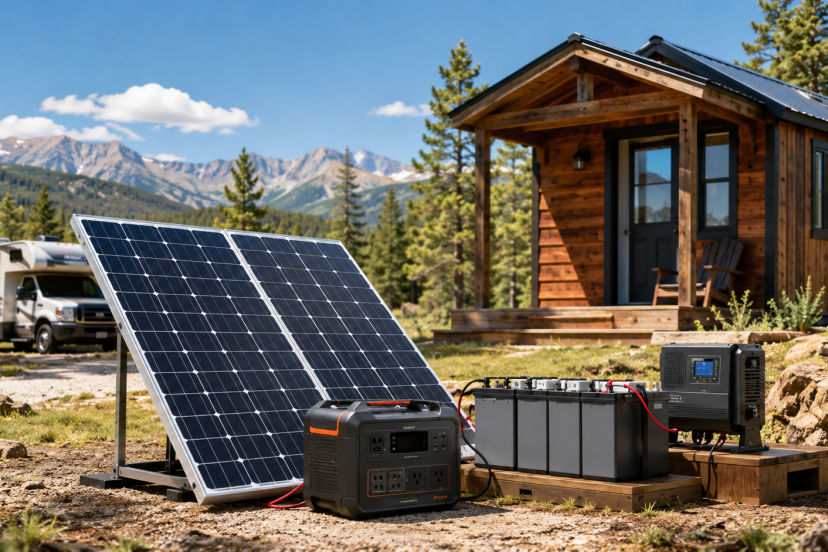
Off-grid solar kits combine panels and charging equipment so you can generate electricity where utility service is unavailable. They suit cabins, RVs, sheds, boats, workshops, and small homes. Some packages include panels, a controller, and hardware; complete systems may also provide batteries and an inverter. Panel output, storage, voltage, and inverter capacity must work together. We compared verified Amazon.com products by completeness, component quality, expandability, installation demands, portability, value, and realistic off-grid use.
Comparison Table
| Product | Best for | Key feature | Main limitation | Price category | Overall recommendation |
| Renogy 400W Premium | Fixed systems | 40A MPPT | Battery and inverter separate | Mid-range | Best overall |
| ECO-WORTHY 1200W | Cabins | Complete 24V system | Complex installation | Premium | Most complete |
| ExpertPower 400W | RV upgrades | Battery and inverter charger | Heavy package | Premium | Integrated choice |
| WindyNation 400W | Budget arrays | Four rigid panels | PWM controller | Budget | Good value |
| Renogy 200W Starter | First system | Simple controller | No storage | Budget | Easy entry |
| ECO-WORTHY 200W | Beginners | Battery and inverter | Limited generation | Mid-range | Convenient starter |
| EcoFlow DELTA 2 Max | Portable power | 2,048Wh station | Heavy | Premium | Plug-and-play |
| Jackery 2000 v2 | Compact backup | 2,200W output | 400W solar ceiling | Premium | Compact 2kWh choice |
| BLUETTI AC200L | RV appliances | TT-30 outlet | Bundle varies | Premium | RV-friendly |
| Anker SOLIX F2000 | Mobile work | Wheels and handle | Heavy on stairs | Premium | Easy to move |
1. Renogy 400W 12V Solar Premium Kit with Rover 40A MPPT — Best for Balanced Systems
Overview: This four-panel kit forms a practical foundation for an RV, cabin, shed, or boat. It pairs 400 watts of rigid panels with a Rover MPPT controller.
Key features: Four 100W panels, 40A MPPT charging, mounts, branch connectors, and cabling.
Pros: Efficient controller; sensible capacity; expansion-friendly.
Cons: Battery and inverter cost extra; installation needs planning.
Best for: Buyers building a dependable fixed 12V system.
Verdict: Its balanced components and manageable scale make it the strongest all-around choice.
2. ECO-WORTHY 4.8KWh 1200W 24V Complete Solar Kit — Best for Cabins
Overview: This package targets cabins, tiny homes, and workshops with larger energy needs. Unlike panel-only kits, it combines generation, storage, and AC conversion.
Key features: Six 195W panels, a 25.6V 100Ah LiFePO4 battery, 3,000W hybrid inverter charger, MPPT charging, and accessories.
Pros: Broad component coverage; 24V architecture; substantial storage.
Cons: Premium cost; demanding installation.
Best for: Permanent systems serving varied household loads.
Verdict: It is compelling when completeness matters more than portability.
3. ExpertPower 1.3KWh 400W LiFePO4 Solar Power Kit — Best for RV Upgrades
Overview: ExpertPower combines a 400W array with battery storage and AC equipment in one coordinated package. It suits RVs, campers, boats, and compact cabins where simpler component matching is desirable.
Key features: Four 100W panels, 12V 100Ah LiFePO4 battery, MPPT controller, 2,000W pure-sine inverter charger, cables, and brackets.
Pros: Integrated charging and inversion; useful storage; complete mounting parts.
Cons: Costlier than panel kits; requires installation space.
Best for: Owners replacing a pieced-together system.
Verdict: The coordinated set makes a capable premium retrofit.
4. WindyNation 400 Watt Solar Kit with P30L Controller — Best for Budget Arrays
Overview: This traditional kit prioritizes useful panel capacity without bundling a battery or inverter. It fits buyers who own those components or select them separately.
Key features: Four 100W panels, 30A P30L PWM controller, brackets, solar cable, and branch connectors.
Pros: Straightforward hardware; flexible battery choice; good value.
Cons: PWM charging is less advanced than MPPT; no AC inverter.
Best for: Budget cabins, boats, and RVs.
Verdict: It supplies a credible 400W foundation without forcing unnecessary bundled equipment.
5. Renogy 200 Watt 12V Solar Starter Kit with Wanderer 30A PWM — Best for First-Time Installers
Overview: Renogy’s starter package keeps the system small and understandable. Two rigid panels need less space, while the controller permits limited expansion.
Key features: Two 100W panels, Wanderer 30A PWM controller, brackets, connectors, and cables.
Pros: Simple component list; clear documentation; manageable roof area.
Cons: No battery or inverter; PWM reduces harvesting flexibility.
Best for: New users powering lights, fans, electronics, or battery maintenance.
Verdict: It introduces fixed solar without requiring a large system.
6. ECO-WORTHY 200W 12V Complete Solar Panel Starter Kit — Best for Beginners
Overview: This package suits people wanting usable AC power immediately. It includes the major components for a compact off-grid setup.
Key features: Two 100W panels, 12.8V 100Ah LiFePO4 battery, 1,100W inverter, 30A PWM controller, brackets, and cables.
Pros: Battery included; convenient matching; suitable for essential loads.
Cons: Limited solar replenishment; expansion may require replacements.
Best for: Beginners outfitting a shed, camper, or emergency corner.
Verdict: Its completeness helps when daily energy demand remains modest.
7. EF ECOFLOW DELTA 2 Max Solar Generator with 400W Panel — Best for Portable Power
Overview: This bundle replaces separate batteries, controllers, and inverters with an integrated power station and folding panel. It suits renters, campers, and temporary setups.
Key features: 2,048Wh LiFePO4 capacity, 2,400W AC output, 1,000W maximum solar input, app connectivity, and a 400W panel.
Pros: Fast setup; varied outlets; expandable storage.
Cons: Heavy for hand carrying; proprietary accessories add cost.
Best for: Portable backup and temporary off-grid use.
Verdict: It provides substantial capability without fixed wiring.
8. Jackery Solar Generator 2000 v2 with Two 200W Panels — Best for Compact Backup
Overview: This bundle combines a compact 2kWh station with two folding 200W panels. It targets users wanting a compact emergency system.
Key features: 2,042Wh LiFePO4 capacity, 2,200W AC output, 400W solar input, under-20ms UPS switching, 100W USB-C, and two panels.
Pros: Compact; strong output; simple deployment.
Cons: Solar input is limited to 400W; no expansion-battery connection.
Best for: Apartments, RVs, and indoor backup.
Verdict: Its compact format and UPS function suit essential household backup.
9. BLUETTI AC200L Solar Generator with PV Panel — Best for RV Appliances
Overview: The AC200L combines a high-output power station with a portable panel option. Its RV connections distinguish it from camping batteries.
Key features: 2,048Wh LiFePO4 capacity, 2,400W pure-sine output, 1,200W solar input, TT-30 outlet, app control, and expansion compatibility.
Pros: Strong AC and DC connectivity; high solar-input ceiling; integrated monitoring.
Cons: Heavy; Amazon panel wattage needs careful checking.
Best for: RV users running mixed appliances and electronics.
Verdict: Its outlets and charging flexibility suit mobile living.
10. Anker SOLIX F2000 Solar Generator with Two 200W Panels — Best for Mobile Worksites
Overview: The F2000 pairs a large integrated battery with 400 watts of folding solar. Wheels and a retractable handle simplify repositioning.
Key features: 2,048Wh LiFePO4 capacity, 2,400W pure-sine output, multiple ports, expansion support, wheels, handle, and two 200W panels.
Pros: Practical mobility; strong output; organized setup.
Cons: Premium price; awkward on stairs or rough ground.
Best for: Mobile workshops, events, and RV travel.
Verdict: It makes high-capacity power easier to transport.
How to Choose the Best Off-grid solar kits
Start with a daily energy audit. Multiply wattage by operating hours, then add losses and cloudy-weather margin. Panel wattage affects replenishment speed, while battery watt-hours determine nighttime runtime. Seasonal sunlight, shade, temperature, and appliance startup surges can materially change the capacity you actually need.
Before buying, use SolarFlez’s off-grid solar system sizing guide to calculate your daily energy use and choose a suitable 12V, 24V, or 48V design.
Check completeness carefully. A “solar kit” may omit the battery, inverter, fuses, disconnects, or roof-specific hardware. MPPT controllers usually allow more flexible panel-voltage design than PWM models. Match inverter continuous output and surge capability to your appliances, not merely array wattage.
Consider cable length, component ventilation, panel mounting, installation space, and weather exposure. Portable stations simplify wiring but reduce customization. Confirm battery chemistry, operating-temperature limits, warranty terms, expansion compatibility, and replacement-part availability.
Frequently Asked Questions About Off-grid solar kits
Do off-grid solar kits include everything?
Not always. Some include panels, a controller, cables, and brackets only. Complete packages may add batteries and an inverter, while safety devices or specialized mounts remain separate.
How large should my kit be?
Use measured daily watt-hour consumption, peak appliance wattage, local sunlight, and desired backup days. Do not rely solely on panel wattage.
Are 12V or 24V systems better?
Small RV and shed systems commonly use 12V. Higher-power cabins may benefit from 24V because current is lower at equal wattage, but every component must match.
Can beginners install these systems?
Compact kits may be manageable with careful documentation. Large batteries, high-current DC wiring, roof penetrations, and permanently wired AC circuits warrant qualified professional help.
How should panels and batteries be maintained?
Keep panels unobstructed, inspect cables and mounts, follow battery storage instructions, maintain ventilation, and verify controller settings. Never mix incompatible batteries or exceed published electrical limits.
Final Verdict
Among these Off-grid solar kits, the Renogy 400W Premium Kit is best overall for its balanced MPPT foundation. The Renogy 200W Starter Kit is the best budget option, while the ECO-WORTHY 1200W package is the best premium system. Beginners should consider ECO-WORTHY’s complete 200W kit. The Anker SOLIX F2000 is the best specialized choice for mobile work and travel.
Compare specifications, confirm compatibility, review warranty details, and check current Amazon.com information before purchasing.