Top 10 Solar suitcase kits
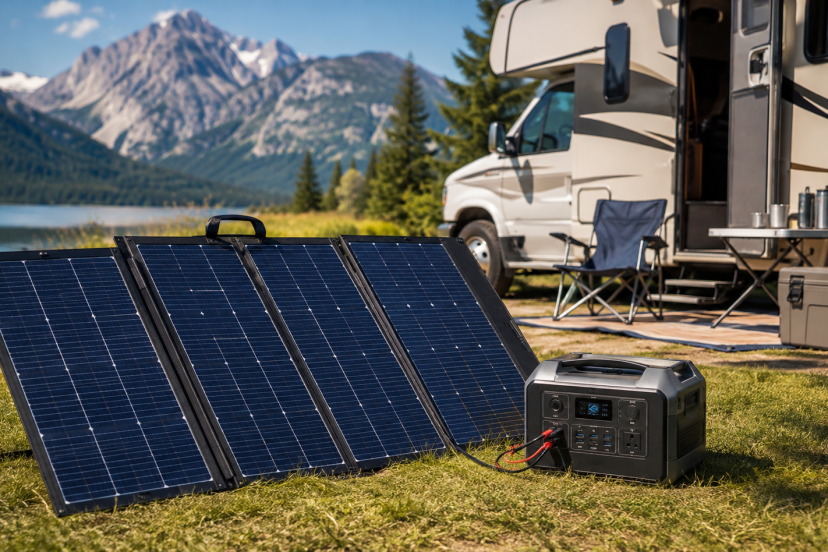
Solar suitcase kits fold into portable cases for charging RV batteries, power stations, camping electronics, and emergency equipment. Battery-ready models include a charge controller and clamps; generator-focused panels usually connect to a power station’s regulated solar input. The right choice depends on wattage, weight, connectors, controller type, construction, and storage space. We compared current or recently verified Amazon US products using manufacturer specifications, portability, included accessories, compatibility, weather-resistance claims, setup demands, and value. These picks cover rigid suitcases, lightweight folding panels, beginner options, and higher-capacity systems. No product was treated as personally tested, and changing prices or ratings were excluded.
Solar suitcase kits comparison
| Product | Best for | Key feature | Main limitation | Price | Recommendation |
| Renogy Voyager 200W | Overall | Controller | Heavy | Premium | Complete |
| Newpowa 200W | Premium | MPPT | More parts | Premium | Flexible |
| DOKIO 200W | Budget | Light kit | Basic controller | Budget | Good value |
| Renogy Portable 200W | Power stations | USB ports | No controller | Premium | Versatile |
| SOKIOVOLA 200W | Wet camps | IP68 claim | Variable stock | Mid-range | Rugged |
| HQST 200W | Transport | Low weight | No controller | Mid-range | Portable |
| GRECELL 100W | Beginners | Adapters | Lower output | Budget | Simple |
| FlexSolar 100W | Devices | USB-C | No controller | Budget | Compact |
| ZOUPW 100W | Compatibility | Five-in-one cable | 100W limit | Mid-range | Adaptable |
| ACOPOWER 200W | Batteries | LCD controller | Few reviews | Mid-range | Complete |
1. Renogy 200W 12V Monocrystalline Foldable Solar Suitcase with Voyager 20A Controller — Best for Overall RV Use
Overview: A rigid folding system for charging 12V RV and camping batteries.
Key Features: Two 100W monocrystalline panels, adjustable stands, waterproof Voyager PWM controller, clamps, and case.
Pros: Coordinated components; simple battery connection; sturdy frame.
Cons: Heavier than fabric panels; PWM rather than MPPT.
Best For: Beginners wanting one battery-ready package.
Verdict: Its controller, supports, and leads make it the most complete general-purpose choice. Its weight is the tradeoff for the rigid, self-supporting build.
2. Newpowa 200W Portable Solar Panel Kit with 20A MPPT Controller — Best for Premium Battery Systems
Overview: A two-panel folding kit built around more advanced MPPT charging.
Key Features: Parallel-wired 100W panels, 20A MPPT controller, Bluetooth support, extension cable, and clamps.
Pros: MPPT control; useful wiring; flexible battery setup.
Cons: More pieces to manage; premium cost.
Best For: RV or cabin owners maintaining compatible 12V banks.
Verdict: The controller and accessory bundle suit buyers prioritizing system capability over minimum weight. Bluetooth can simplify monitoring, although app support should be checked.
3. DOKIO 200W Portable Foldable Solar Panel Kit — Best for Budget Buyers
Overview: A soft-folding 200W package offering portable battery and power-station charging.
Key Features: Monocrystalline panel, separate controller, dual USB ports, compact fold, and claimed 9.7-pound weight.
Pros: Light; controller included; budget category.
Cons: Basic hardware; softer construction needs careful handling.
Best For: Occasional camping and economical backup kits.
Verdict: It delivers substantial rated wattage and useful accessories without traditional suitcase weight or premium pricing. The separate controller also adds another item to pack and protect.
4. Renogy 200W Portable Foldable Solar Panel — Best for Power Stations
Overview: A modern panel-only design for solar generators and direct USB charging.
Key Features: N-type 16-busbar cells, kickstands, solar connector, USB-C, two USB-A ports, and IP65 claim.
Pros: Multiple outputs; compact storage; broad utility.
Cons: No battery controller; premium category.
Best For: Campers using compatible power stations and mobile devices.
Verdict: Its output selection is unusually versatile, provided your generator accepts its voltage, current, and connector. This model is better viewed as a charging panel than battery kit.
5. SOKIOVOLA N-Type 16BB 200W Portable Solar Panel — Best for Weather-Exposed Camping
Overview: A foldable power-station panel emphasizing weather protection and manageable storage.
Key Features: N-type cells, four supports, 21-by-23-inch folded size, 16.31-pound weight, and IP68 claim.
Pros: Compact; stable positioning; strong stated ingress protection.
Cons: Controller excluded; seller stock varies.
Best For: Dusty, damp, or changeable campsites.
Verdict: Its weather-resistance claim and balanced size stand out, though connectors still need protection and compatibility checking. The panel’s 25 percent efficiency figure is a manufacturer claim.
6. HQST 200W N-Type Portable Solar Panel — Best for Lightweight 200W Transport
Overview: A 200W folding panel designed for travelers who move equipment frequently.
Key Features: N-type cells, kickstands, three-in-one adapter cable, IP67 claim, and stated 11.82-pound weight.
Pros: Light for its class; fast deployment; useful adapters.
Cons: No controller; soft panels require careful storage.
Best For: Vans, overlanding, and changing campsites.
Verdict: Its weight-to-wattage balance is compelling where portability matters more than a complete battery kit. A separate controller is required for direct battery charging.
7. GRECELL 100W Portable Solar Panel — Best for Beginners
Overview: An approachable 20V folding panel for compact power stations and modest campsite loads.
Key Features: Multiple DC adapters, Anderson-style cable, integrated supports, and carrying form.
Pros: Broad adapter bundle; manageable size; budget positioning.
Cons: No battery controller; slower than 200W choices.
Best For: First-time buyers with small solar generators.
Verdict: Its simple format reduces setup friction after you confirm the station’s input limits, plug size, and polarity. Its 100W ceiling suits maintenance better than demanding daily loads.
8. FlexSolar 100W Foldable Portable Solar Panel Charger — Best for Phones and Small Power Stations
Overview: A travel-focused panel prioritizing low weight and direct device charging.
Key Features: PD3.0 USB-C, QC3.0 USB-A, DC output, IP67 claim, and stated 4.1-pound weight.
Pros: Very portable; device-friendly ports; slim storage.
Cons: No battery controller; lower total output.
Best For: Hikers, car campers, phones, power banks, and small generators.
Verdict: It is the compact specialist for buyers valuing mobility over maximum production or battery-bank integration. Direct USB access can reduce reliance on a separate generator.
9. ZOUPW 100W Portable Solar Panel with Five-in-One Cable — Best for Connector Compatibility
Overview: A 100W folding panel bundled for several popular portable power stations.
Key Features: Five-in-one cable, monocrystalline cells, kickstands, IP67 claim, and carrying design.
Pros: Good connector coverage; quick setup; practical size.
Cons: No battery controller; compatibility remains model-specific.
Best For: Households using different small generators.
Verdict: The adapter bundle is valuable, but verify input voltage, current, polarity, and exact plug dimensions before connection. Adapter variety helps, but electrical limits still govern safe use.
10. ACOPOWER 200W Mono Lightweight Portable Solar Panel Kit — Best for Battery-Ready Portability
Overview: A soft-folding 200W system combining portability with direct battery-charging hardware.
Key Features: Waterproof 20A LCD controller, alligator clips, monocrystalline sections, handles, and supports.
Pros: Controller included; lighter than many framed kits; battery ready.
Cons: Small review base; variable seller availability.
Best For: Campers wanting 200W without a heavy frame.
Verdict: It bridges panel-only and traditional suitcase designs, but warranty, seller support, and included cables need reconfirming. The LCD controller offers at-a-glance charging information during setup.
How to Choose the Best Solar suitcase kits
Begin with what you must charge. A 12V battery needs a correctly sized, battery-compatible controller between panel and battery. A power station normally uses its internal controller, but its allowable voltage, current, polarity, and connector must match the panel. An adapter fitting physically does not guarantee electrical compatibility.
Choose wattage around energy use, battery size, sunlight, and carrying capacity. A 100W panel is easier to transport; 200W offers more potential input but needs more ground space. Shade, clouds, heat, sun angle, cable loss, and controller efficiency reduce real production.
Compare rigid and fabric construction. Framed suitcases usually handle repeated deployment well but weigh more. Soft panels store compactly, although folds and wiring need protection. IP ratings vary and may not cover every controller, junction, or open port.
Before matching panel wattage to your battery, review SolarFlez’s RV solar power setup guide for a clearer view of battery sizing, controllers, and portable suitcase use.
Check folded dimensions, cable length, stand adjustment, battery profiles, storage case, fuse guidance, warranty terms, and replacement support before buying.
Frequently Asked Questions About Solar suitcase kits
Do solar suitcase kits include charge controllers?
Some battery-focused kits include PWM or MPPT controllers. Power-station panels often rely on the generator’s internal controller, so verify package contents.
Can one connect directly to an RV battery?
Only through a suitable controller. Follow polarity, fuse, battery-profile, and connection-sequence instructions from the panel and controller manufacturers.
Is 100W or 200W better for camping?
Choose 100W for lighter transport and modest devices. Choose 200W for higher consumption, adequate controller capacity, and sufficient setup space.
Are portable solar panels waterproof?
Some have IP claims, but protection differs by component. Keep connectors, USB ports, and controllers dry unless their documentation explicitly says otherwise.
How should a solar suitcase be stored?
Clean and dry it, disconnect cables, avoid pinching wires, use its case, and protect it from sharp objects, heavy loads, moisture, and extreme heat.
Final Verdict
Among these Solar suitcase kits, Renogy’s 200W Voyager is best overall for its coordinated battery-ready package. DOKIO is the budget winner, while Newpowa is the premium choice because of its MPPT-centered system. GRECELL suits beginners with small power stations, and FlexSolar is the specialized lightweight pick for phones and compact generators.
Compare specifications carefully. Confirm dimensions, weight, electrical compatibility, controller limits, current warranty language, included accessories, seller status, and updated Amazon.com information before purchasing. Recheck components; stock changes quickly.