Top 10 Portable power stations
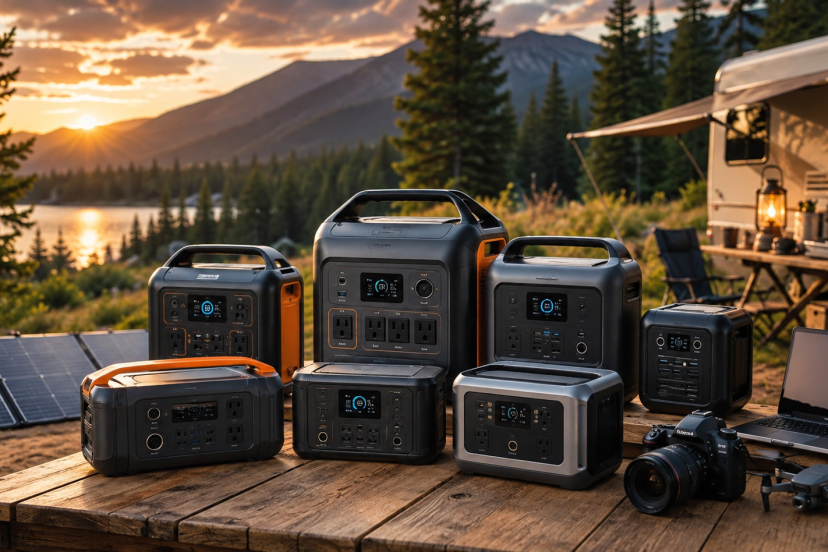
Portable power stations store electricity in rechargeable batteries and deliver it through AC outlets, USB ports, and DC connections. They are useful for campers, RV travelers, remote workers, photographers, and households that need quiet backup power during an outage. The right model can keep phones, laptops, lights, routers, refrigerators, or selected tools running, but capacity, inverter output, recharge speed, weight, and port selection vary widely. We evaluated these Portable power stations by verified specifications, portability, battery chemistry, charging flexibility, expandability, practical limitations, and current Amazon.com availability. Always compare your devices’ starting and running wattage before choosing.
Portable power stations Comparison Table
| Product | Best for | Key feature | Main limitation | Price category | Overall recommendation |
| Jackery Explorer 1000 v2 | Most buyers | 1,070Wh, 1,500W | Three AC outlets | Mid-range | Best overall balance |
| EcoFlow DELTA 2 | Expandable backup | Extra-battery support | Older platform | Mid-range | Highly versatile |
| Anker SOLIX C1000 Gen 2 | Fast recharging | 2,000W output | App unlocks features | Mid-range | Excellent for emergencies |
| BLUETTI AC70 | Car camping | 22.5-pound design | 1,000W ceiling | Mid-range | Strong portable choice |
| EcoFlow RIVER 3 | Budget buyers | Compact 245Wh battery | Limited appliance runtime | Budget | Great light-duty value |
| BLUETTI AC2A | Small electronics | 7.9-pound body | 300W output | Budget | Easy grab-and-go power |
| Anker SOLIX C300 | Beginners | Eight useful ports | Small 288Wh capacity | Budget | Simple first station |
| DJI Power 1000 | Drone creators | Dual 140W USB-C | Solar adapter costs extra | Premium | Specialized, powerful design |
| Anker SOLIX F2000 | RV travelers | Wheels and TT-30 outlet | Heavy at 67.3 pounds | Premium | Excellent mobile backup |
| BLUETTI AC200L | Expandable RV backup | 2,400W output | Heavy and bulky | Premium | Serious off-grid capability |
1. Jackery Explorer 1000 v2 — Best for Overall Use
Overview: The Explorer 1000 v2 combines a 1,070Wh LiFePO4 battery, 1,500W continuous AC output, and a manageable 23.8-pound body. It suits camping, outages, and mobile work without moving into wheeled-generator territory.
Key Features: Three AC outlets, 3,000W surge capability, 100W USB-C output, app controls, and up to 400W solar input.
Pros: Strong capacity-to-weight balance; simple controls; fast emergency charging mode.
Cons: Fewer AC outlets than several competitors; solar panels cost extra.
Best For: Buyers wanting one dependable station for both recreation and home essentials.
Verdict: Its useful output, familiar interface, and genuinely portable size make it the most balanced choice here.

2. EF ECOFLOW DELTA 2 — Best for Expandable Backup
Overview: The DELTA 2 is a 1,024Wh LiFePO4 station built for users who may need more storage later. It provides 1,800W AC output and supports a compatible extra battery, distinguishing it from fixed-capacity alternatives.
Key Features: Four AC outlets, two 100W USB-C ports, 500W maximum solar input, Wi-Fi and Bluetooth control, and expandable capacity.
Pros: Broad port selection; fast wall charging; flexible battery expansion.
Cons: Newer EcoFlow platforms offer updated features; expansion batteries add cost and weight.
Best For: Families, campers, or remote workers who want a practical upgrade path.
Verdict: DELTA 2 remains compelling when expandability matters more than owning the newest chassis.

3. Anker SOLIX C1000 Gen 2 — Best for Fast Recharging
Overview: The C1000 Gen 2 packs 1,024Wh into a roughly 25-pound station and raises continuous output to 2,000W. It is designed for buyers who need quick turnaround between outages, campsites, or work sessions.
Key Features: Five AC outlets, 10 total ports, 1,600W AC input, 600W solar input, and a manufacturer-claimed sub-10-millisecond UPS switchover.
Pros: High output for its size; fast charging; useful port layout.
Cons: Maximum charging can stress household circuits; advanced controls rely on the app.
Best For: Emergency preparedness and high-demand appliances within the rated limit.
Verdict: Few 1kWh models combine this much output, charging speed, and portability so effectively.

4. BLUETTI AC70 — Best for Car Camping
Overview: The AC70 delivers 768Wh and 1,000W continuous AC output in a 22.5-pound package. It lands between compact device chargers and larger 1kWh stations, making it easier to carry while offering meaningful overnight energy.
Key Features: Two AC outlets, 2,000W power-lifting mode for compatible resistive loads, 100W USB-C, 500W solar input, and Bluetooth app control.
Pros: Sensible size; fast AC charging; strong solar intake for its capacity.
Cons: The 1,000W inverter limits demanding appliances; only two AC outlets.
Best For: Road trips, weekend camping, portable refrigerators, lights, and electronics.
Verdict: AC70 offers an appealing middle ground for users who value mobility over maximum output.

5. EF ECOFLOW RIVER 3 — Best Budget Option
Overview: RIVER 3 is a compact 245Wh station intended for light loads rather than refrigerators or cooking appliances. Its 300W rated AC output can support laptops, routers, lights, cameras, and charging gear.
Key Features: LiFePO4 battery, one-hour AC recharge claim, under-30-decibel operation under stated conditions, app monitoring, and 600W X-Boost support for selected devices.
Pros: Small footprint; quiet operation; quick charging; easy storage.
Cons: Short runtime with sustained loads; limited output and solar capacity.
Best For: Budget-minded campers, students, and households needing communications backup.
Verdict: It is a sensible low-cost entry when portability and basic electronics matter more than appliance support.

6. BLUETTI AC2A — Best for Compact AC Power
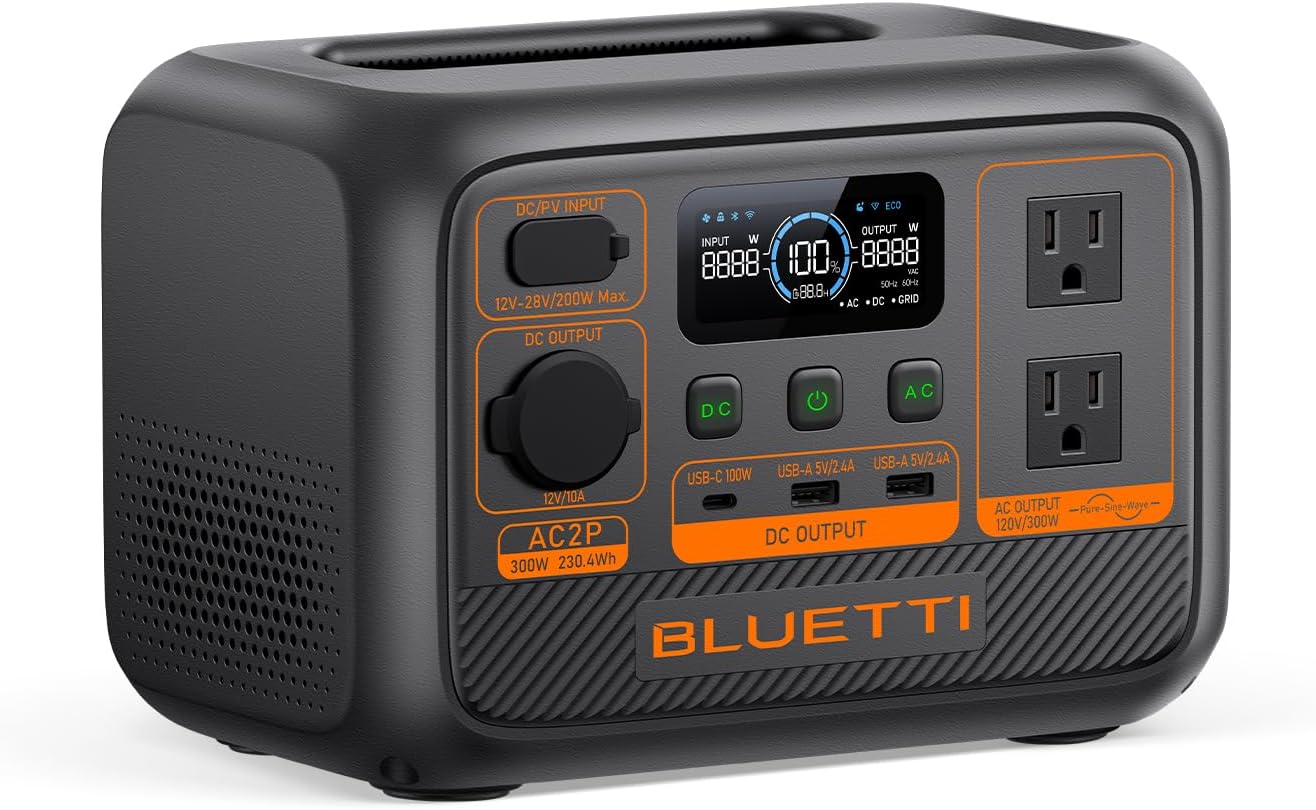
Overview: The 204Wh AC2A weighs 7.9 pounds yet includes two standard AC outlets. It is designed for short trips, desk equipment, cameras, routers, and emergency charging rather than high-wattage household loads.
Key Features: 300W pure-sine AC output, 600W surge, 100W USB-C, regulated 12V car outlet, 200W solar input, and Bluetooth controls.
Pros: Very easy to carry; generous inputs for its size; useful 100W USB-C port.
Cons: Small battery drains quickly under AC loads; 300W ceiling excludes many appliances.
Best For: Anyone needing a lightweight station that still provides real wall outlets.
Verdict: AC2A earns its place by packing unusually complete connectivity into a genuinely compact format.
7. Anker SOLIX C300 — Best for Beginners
Overview: The C300 offers 288Wh, 300W continuous output, and eight ports in a tidy nine-pound design. It is approachable for first-time owners because the controls and use cases are straightforward.
Key Features: Three AC outlets, two 140W USB-C ports, car socket, 100W solar support, LiFePO4 battery, and approximately 50-minute charging to 80% under manufacturer conditions.
Pros: Excellent USB-C capability; multiple AC outlets; compact vertical body.
Cons: Limited battery capacity; shoulder strap and some charging accessories may be separate purchases.
Best For: Beginners powering laptops, phones, lights, small fans, and campsite electronics.
Verdict: The C300 is an uncomplicated starter model with more connectivity than many similarly sized stations.

8. DJI Power 1000 — Best for Drone and Camera Crews
Overview: DJI Power 1000 combines a 1,024Wh LFP battery with 2,200W continuous output and proprietary SDC connections. It serves general backup needs, but its strongest advantage is integration with compatible DJI charging accessories.
Key Features: Two 140W USB-C ports, two AC outlets, SDC and SDC Lite ports, 1,200W grid charging, and 4,000-cycle manufacturer rating to 70% capacity.
Pros: High inverter output; strong USB-C charging; specialized drone fast-charging options.
Cons: Solar charging requires an additional adapter; only two AC outlets; accessories increase system cost.
Best For: Filmmakers, drone operators, photographers, and mobile production teams.
Verdict: Its specialized connections justify the premium for creators already invested in DJI equipment.

9. Anker SOLIX F2000 PowerHouse 767 — Best for RV Travel
Overview: The F2000 is a 2,048Wh, 2,400W station with wheels, a retractable handle, and a dedicated TT-30 RV outlet. It is portable in the luggage sense, not the carry-it-far sense.
Key Features: Twelve ports, 1,000W solar input, four household AC outlets, three 100W USB-C ports, expansion to 4,096Wh, and under-20-millisecond UPS switching claimed by Anker.
Pros: Excellent RV connectivity; high output; wheeled design; expandable storage.
Cons: Heavy; occupies substantial cargo space; premium accessories are expensive.
Best For: RV owners, extended camping, outage backup, and users running several appliances.
Verdict: F2000 is the premium choice for buyers who need serious power with practical rolling transport.

10. BLUETTI AC200L — Best for Expandable Off-Grid Power
Overview: AC200L provides 2,048Wh capacity and 2,400W continuous output, plus expansion options for longer off-grid stays. Its 30A RV connection and high solar intake make it more infrastructure-like than casual camping gear.
Key Features: Four AC outlets, 1,200W solar input, 100W USB-C, TT-30 outlet, Wi-Fi and Bluetooth app control, and capacity expansion with compatible BLUETTI batteries.
Pros: Strong output; broad RV and DC connectivity; rapid AC charging; substantial expansion potential.
Cons: Approximately 62-pound weight; large footprint; expansion packs require significant investment.
Best For: RVs, cabins, longer outages, and users building a scalable portable system.
Verdict: AC200L is the specialized winner when capacity growth and RV-ready connections outweigh easy carrying.

How to Choose the Best Portable power stations
Start with energy capacity, measured in watt-hours. Add the watt-hours used by each essential device, then include headroom for inverter losses and unexpected needs. A 200Wh station fits phones and laptops; roughly 700Wh to 1,100Wh offers more useful camping or outage coverage; 2,000Wh models better suit refrigerators, RV equipment, and longer backup periods.
Next, compare continuous AC output with every device’s running wattage. Motors, compressors, pumps, and some tools also have higher startup demand, so check surge requirements instead of relying only on normal consumption. Power-lifting modes do not make every appliance compatible.
Port selection matters. Count the AC outlets, USB-C wattage, regulated 12V outputs, and any RV connections you actually need. Avoid buying an oversized station merely for extra sockets; a suitable power strip may solve layout issues when permitted by the manufacturer.
Recharge options determine how useful the battery remains after day one. Check wall-charging time, solar input voltage range, maximum solar wattage, connector requirements, and car-charging support. For a broader backup plan, SolarFlez’s guide to battery backup for home explains how portable stations compare with installed battery systems and fuel generators.
Finally, evaluate weight, handle design, storage dimensions, operating-temperature limits, warranty terms, and replacement or expansion-battery availability. LiFePO4 chemistry is common in current models and generally offers long cycle life, but every battery still requires proper storage. Keep the station dry, ventilated, away from excessive heat, and within its rated electrical limits.
Runtime estimates should remain conservative. Divide usable watt-hours by the device’s measured watts, then reduce the result to allow for conversion losses, standby draw, temperature, and battery-management reserves. A station advertised at 1,000Wh will not deliver stored watt-hours through its AC outlets. Also confirm whether pass-through charging or UPS operation is approved for your intended equipment, especially computers, medical devices, refrigerators, and anything that must restart automatically after an interruption.
Frequently Asked Questions About Portable power stations
Can a portable power station run a refrigerator?
Yes, when its continuous and surge output exceed the refrigerator’s requirements and its capacity supports the desired runtime. Check the appliance label or a watt meter before buying.
Can I use one indoors?
Battery power stations do not produce combustion exhaust, but they still need ventilation and dry conditions. Follow the manufacturer’s clearance, temperature, charging, and storage instructions.
How large should my station be for camping?
For phones, lights, and a laptop, 200Wh to 300Wh may suffice. Add a refrigerator, fan, or several days away, and 700Wh to 1,100Wh becomes more practical.
Are solar panels included?
Usually not. Confirm panel voltage, current, connector type, and maximum input before purchasing. Brand-matched panels simplify compatibility but may cost more than suitable third-party options.
Can portable power stations travel on airplanes?
Most cannot. Passenger-aircraft battery limits are far below the capacities of these products. Confirm current airline and transportation rules before attempting to travel with any battery.
Final Verdict
Among Portable power stations, the Jackery Explorer 1000 v2 is the best overall choice because it balances capacity, output, and manageable weight. EcoFlow RIVER 3 is the best budget option for basic electronics, while Anker SOLIX F2000 is the best premium model for high-capacity mobile backup. Anker SOLIX C300 is best for beginners, and BLUETTI AC200L is the best specialized pick for expandable RV or off-grid use. Compare specifications, measure your devices’ requirements, confirm dimensions and warranty terms, and review current Amazon.com product information before purchasing.