5 Solar Water Heater Systems for Energy-Efficient Homes
Hot showers are lovely. Surprise energy bills? Not so lovely. If your water heater feels like it quietly eats half your budget while pretending to be innocent, you are not imagining things. According to the U.S. Department of Energy, heating water is a major household energy cost and makes up roughly 18% of the energy used in a typical home.
That is where a Solar Water Heater can make a real difference. Instead of relying only on electricity or gas, it uses sunlight to help heat water for showers, laundry, dishwashing, pools, or outdoor use.
In this guide, you will learn how solar water heating works, which system types make sense, what products to consider, and how to decide whether it fits your home.
What Is a Solar Water Heater?
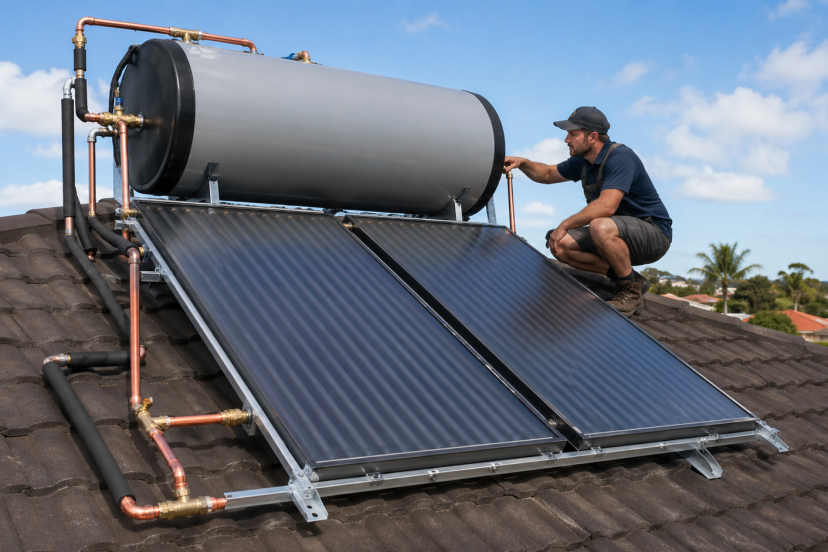
A Solar Water Heater is a system that uses solar thermal energy to warm water. Unlike solar panels that create electricity, solar water heating systems capture heat from the sun directly.
Picture a garden hose sitting outside on a sunny afternoon. The water inside gets warm because the hose absorbs heat. A proper solar hot water system does the same thing, only in a much smarter, safer, and more controlled way.
Common parts include:
- Solar collectors
- A storage tank
- Pipes or tubing
- A pump or natural circulation system
- A backup heater for cloudy days
Why Hot Water Uses So Much Energy
Hot water runs through daily life so quietly that you barely notice it. Morning shower. Coffee mug rinse. Baby bottles. Laundry. Dinner dishes. Then the bill arrives and says, “Remember me?”
The DOE notes that water heating is typically the second-largest home energy expense. That makes solar hot water one of the more practical home energy upgrades because it targets a real, recurring cost.
How Solar Water Heating Works
A solar water heating system collects sunlight, turns it into heat, and transfers that heat into water.
The simple version
Sunlight hits the collector.
The collector warms water or heat-transfer fluid.
That warm liquid moves to a storage tank.
Your home uses the heated water when needed.
Some systems use pumps. Others rely on natural movement, where hot water rises and cooler water sinks. It is basically physics doing housework, which feels delightfully unfair to your utility company.

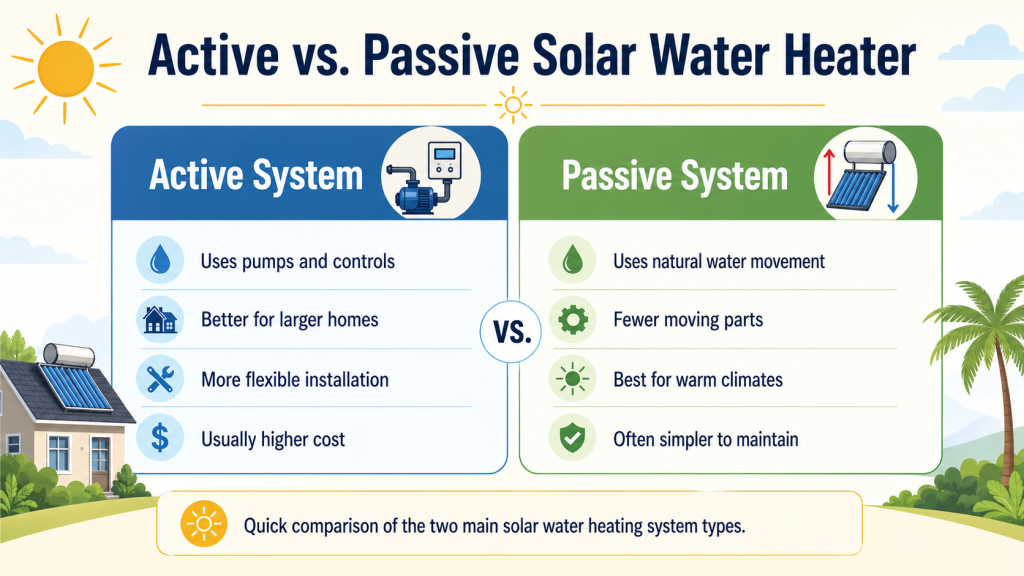
Understanding Active and Passive Solar Water Heaters
Active systems
Active systems rely on pumps and control units to circulate water or a heat-transfer liquid through the system. They usually cost more but can offer better control and stronger performance.
They are useful for:
- Larger households
- Cold climates
- Homes with higher hot water demand
- More complex plumbing setups
Passive systems
Passive systems rely on natural circulation. They usually have fewer moving parts, which can mean easier maintenance.
They are useful for:
- Warm climates
- Small homes
- Simple installations
- Budget-conscious homeowners
Direct vs. Indirect Solar Hot Water Systems
A direct system heats the household water itself. This works best where freezing temperatures are rare.
An indirect system heats a separate fluid, often antifreeze, then transfers that heat to household water through a heat exchanger. This is better for cold climates because frozen pipes are not the kind of winter surprise anyone wants.
Flat-Plate Solar Collectors vs. Evacuated Tubes
Flat plate collectors
Flat plate collectors usually appear as dark, panel-like units installed on rooftops. They are durable, common, and often more affordable.
Best for:
- Moderate climates
- Roof-mounted systems
- Standard residential hot water needs
Evacuated tube collectors
Evacuated tube systems use glass tubes that help reduce heat loss. They can perform well in cooler or cloudier areas.
Best for:
- Cold climates
- Higher-efficiency needs
- Homes with limited roof space

5 Solar Water Heater Systems to Consider
Before buying, remember this: a full-home Solar Water Heater is not always a simple plug-and-play product. Many systems need proper sizing, plumbing, and local code compliance.
1. Duda Solar 30 Tube Water Heater Collector 37° Frame
This evacuated tube collector is designed for solar water heating and rooftop use. Amazon’s listing describes it as an SRCC-certified collector with vacuum tubes built to capture and retain heat better than many flat panels.
Features:
- 30 evacuated vacuum tubes
- 37-degree frame
- Solar-powered collector design
- Built for hot water applications
Best for: Homeowners researching a serious collector for a professionally planned solar hot water system.
2. Duda Solar 200 Liter Water Heater Active Split System
This is closer to a full residential solar water heating setup. The Amazon listing highlights a 200-liter capacity and solar-powered operation.
Features:
- 200-liter capacity
- Active split system design
- Solar collector and tank setup
- Better suited for larger installations
Best for: Homeowners who want a more complete system and plan to involve a qualified installer.
3. MISOL Solar Collector of Solar Hot Water Heater with 10 Evacuated Tubes
This compact evacuated tube collector is listed for small solar hot water heating systems, training projects, or demonstration setups. The listing says it is suitable for heating a smaller 50-liter tank or a 100-liter tank with an electric element.
Features:
- 10 vacuum glass tubes
- Heat pipe design
- Aluminum alloy manifold
- Smaller collector footprint
Best for: DIY learners, small projects, cabins, or educational solar thermal setups.
4. GAME 4721-BB SolarPRO Curve Solar Pool Heater
This is a solar pool heater, not a whole-home Solar Water Heater. Still, it is useful for readers who want solar-heated water outdoors. Amazon notes it is designed for above-ground and many in-ground pools and can raise pool temperature by about 5°F in four days for an 8,000-gallon pool.
Features:
- Curved solar collector shape
- Works with many above-ground pools
- Includes adapters and hoses
- Uses sunlight instead of electric heat
Best for: Pool owners who want a budget-friendly way to extend swim season.
5. Intex 28685E Solar Mat Above Ground Swimming Pool Water Heater
This compact solar mat uses solar technology to warm pool water. Amazon says it is suitable for above-ground pools up to 8,000 gallons and may raise water temperature by about 5°F to 9°F depending on weather.
Features:
- 47.25 x 47.25-inch mat
- Works with compatible filter pumps
- Lightweight design
- Budget-friendly solar heating option
Best for: Small above-ground pool owners who want a simple seasonal heating boost.
How to Choose the Right Size Solar Water Heater
Sizing depends on your household, climate, roof space, and hot water habits.
Ask yourself:
- How many people are in your household?
- Do you use hot water mostly in the morning or evening?
- Do you run laundry with warm water?
- Does your roof get direct sunlight for most of the day?
- Do you need freeze protection?
A family of five with teenagers will need more capacity than a single person in a tiny home. Teenagers and long showers: name a more iconic duo.
Installation Tips Before You Buy
A solar hot water system touches plumbing, roofing, and sometimes electrical controls. That means installation matters a lot.
Practical tips
- Check local building codes.
- Ask about permits.
- Confirm roof strength.
- Look for shade from trees or nearby buildings.
- Plan a backup heater for rainy days.
- Use a licensed installer for full-home systems.
For small pool heaters or outdoor solar mats, DIY installation may be realistic. For a full residential Solar Water Heater, professional help is usually the smarter move.
Cost, Savings, and Payback
The U.S. Department of Energy says a solar water heater can reduce water heating bills by 50% to 80% on average. That is a wide range because location, fuel prices, system design, and hot water use all matter.
A sunny home with high hot water demand may see better savings than a shaded home with low use. So instead of asking, “Is solar water heating always worth it?” ask, “Is my home a good match?”
That question gets you closer to a useful answer.
Maintenance and Lifespan
A Solar Water Heater is not maintenance-free, but it can be low-maintenance when installed correctly.
Typical care includes:
- Checking for leaks
- Inspecting collectors
- Flushing sediment from tanks
- Checking pumps and valves
- Replacing heat-transfer fluid when needed
- Keeping collectors clean
If your system uses evacuated tubes, ask how easy tube replacement is. If your area has hard water, pay extra attention to scale buildup.
Best Homes and Climates for Solar Hot Water
Solar water heating works best when your home has strong sun exposure and steady hot water demand.
It can work well for:
- Sunny suburban homes
- Rural homes with high utility costs
- Eco-conscious families
- Tiny homes and cabins
- Pool owners
- Off-grid or semi-off-grid setups
In cold climates, choose an indirect system with freeze protection. In warm climates, passive or direct systems may be simpler and more affordable.
Research-Backed Reasons to Consider Solar Water Heating
The U.S. Department of Energy solar water heater cost guide reports that solar water heaters can cut water heating bills by 50% to 80% on average. That is not a tiny “turn off the faucet while brushing” kind of saving. It is a major household energy category.
The IEA solar thermal technologies review noted that about 250 million dwellings worldwide used solar thermal technologies for water heating in 2020, with a target of 400 million by 2030 in its Net Zero scenario.
That tells us something important: solar water heating is not a quirky backyard experiment. It is a mature renewable heat technology with global relevance.
Small Solar Upgrades That Pair Well
You do not need to turn your home into a spaceship overnight. Start with one smart solar upgrade, then build from there.
A Solar Water Heater pairs nicely with:
- Solar attic fans
- Solar landscape lighting
- Low-flow showerheads
- Pipe insulation
- Efficient dishwashers
- Smart water heater timers
For curb appeal and outdoor efficiency, you can also explore solar garden lighting ideas for a more beautiful outdoor space. Small solar upgrades can make your home feel greener without making your wallet faint.
Common Mistakes to Avoid
The biggest mistake is buying the first shiny system you see without checking fit.
Avoid these:
- Choosing a system too small for your household
- Ignoring freeze protection
- Installing collectors in heavy shade
- Forgetting maintenance access
- Assuming pool heaters work for household plumbing
- Skipping local permits
- Buying parts without an installer’s input
Solar heating is like cooking rice. Simple idea, but the wrong ratio can make a mess.
FAQs About Solar Water Heater Systems
How much money can a Solar Water Heater save?
A Solar Water Heater can reduce water heating bills by 50% to 80% on average, according to the U.S. Department of Energy. Actual savings depend on sunlight, system size, hot water use, and local energy costs.
Will a Solar Water Heater still heat water on cloudy days?
Yes, although it produces less heat when sunlight is limited. Most homes use a backup electric, gas, or tankless water heater so hot water stays available during cloudy weather.
Is a Solar Water Heater better than solar panels?
They do different jobs. Solar panels produce electricity. A Solar Water Heater produces heat for water. If your main goal is lowering hot water costs, solar thermal can be very direct and efficient.
Can I install a Solar Water Heater myself?
Small pool heaters or camping-style solar heaters may be DIY-friendly. Full-home solar hot water systems usually need professional installation because they connect to plumbing, roofing, and sometimes electrical controls.
How long does a Solar Water Heater usually last?
Many quality systems can last 15 years or longer with proper installation and maintenance. Lifespan depends on collector type, water quality, climate, and how well the system is serviced.
Conclusion
A Solar Water Heater is one of those home upgrades that feels practical and hopeful at the same time. It does not just look good on a sustainability checklist. It targets a real daily need: hot water.
The right system can lower energy use, reduce utility bills, and make your home feel a little more self-reliant. Start by looking at your climate, roof space, household size, and budget. Then compare active, passive, direct, indirect, flat plate, and evacuated tube options.
You do not have to do everything at once. Even one smart solar choice can move your home in a cleaner, calmer, more energy-efficient direction. Start with the system that fits your life, not someone else’s Pinterest-perfect version of it.